
Ingredients
Vegetables
- 2ampalaya, bitter melon, deseeded and cut into chunks
- 200 gokra, trimmed
- 300 gkalabasa, squash, cubed
- 2aubergines, cut into chunks
- 200 gyardlong beans, in 5 cm lengths
- 4tomatoes, quartered
- 1onion, sliced
- 6 clovesgarlic
- 3cm ginger, sliced
Flavour
- 3 tbspbagoong isda or bagoong alamang, fermented fish or shrimp paste
- 200 mlwater
Meat
- 200 gpork belly, cubed, or 150 g crisp lechon kawali
To serve
- steamed rice
Directions
- Cut the bitter melon in half lengthways and scrape out the seeds and the white pith with a spoon. Render the pork belly in a heavy pot until it browns and gives up its fat.
- Add the garlic, ginger and onion and cook until fragrant. Add the tomatoes and cook until they soften and start to break down. Simmer the bagoong for a few minutes before the vegetables go in, which takes the raw edge off its smell.
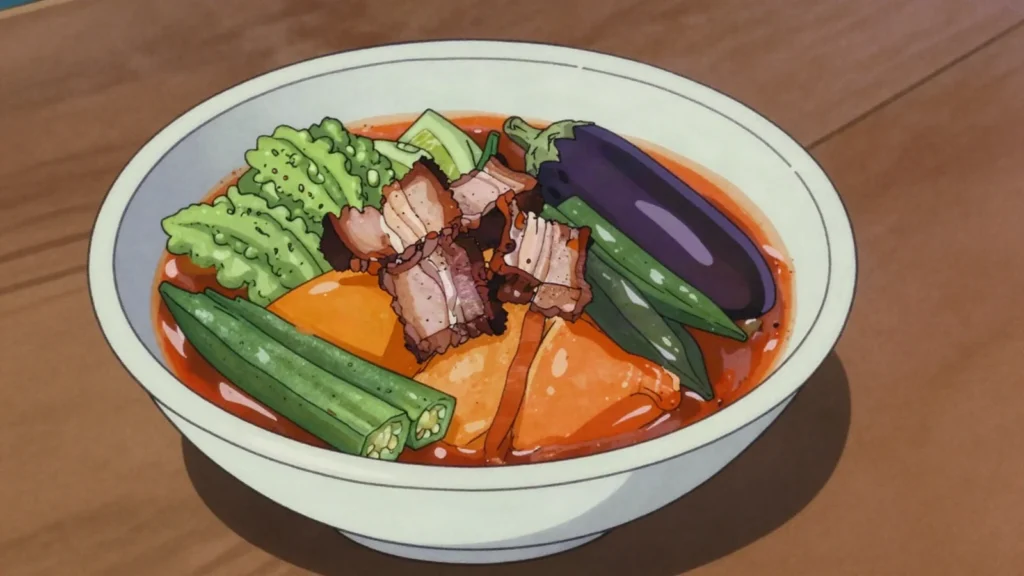
- Put the vegetables in the pot in layers according to how long they take: squash at the bottom, then beans, then aubergine, then okra, then bitter melon on top.
- Layer them rather than stirring them in. Cover the pot and cook on a medium heat for 8 minutes without touching it. Now the rule every Filipino cook states: do not stir it.
- Cook a further 5 to 8 minutes covered, until everything is just tender. The vegetables should be cooked through but still holding their shape and colour, and definitely not collapsed.
- Taste for salt, remembering the bagoong is very salty already. There should be only a small amount of thick liquid at the bottom, not a broth.
- Top with crisp lechon kawali if using, which is the restaurant version. Serve hot with plenty of steamed rice, which is what the strong salty sauce is for.
Technique
- Bagoong varies enormously in salt and strength between brands, so taste it before deciding the quantity.
- Ilocano versions often include no tomato at all.
- It reheats well and many say it is better the next day.
Substitutions
- Bagoong alamang, shrimp paste, in place of fish bagoong.
- Courgette and green beans if the Filipino vegetables are unavailable, which changes it considerably.
Variations
- With crisp fried pork belly on top.
- With prawns or fried fish.
- Made without meat, using bagoong alone.
History
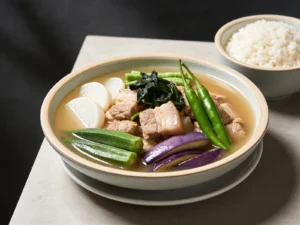
A mixed vegetable dish, combining bitter melon, aubergine, okra and squash cooked with a small amount of shrimp paste called bagoong, developed in the Ilocos region of the northern Philippines, with its name derived from the Ilocano word for shrunk or shriveled, referencing how the vegetables reduce in volume as they cook down together. Its combination of several vegetables cooked together in one pot, seasoned with the pungent, salty bagoong, reflects a practical, resourceful Ilocano cooking approach built around whatever vegetables were locally available and in season rather than relying on a single specific ingredient. Pinakbet remains one of the most widely recognized specifically Ilocano dishes within the broader landscape of Filipino regional cuisine, now eaten across the whole country.
Frequently asked questions
What is Pinakbet?
Pinakbet is a main from Philippines: ilocano vegetable stew of bitter melon, okra and squash flavoured with bagoong. A mixed vegetable dish, combining bitter melon, aubergine, okra and squash cooked with a small amount of shrimp paste called bagoong, developed in the Ilocos region of the northern Philippines, with its name derived from the Ilocano word for shrunk or shriveled, referencing how the vegetables reduce in volume as they cook down together. Its combination of several vegetables cooked together in one pot, seasoned with the pungent, salty bagoong, reflects a practical, resourceful Ilocano cooking approach built around whatever vegetables were locally available and in season rather than relying on a single specific ingredient. Pinakbet remains one of the most widely recognized specifically Ilocano dishes within the broader landscape of Filipino regional cuisine, now eaten across the whole country.
How long does Pinakbet take to make?
Pinakbet takes 25 min of preparation and 30 min of cooking. The recipe makes 6 servings. It is rated easy to make.
What can I substitute in Pinakbet?
Yes, within limits. Bagoong alamang, shrimp paste, in place of fish bagoong. Courgette and green beans if the Filipino vegetables are unavailable, which changes it considerably.
What is the most important thing to get right in Pinakbet?
Layer them rather than stirring them in. Cover the pot and cook on a medium heat for 8 minutes without touching it. Now the rule every Filipino cook states: do not stir it.