
Ingredients
Rice and beans
- 300 gdried black-eyed peas or red cowpeas, soaked overnight and drained
- 500 glong-grain rice, rinsed until the water runs clear
- 6–8dried sorghum leaf sheaths (waakye aba), rinsed
- ¼ tspfood-grade potash (kanwa), or ¼ tsp bicarbonate of soda
- 1.5 litreswater
- 2 tspfine salt
Accompaniments
- 300 ggari (coarse cassava granules)
- 200 gspaghetti, boiled and tossed in a little oil (talia)
- 4eggs, hard-boiled and halved
- 2ripe plantains, sliced and fried until deep gold
- 1cucumber, 2 tomatoes and 1 onion, sliced into a salad
- 4 tbspvegetarian shito, made with mushroom rather than the usual dried seafood
Stew
- 400 mltomato and pepper stew with plenty of onion and scotch bonnet
Directions
- Simmer the soaked peas with the sorghum leaves and the pinch of potash in the 1.5 litres of water for 30–35 minutes, until the beans are almost tender and the water has turned deep red-brown.
- Lift out the leaves and squeeze them over the pot before discarding. Their pigment, not any dye, is what colours the dish.
- Check the liquid: you want roughly twice the volume of the rice left in the pot. Top up with boiling water if it has reduced too far.
- Stir in the rinsed rice and the salt, bring back to a full boil, then reduce the heat to its lowest.
- Cover tightly and steam 20–25 minutes, without stirring, until the rice is cooked and every drop of liquid is absorbed.
- Take off the heat and let it stand covered for 10 minutes, then fluff with a wooden spoon; the grains should be separate, russet-brown and slightly nutty in flavour.
- While it rests, warm the tomato and pepper stew, fry the plantain until the edges caramelise, and boil the spaghetti until just soft.
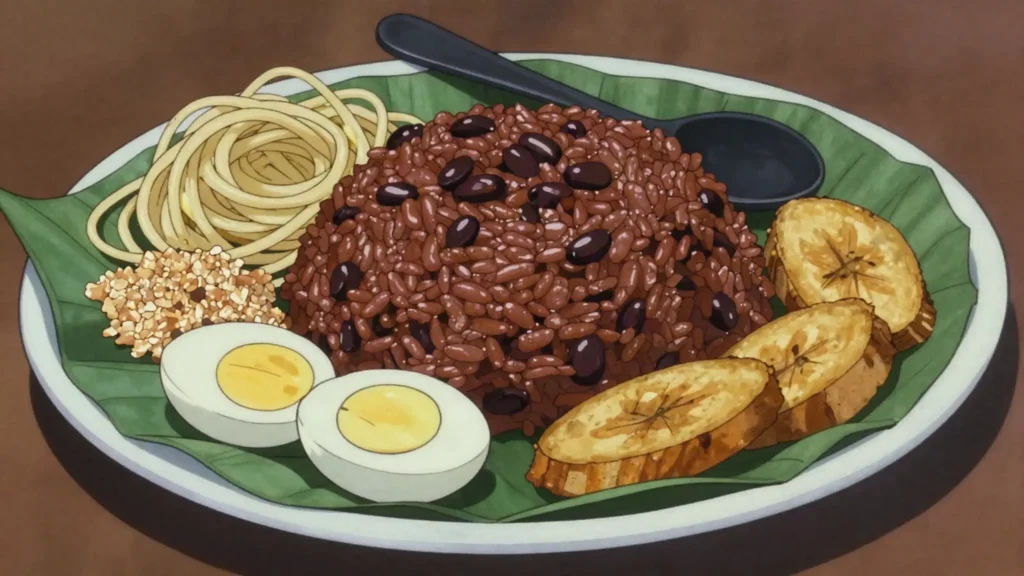
- Build the plate the way a waakye seller does, wrapping it in a banana or teak leaf if you have one: a bed of waakye, then talia, gari on the side, fried plantain, halved eggs and the salad.
- Ladle the stew over the top, add a spoon of shito, and serve while everything is still steaming.
Technique
- The colour and the faint alkaline flavour come from dried sorghum leaf sheaths, sold in Ghanaian markets as waakye aba. Without them it is just rice and beans.
- The pinch of potash helps the beans soften and deepens the colour, but too much makes the dish soapy and destroys thiamine. A quarter teaspoon for this quantity is plenty.
- Waakye is a breakfast and lunch dish sold from covered pans at roadside stands, never a dinner dish, and the accompaniments are chosen by the customer, item by item.
- The classic shito sold with waakye is built on dried seafood, so ask or make your own if you are avoiding it; mushroom-based versions are now common in Accra.
Substitutions
- No sorghum leaves: dried hibiscus (sobolo) calyces or the skins of red onions give a similar red-brown colour, though not the same earthy taste.
- Black-eyed peas are standard; red cowpeas give a darker pot and a firmer bean.
Variations
- Waakye with gari, talia and egg, the full roadside plate.
- Plain waakye with just stew and gari, the everyday version.
- Waakye with avocado and fried plantain, common in Accra offices.
History
A dish of rice and beans cooked together with dried millet or sorghum leaves, called waakye leaves, which give the dish its distinctive reddish-brown colour, developed in northern Ghana and closely associated historically with Ghana’s Muslim and Hausa communities before spreading to become a beloved everyday food across the entire country regardless of religion or ethnicity. Its name is borrowed from Hausa, reflecting that northern and cross-border cultural origin. A full waakye plate today is typically served with an extensive array of accompaniments, including fried plantain, spaghetti, boiled egg, meat and a spicy pepper sauce called shito, making the specific combination and quality of these side dishes as central to a good waakye experience in modern Ghanaian street food culture as the rice and beans themselves.
Frequently asked questions
What is Waakye?
Waakye is a main from Ghana: rice and beans tinted by sorghum leaves; sold with gari, spaghetti, egg, shito. A dish of rice and beans cooked together with dried millet or sorghum leaves, called waakye leaves, which give the dish its distinctive reddish-brown colour, developed in northern Ghana and closely associated historically with Ghana’s Muslim and Hausa communities before spreading to become a beloved everyday food across the entire country regardless of religion or ethnicity. Its name is borrowed from Hausa, reflecting that northern and cross-border cultural origin. A full waakye plate today is typically served with an extensive array of accompaniments, including fried plantain, spaghetti, boiled egg, meat and a spicy pepper sauce called shito, making the specific combination and quality of these side dishes as central to a good waakye experience in modern Ghanaian street food culture as the rice and beans themselves.
How long does Waakye take to make?
Waakye takes 20 min of preparation and 1 hr 15 min, plus overnight soaking of cooking. The recipe makes 4–6 servings. It is rated easy to make.
What can I substitute in Waakye?
Yes, within limits. No sorghum leaves: dried hibiscus (sobolo) calyces or the skins of red onions give a similar red-brown colour, though not the same earthy taste. Black-eyed peas are standard; red cowpeas give a darker pot and a firmer bean.
What is the most important thing to get right in Waakye?
Waakye is a breakfast and lunch dish sold from covered pans at roadside stands, never a dinner dish, and the accompaniments are chosen by the customer, item by item.