The small swimming crustaceans of every sea — prawn in Britain and Australia, shrimp in America — sweet, quick-cooking, and the most eaten seafood in the world after fish: grilled, fried, curried, stir-fried, and dried and fermented into the pastes that season Southeast Asia.
Where it comes from
Prawns and shrimp are the same kind of animal — the two words are used interchangeably and inconsistently — and they are caught wild and farmed in warm and cold waters everywhere. Cold-water prawns from the North Atlantic are small, pink and sweet and sold cooked; warm-water tiger and king prawns from the Indo-Pacific and the Gulf of Mexico are large and firm and sold raw, and most of what is sold is now farmed in Southeast Asia, India and Ecuador. The farming has real environmental and labour problems; certification matters.
They are eaten in every possible way — boiled and peeled at the table, grilled in the shell, fried in batter or breadcrumbs, stirred into curries and pastas, pounded into dumplings and toasts, salted and dried whole, and fermented into the belacan, terasi and kapi pastes without which Malaysian, Indonesian and Thai cooking would not taste of itself. The shells and heads, usually thrown away, carry most of the flavour and make a stock or a bisque worth more than the meat.
Varieties
- Cold-water (North Atlantic) prawn — Small, pink, sweet, sold cooked and peeled. For prawn cocktail, sandwiches and salads.
- King prawn / white shrimp — Large, pale grey raw, firm and mild; mostly farmed. The all-purpose raw prawn.
- Tiger prawn — Large, striped, meaty; grilled in the shell and in Southeast Asian dishes.
- Brown shrimp — Tiny, sweet, intense; potted in butter in England, in Belgian tomate-crevette and Dutch dishes.
- Dried shrimp — Small shrimp salted and sun-dried; pounded into Thai salads, Chinese fried rice and XO sauce, West African stews.
- Shrimp paste (belacan, terasi, kapi) — Fermented salted shrimp pressed into blocks; pungent, essential to sambals and curry pastes. Toast before use.
In the kitchen
Cook them briefly: two or three minutes is enough for most prawns, until they turn pink and opaque and curl into a C; an O means overcooked and rubbery. Cook in the shell when you can — grilled, roasted, in a broth — and peel at the table; the shell protects the meat and flavours everything. Devein large prawns by slitting the back and lifting out the dark thread.
Save every shell and head and simmer them with onion and a little tomato for twenty minutes for a stock that makes a bisque, a paella base or a Thai soup. Prawns go with garlic, chilli, lemon, parsley and olive oil (Spain, Italy); with ginger, spring onion and soy (China); with coconut, lemongrass and lime (Thailand); with butter, Old Bay and beer (the American coast).
Choosing and keeping
Raw prawns should be firm, translucent grey or blue, with no black spots at the head and no smell beyond the sea; ammonia means they are off. Most prawns are frozen at sea or on the farm, so buying frozen and thawing at home in cold water is as good as ‘fresh’ and often better. Cook within a day of thawing.
Cooked cold-water prawns keep a day or two. Dried shrimp and shrimp paste keep for months in the fridge. Look for certification (ASC, MSC) — the farming industry varies enormously.
Dishes with prawn
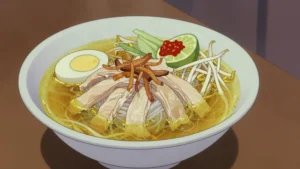 Soto AyamTurmeric chicken soup with vermicelli, egg and sambal
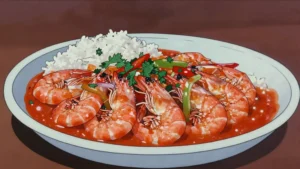 Camarones enchiladosShrimp simmered in tomato-sofrito creole sauce
 Kontomire stewCocoyam-leaf palava stew with egusi seeds and smoked fish
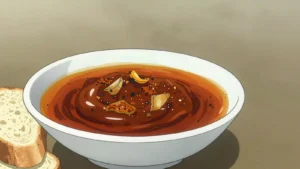 ZomiRed palm oil heated with onion and spices into a fragrant cooking oil
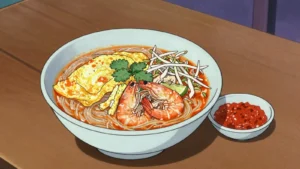 Sarawak LaksaSambal and coconut broth with vermicelli, omelette strips, prawns and shredded chicken
 Base nyebbeblack-eyed peas stewed with tomato, onion and fish, served over rice
 Mie GorengWok-fried sweet-soy noodles with vegetables and egg
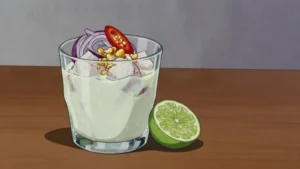 Leche de tigreThe citrus, fish and aji marinade of ceviche, drunk from a glass
Prawns and shrimp is tagged on 210 dishes from 70 countries in the atlas. These notes are written from general knowledge and carry no per-fact citation — see About.