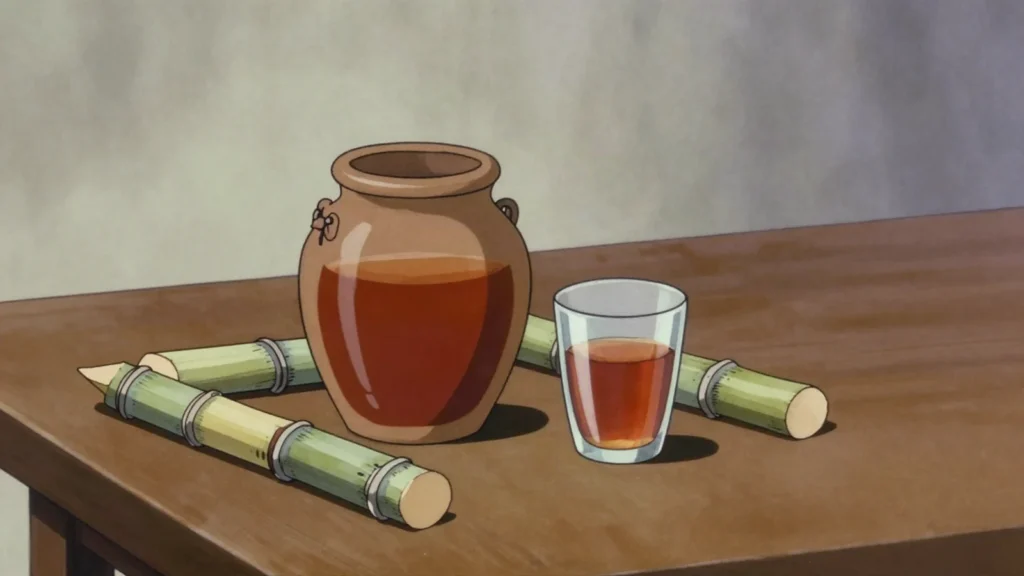

Ilocano sugarcane wine fermented in earthen jars with tree bark and herbs. In 1807 a Spanish colonial monopoly on basi production triggered the Basi Revolt in Ilocos, which is remembered in a series of painted panels.
Producing alcohol at home is licensed or restricted in most of the atlas’s readership, and the ferment depends on samak bark and on jars used across generations.
What goes into it
- sugarcane juice
- samak bark or other tree bark
- sometimes herbs and fruit
- large earthen jars
How it is made
Cane juice is boiled down, cooled, and poured into large earthen jars with pieces of samak bark, which supplies both tannin and — in local practice — the character of the ferment. The jars are sealed and left for months to years; the longest-aged basi is treated the way an old wine would be.
How long it takes: months at minimum; the prized jars run for years
How it is eaten
In small glasses at Ilocano celebrations, and used as a cooking vinegar when it turns.
History
In 1807 a Spanish colonial monopoly on basi production triggered the Basi Revolt in Ilocos, remembered in a series of painted panels.
Frequently asked questions
What is Basi?
Basi is a wine & spirit from Philippines: ilocano sugarcane wine fermented in earthen jars with tree bark and herbs. In 1807 a Spanish colonial monopoly on basi production triggered the Basi Revolt in Ilocos, remembered in a series of painted panels.
How is Basi made?
Cane juice is boiled down, cooled, and poured into large earthen jars with pieces of samak bark, which supplies both tannin and — in local practice — the character of the ferment. The jars are sealed and left for months to years; the longest-aged basi is treated the way an old wine would be. It takes months at minimum; the prized jars run for years.
Can I make Basi at home?
No, and the atlas gives no method for it. Producing alcohol at home is licensed or restricted in most of the atlas’s readership, and the ferment depends on samak bark and on jars used across generations.
What goes into Basi?
Sugarcane juice, samak bark or other tree bark, sometimes herbs and fruit, large earthen jars.
How is Basi eaten?
In small glasses at Ilocano celebrations, and used as a cooking vinegar when it turns.