The small oily fish of the Mediterranean and the Pacific, salted and cured until it dissolves into pure savouriness — and the fish sauces and pastes of Southeast Asia made the same way — the umami that seasons half the world without tasting of fish.
Where it comes from
Salting small fish to preserve them is Bronze Age technology, and the Romans made an industry of it: garum, their fermented fish sauce, was traded across the empire in amphorae and flavoured everything from vegetables to sweets. The Mediterranean tradition survived as the salted anchovy of Spain, Italy and France — filleted, layered in salt for months, then packed in oil — and as Italy’s colatura di alci, the direct descendant of garum, dripped from barrels of anchovies in Cetara.
Southeast Asia arrived at the same place independently. Fish sauce — nam pla in Thailand, nước mắm in Vietnam, patis in the Philippines — is anchovies and salt fermented for a year or more into an amber liquid that is the salt of those kitchens; shrimp paste is the solid equivalent. Worcestershire sauce is an English anchovy ferment; Caesar dressing, puttanesca, bagna cauda, salade niçoise, pissaladière and Jansson’s temptation all rest on the cured anchovy. Fresh anchovies are a different, delicate fish, fried or marinated in vinegar as boquerones.
Varieties
- Salted anchovy fillets in oil — Cantabrian (Spain) and Italian are the finest: meaty, mellow, not fishy. In tins and jars; the cooking anchovy.
- Whole salted anchovies — Uncleaned, packed in salt; rinse and fillet. Fuller flavour, more work.
- Boquerones — Fresh anchovies marinated in vinegar and oil; white, tender, sharp. A tapa, not a seasoning.
- Anchovy paste — Anchovies puréed with oil; convenient for dressings and butters.
- Fish sauce (nam pla, nước mắm, patis) — Fermented anchovy liquid; the seasoning of Thai, Vietnamese, Filipino and Cambodian cooking.
- Colatura di alici — Italian anchovy ‘drip’, the modern garum; a few drops over pasta with garlic and oil.
In the kitchen
Melt them: a fillet or two dissolved in warm oil or butter at the start of a dish disappears entirely and leaves a deep, rounded savouriness behind — under lamb, in a tomato sauce, in a braise of greens, in the dressing for a bitter salad. Nobody will taste fish. Mashed with garlic and butter they make a sauce for steak; with garlic and oil warmed gently, the Piedmontese bagna cauda.
Fish sauce is a seasoning used by the tablespoon in Southeast Asian cooking — in dipping sauces with lime, sugar and chilli, in stir-fries, in soups — and by the teaspoon as a secret ingredient in Western stews and gravies, where it does what a stock cube claims to. It smells strong from the bottle and mellows completely in the dish. Whole salted anchovies need a rinse and a soak in milk or water to soften the salt.
Choosing and keeping
Anchovy fillets in oil keep for months in the fridge once opened if covered in oil; in salt, for a year. Good anchovies are firm, pink-brown and mellow; mushy, grey or harsh ones are poor quality. Cantabrian anchovies cost more and are worth it for eating; cheaper Italian ones are fine for melting into a sauce.
Fish sauce keeps indefinitely in a cupboard and darkens with age. Look for a short ingredient list — anchovy, salt, perhaps sugar — and a higher ‘degrees N’ figure, which measures protein and quality. Vietnamese Phú Quốc and Thai brands are the standards.
Dishes with anchovy
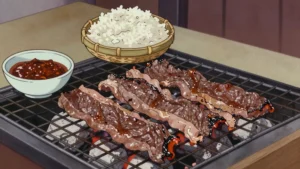 Ping SinMarinated beef strips grilled over charcoal and eaten with jeow and sticky rice
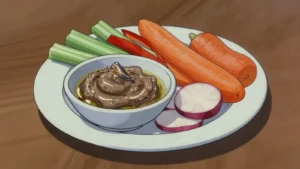 AnchoiadePounded salted anchovy with garlic and olive oil, spread on bread or raw vegetables.
 LampredottoFlorentine tripe simmered and served in a bun with salsa verde
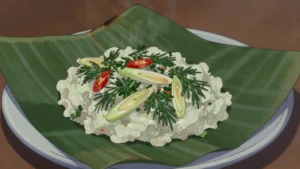 Mok PaFish steamed in banana leaf with dill, lemongrass and chili
 Ang Dtray-MeukGrilled squid brushed with lime and chilli, sold on skewers along the Kep seafront
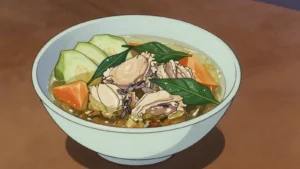 TinolaGinger chicken soup with green papaya and chili leaves
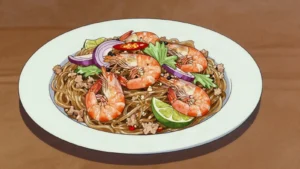 Yam Woon SenGlass noodles tossed with minced pork, prawns, lime, chilli and fish sauce
 Mie GorengWok-fried sweet-soy noodles with vegetables and egg
Anchovy and the fish seasonings is tagged on 190 dishes from 35 countries in the atlas. These notes are written from general knowledge and carry no per-fact citation — see About.