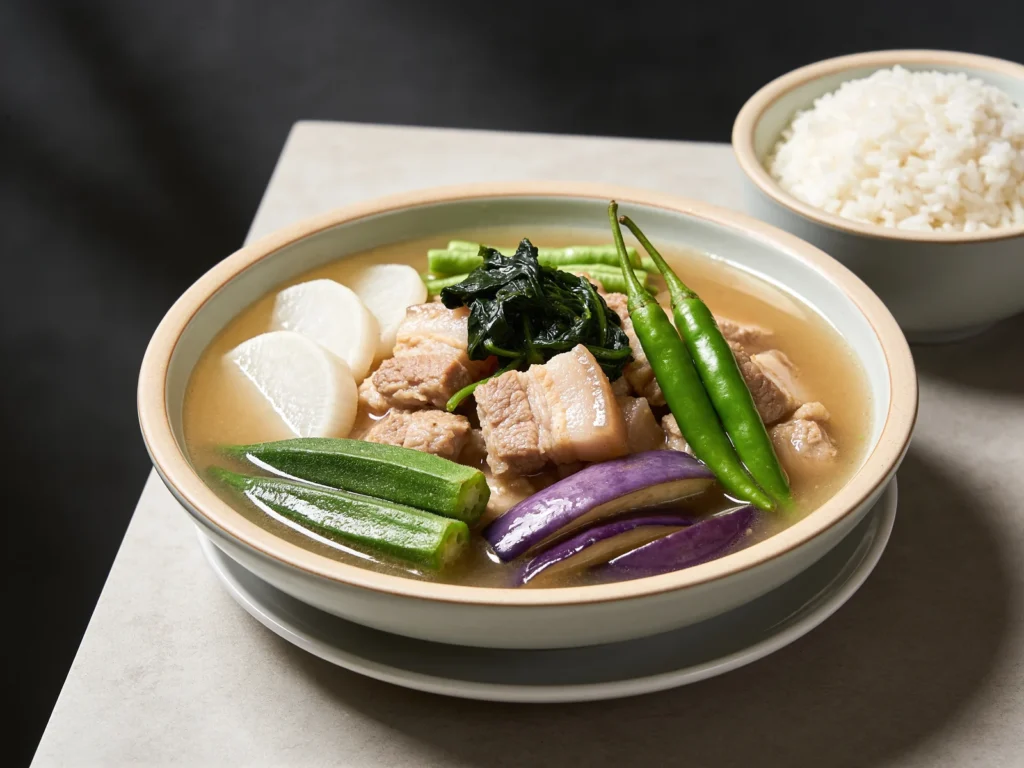

Ingredients
Broth
- 800 gpork belly or spare ribs, in 4 cm pieces
- 200 gfresh tamarind pods (sampalok), or 40 g wet tamarind pulp
- 2 litresrice washing water (hugas bigas), or plain water
- 2large tomatoes, quartered
- 1onion, quartered
- 2 tbspfish sauce (patis), plus more to taste
Vegetables
- 200 gwhite radish (labanos), in half-moons
- 8okra, topped
- 150 glong beans (sitaw), in 5 cm lengths
- 1Asian aubergine, sliced 2 cm thick
- 2long green chillies (siling haba), left whole
- 1large bunch water spinach (kangkong), leaves and tender stems
To serve
- steamed rice
- patis with crushed chilli and calamansi, for dipping
Directions
- If using fresh tamarind, boil the pods in 500 ml water for 15 minutes until soft, mash them and push the pulp through a sieve. Keep the sour liquid and discard skins and seeds.
- Bring the pork, onion, tomato and rice washing water to the boil in a deep pot and skim the grey foam carefully for the first 10 minutes. This is what keeps the broth clean-tasting.
- Simmer covered for 45–60 minutes, until the pork is tender enough to cut with the side of a spoon.
- Stir in the tamarind extract and 2 tbsp patis, then taste. It should be aggressively sour with salt behind it. If it tastes polite, add more.
- Add the radish and cook 5 minutes, then the long beans and aubergine for 4 minutes, then the okra and the whole chillies for 3 minutes. Hardest vegetables first, and everything should keep some bite.
- Turn off the heat, push the kangkong down into the broth and cover for 2 minutes. Residual heat wilts it without turning it khaki.
- Serve boiling hot in a communal bowl with rice and a saucer of patis, chilli and calamansi for dipping the meat into.
Technique
- Sinigang is defined by its souring agent, not by its meat. Tamarind is the common one, but guava, unripe mango, kamias, calamansi and Visayan batwan are all traditional and all named on menus.
- Rice washing water gives the faintly cloudy body Filipinos expect. Plain water works but tastes noticeably thinner.
- Packet sinigang mix is used in most Filipino homes and nobody will judge you for it, but fresh tamarind tastes fruitier and much less salty.
- It is soup and main course at once, eaten with rice, and the sourness is meant to be bracing in tropical heat.
Substitutions
- No fresh tamarind: 40 g wet tamarind pulp soaked in hot water and sieved, or one 25 g sachet of sinigang sa sampalok mix for 2 litres.
- No kangkong: spinach or morning glory, added at the same point.
- Pork can be swapped for prawns, which need only 5 minutes, or for milkfish belly.
Variations
- Sinigang na hipon, the prawn version, lighter and faster.
- Sinigang na baboy sa miso, thickened with fermented soybean paste, the Tagalog style.
- Sinigang sa bayabas, soured with ripe guava, sweeter and rounder.
History
A sour soup, most often built around tamarind though other souring agents including green mango, guava or kamias fruit are used regionally and seasonally, documented in Filipino cooking well before Spanish colonization, since the base technique of souring a broth with local fruit is generally considered an Indigenous Filipino practice rather than an imported one. Meat, fish or shrimp are added along with vegetables including water spinach, radish and aubergine, and the exact combination varies considerably by region, season and what souring fruit is locally available at the time. Its sourness is understood in Filipino food culture partly as a practical response to a hot, humid climate, since sour and acidic flavours are widely felt to be more appetite-stimulating and refreshing than richer, heavier dishes in tropical heat.
Frequently asked questions
What is Sinigang?
Sinigang is a soup & stew from Philippines: sour tamarind soup with pork or shrimp and vegetables. A sour soup, most often built around tamarind though other souring agents including green mango, guava or kamias fruit are used regionally and seasonally, documented in Filipino cooking well before Spanish colonization, since the base technique of souring a broth with local fruit is generally considered an Indigenous Filipino practice rather than an imported one. Meat, fish or shrimp are added along with vegetables including water spinach, radish and aubergine, and the exact combination varies considerably by region, season and what souring fruit is locally available at the time. Its sourness is understood in Filipino food culture partly as a practical response to a hot, humid climate, since sour and acidic flavours are widely felt to be more appetite-stimulating and refreshing than richer, heavier dishes in tropical heat.
How long does Sinigang take to make?
Sinigang takes 20 min of preparation and 1 hr 10 min of cooking. The recipe makes 4–6 servings. It is rated easy to make.
What can I substitute in Sinigang?
Yes, within limits. No fresh tamarind: 40 g wet tamarind pulp soaked in hot water and sieved, or one 25 g sachet of sinigang sa sampalok mix for 2 litres. No kangkong: spinach or morning glory, added at the same point. Pork can be swapped for prawns, which need only 5 minutes, or for milkfish belly.
What is the most important thing to get right in Sinigang?
Add the radish and cook 5 minutes, then the long beans and aubergine for 4 minutes, then the okra and the whole chillies for 3 minutes. Hardest vegetables first, and everything should keep some bite.