The catch-all tag for the everyday vegetables that flavour and bulk a dish — carrot, celery, peppers, greens, squash and roots — where no single one defines it.
Where it comes from
Almost every cuisine has an aromatic vegetable base it starts from, and they are more alike than the distance between them suggests: French mirepoix of onion, carrot and celery; Italian soffritto; Spanish and Latin American sofrito with peppers; the Cajun trinity of onion, celery and green pepper; Chinese ginger and spring onion.
In the atlas this tag marks dishes built on vegetables generally rather than on one named vegetable. Where a dish is really about its onions, its cabbage or its tomatoes, it carries that tag instead.
Varieties
- Aromatic base — Carrot, celery, onion, pepper. Cooked slowly at the start to build the savoury floor of a dish.
- Leafy greens — Spinach, chard, kale, callaloo, amaranth, mustard greens. Minutes for tender ones, much longer for tough ones.
- Squashes and gourds — Pumpkin, courgette, bottle gourd, chayote. Summer types are watery and quick; winter types are dense and sweet.
- Root vegetables — Carrot, parsnip, turnip, swede, celeriac. Sweeten considerably when roasted.
- Peppers — Sweet capsicums, distinct from chilli. Roasting and peeling transforms them.
- Aubergine — A sponge until its cells collapse, then silky. It needs either enough fat or enough time.
In the kitchen
Green vegetables lose their colour to acid and to long cooking. Cooking them fast, uncovered, and in plenty of water keeps them bright; a lid traps the volatile acids that dull them.
Roasting concentrates and browns because water leaves and sugars caramelise; boiling dilutes. Neither is better, but they are not substitutes.
Salting aubergine used to be about drawing out bitterness. Modern varieties are not bitter, and the reason to still do it is that it collapses the cell structure so the flesh absorbs less oil.
Dishes with vegetables
 Mie GorengWok-fried sweet-soy noodles with vegetables and egg
 Githeriboiled maize and beans, often fried with vegetables; Kikuyu staple
 Lenga lengaAmaranth leaves stewed with onion, tomato and palm oil
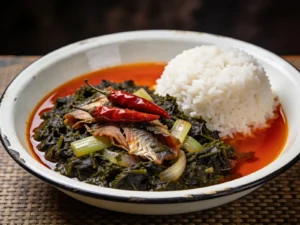 Saka sakaPounded cassava leaves cooked with palm oil, peanut and smoked fish
 Dolmavegetables stuffed with spiced minced meat, simmered in white chickpea sauce
 PicadilloMinced vegetable-and-meat hash scooped up with tortillas
 BathupHand-pinched dough pieces in broth with dried meat and greens, a cold-weather staple
 MkhallalBrined cucumbers, turnips, olives and chillies set on the table with every meal.
Vegetables is tagged on 705 dishes from 189 countries in the atlas. These notes are written from general knowledge and carry no per-fact citation — see About.