
Ingredients
Dough
- 500 gfine cornmeal
- 700 mlwarm water or stock, as needed
- 60 mloil
- 1 tspsalt
Filling
- 700 gminced beef, or minced chicken
- 1onion, finely chopped
- 4 clovesgarlic
- 2 tbspgreen seasoning
- 1 bunchchadon beni, culantro, chopped
- 1 tbspcapers
- 80 graisins
- 12green olives, sliced
- 2 tbsptomato ketchup or purée
- 1 tspground cumin
- 1pimento pepper, chopped
- salt and black pepper
Wrapping
- banana leaves, cut into squares
- kitchen string
- a little oil, to brush
Directions
- Make the filling first and make it a day ahead if you can, because it improves overnight. Brown the mince hard in a hot pan, breaking it up, until it is properly coloured and dry.
- Cook it until genuinely dry rather than merely no longer pink. A wet filling steams inside the parcel and the dough goes to paste. Add the onion, garlic, green seasoning, chadon beni, cumin and pimento and cook 10 minutes. Stir in the ketchup, capers, raisins and olives and cook a further 5 minutes.
- Cool it completely before assembling. Now prepare the banana leaves: pass each square over an open flame until it turns glossy and darkens.
- Use warm water and add it slowly. The dough should be soft, smooth and pliable, like a soft playdough. Work in the oil, which keeps it supple. Let it rest 10 minutes, because cornmeal keeps absorbing liquid after mixing. Brush a leaf with a little oil.
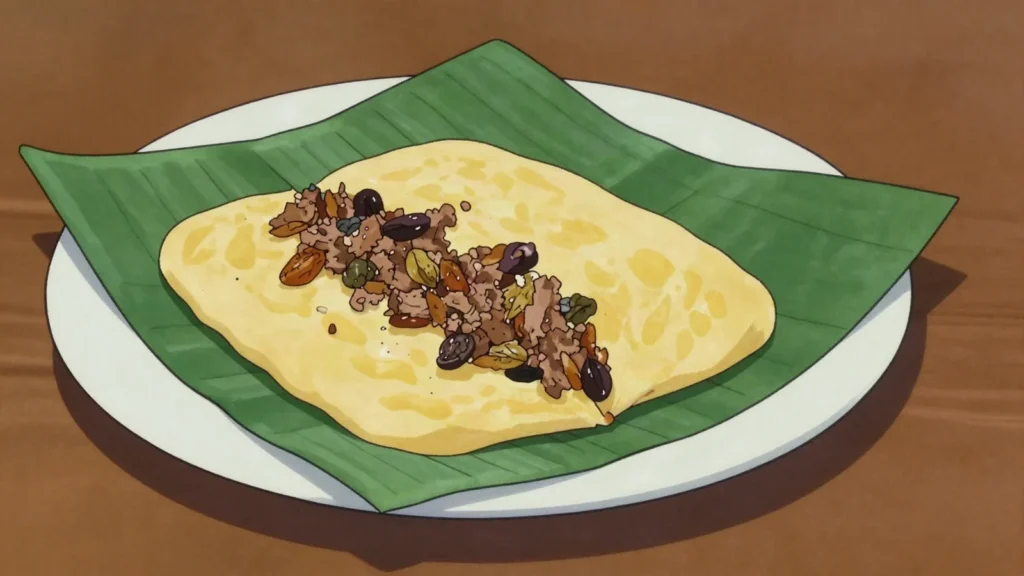
- Put a ball of dough on the leaf and press it out flat with your fingers or the back of an oiled spoon, into a rough rectangle about 5 mm thick. Spread it thin and even. Thick dough is stodgy and the ratio should favour filling over cornmeal. Put a good spoonful of filling down the centre. Fold the ends in and tie the parcel with string, crosswise both ways.
- Steam or boil the parcels for 30 to 45 minutes. If boiling, keep them fully submerged and top up with boiling water rather than cold. Rest them 10 minutes before opening, because they firm up as they settle.
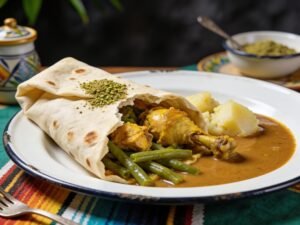
- Serve warm in the leaf, untied at the table, with the leaf opened out as a plate. They are made in enormous batches in the weeks before Christmas, with several people wrapping together, and frozen until needed.
Technique
- They freeze extremely well and are steamed from frozen with 15 minutes added.
- Green seasoning is the Trinidadian herb blend and most households keep a jar of their own.
- Chicken and vegetarian fillings are both common now.
Substitutions
- Foil in place of banana leaves, which loses the perfume entirely.
- Fine cornmeal or masa harina, which behaves similarly.
Variations
- Made with chicken or with a vegetable filling.
- Paime, the sweet version.
- Hallaca, the Venezuelan relative, which is larger and richer.
History
Trinidad’s Christmas parcel, descended from the Venezuelan hallaca and reflecting the island’s long Spanish period before 1797.
Frequently asked questions
What is Pastelle?
Pastelle is a main from Trinidad and Tobago: seasoned meat in cornmeal dough, steamed in a folded banana leaf. Trinidad’s Christmas parcel, descended from the Venezuelan hallaca and reflecting the island’s long Spanish period before 1797.
How long does Pastelle take to make?
Pastelle takes 1 hr 30 min of preparation and 45 min of cooking. The recipe makes about 12. It is rated hard to make.
What can I substitute in Pastelle?
Yes, within limits. Foil in place of banana leaves, which loses the perfume entirely. Fine cornmeal or masa harina, which behaves similarly.
What is the most important thing to get right in Pastelle?
Cook it until genuinely dry rather than merely no longer pink. A wet filling steams inside the parcel and the dough goes to paste. Add the onion, garlic, green seasoning, chadon beni, cumin and pimento and cook 10 minutes. Stir in the ketchup, capers, raisins and olives and cook a further 5 minutes.