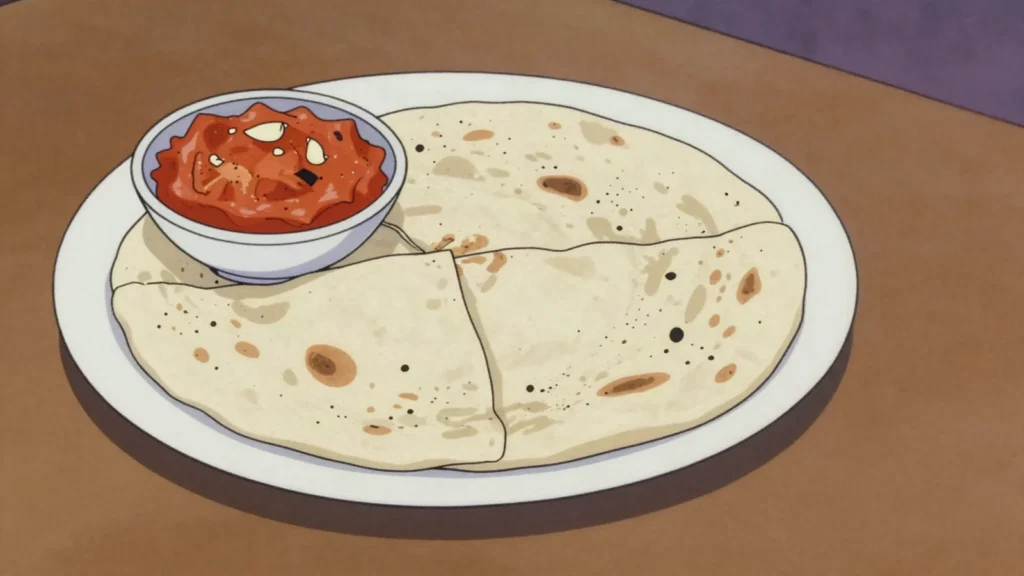

Ingredients
The roti
- 500 gplain flour
- about 320 ml warm water
- 2 teaspoonsbaking powder
- 1 teaspoonsalt
The tomato choka
- 6tomatoes
- 1whole head of garlic
- 1onion, finely sliced
- 3 tablespoonsoil
- 1hot pepper, optional
- salt and black pepper
The aubergine choka
- 2large aubergines
- 6garlic cloves
- peeled and slivered
- 1onion, finely sliced
- 3 tablespoonsoil
- salt
To finish
- chopped chadon beni
- or coriander
- a little more oil
Directions
- Use tongs rather than your hands. Keep loose sleeves well away from it. Never leave the flame unattended. Steam builds inside the sealed skin. Pierce it several times before roasting. A bursting aubergine throws hot pulp.
- Stand well back as you pour it. Pour it away from your own body. Use a long-handled pan for it. Put the flour in a large bowl. Add the baking powder and salt. Whisk them together thoroughly first. The baking powder must spread evenly. Add all the warm water gradually. It should be soft and slightly sticky.
- Knead it for about five minutes. It should become smooth and elastic. Oil your hands if it sticks badly. Do not add any more flour to it. Cover it over and let it rest. Give it at least thirty full minutes. Put the whole tomatoes on the flame.
- Set them straight onto the burner. Or lay them out on a hot grill. Turn them as the skin blackens. Use tongs rather than your hands. Roasting the garlic is done alongside.
- Put the whole garlic head on the flame. Roast it whole in its papery skin. It goes soft and sweet inside. Squeeze the cloves out afterward. Judging them takes a careful look. Press it gently with the tongs. It should collapse under pressure. Let the tomatoes cool a little.
- Rub the skin off with your fingers. Do not rinse it under any water. Mash the tomato with the roast garlic. Mash it coarsely rather than smooth. Some texture should remain in it. Pierce the aubergine several times. Make five or six holes right through. It stops the aubergine bursting.
- Cut slits in the aubergine skin. Use six or eight garlic slivers. Put the aubergine onto the flame. It takes about fifteen minutes. Turn it as each side blackens. The skin should char right through. Let the aubergine cool a little. Scoop it out with a large spoon. Discard the blackened skin entirely.
- Keep the roasted garlic slivers. Mash the flesh with the garlic. Mash it coarsely rather than smooth. Stop while some texture remains. Stir the raw sliced onion through. The hot oil cooks it slightly. Heat the oil until genuinely hot. It should shimmer and almost smoke. Warm oil does nothing at all here. Heat the oil up properly first. Pour the hot oil over the choka.
- Pour it directly over the onion. Stand well back as you pour it on. Pour it away from your own body. Stir the oil right through the mash. Work it in thoroughly and quickly. Taste it and season the choka now. Divide the dough into equal balls. Roll each one out on a floured surface.
- Roll it about half a centimetre thick. It gives the soft bready interior. Keep it even across the circle. Heat the tawa until genuinely hot. They should skitter and evaporate.
- Wait for longer before starting. Cooking them takes a few minutes. Lay a rolled roti on the hot tawa. Give it about a minute a side. Brown spots appear underneath. Press it lightly with a clean cloth. Press gently around the edges. Work quickly and quite gently. Clap the hot roti between your hands. Use a cloth if it is far too hot. Keeping them soft is genuinely essential.
- Stack them under a clean cloth. The steam keeps them soft and pliable. Cover them the moment they come off. Keep the whole stack fully covered. Serving it is always done hot. Serve the roti with the choka alongside. The choka keeps two days refrigerated.
Technique
- Pierce a whole aubergine five or six times right through before it goes near the flame: steam builds inside the sealed skin and a bursting aubergine throws hot pulp, causing genuine burns. Piercing prevents that entirely and the step should not be skipped.
- Chunkaying — pouring genuinely hot, almost smoking oil over the finished choka — is what cooks the raw onion slightly and carries the flavour through. It sizzles loudly as it lands and spits off the wet mash, so stand well back, pour away from yourself and use a long-handled pan. Warm oil does nothing at all.
- Roast the vegetables directly in flame rather than in an oven, which gives no smoke flavour at all — that smokiness defines the dish. Use tongs, keep loose sleeves away and never leave the flame unattended; a gas burner works well and a charcoal grill better still.
Substitutions
- Coriander stands in for chadon beni, a Caribbean herb also called culantro that tastes like a stronger coriander.
- Push garlic slivers deep into slits cut in the aubergine so they roast inside the flesh and flavour it right through — a genuine and clever technique — and roast a whole garlic head in its papery skin alongside the tomatoes, where the skin protects it and it goes soft and sweet.
Variations
- Rub the blackened skin off with your fingers rather than rinsing under water, which washes the smoke flavour away, and leave some black flecks — they carry the char and are genuinely part of the dish.
- Mash both chokas coarsely rather than smooth, stopping while texture remains; aubergine especially goes to purée very easily. The sliced onion goes in raw and stays sharp and crunchy, which is intended.
- The atlas also carries Guyanese sada roti, the same bread in a country sharing the same history: Indian labourers came to Trinidad under indenture from 1845 to 1917 to work the sugar plantations, often in harsh conditions and often unable to return home.
History
Plain griddled roti eaten with roasted tomato or aubergine choka, an Indo-Trinidadian breakfast built on fire-roasted vegetables.
Frequently asked questions
What is Sada roti and choka?
Sada roti and choka is a breakfast from Trinidad and Tobago: soft roti with roasted tomato or aubergine choka. Plain griddled roti eaten with roasted tomato or aubergine choka, an Indo-Trinidadian breakfast built on fire-roasted vegetables.
How long does Sada roti and choka take to make?
Sada roti and choka takes 30 minutes plus resting of preparation and 40 minutes of cooking. The recipe makes serves 4. It is rated medium to make.
What can I substitute in Sada roti and choka?
Yes, within limits. Coriander stands in for chadon beni, a Caribbean herb also called culantro that tastes like a stronger coriander. Push garlic slivers deep into slits cut in the aubergine so they roast inside the flesh and flavour it right through — a genuine and clever technique — and roast a whole garlic head in its papery skin alongside the tomatoes, where the skin protects it and it goes soft and sweet.
What is the most important thing to get right in Sada roti and choka?
Use tongs rather than your hands. Keep loose sleeves well away from it. Never leave the flame unattended. Steam builds inside the sealed skin. Pierce it several times before roasting. A bursting aubergine throws hot pulp.