The small, ridged, boat-shaped seed with a warm, earthy, slightly bitter smell — the most widely used spice on earth after pepper, and the flavour that Indian, Mexican, Middle Eastern and North African cooking have in common.
Where it comes from
Cumin is native to the eastern Mediterranean and south-west Asia and has been grown for at least four thousand years; it was in Egyptian tombs and on Roman tables, where it stood in for pepper as the everyday hot seasoning. The Arabs carried it across North Africa and into Spain, the Spanish carried it to Mexico, and it became indispensable in every one of those kitchens. India grows and uses more than anyone.
Its character is earthy and musky rather than hot, and it changes a great deal with cooking. Raw, it is harsh and a little soapy; toasted in a dry pan or fried in oil for a few seconds it turns nutty and warm, and that transformation is the reason almost every recipe that uses it begins by heating it. Ground cumin in a jar has already lost much of this, which is why whole seed, toasted and ground at home, tastes so different.
Varieties
- Common cumin (Cuminum cyminum) — The tan-brown ridged seed of every spice rack. Sold whole and ground.
- Black cumin (kala jeera, shahi jeera) — A smaller, darker, sweeter seed from Kashmir and Iran; more delicate, used in biryanis and Mughal dishes. Not the same as nigella, which is also sometimes called black cumin.
- Iranian cumin — Slightly smaller and greener than Indian; considered fine and mild.
- Ground cumin — Convenient, fades fast. Buy small amounts.
In the kitchen
Toast whole seeds in a dry pan over medium heat for a minute or two, shaking, until they darken a shade and smell nutty; then grind. Or fry them in hot oil or ghee at the very start of a dish — the Indian tadka — for a few seconds until they sizzle and darken, and build the dish on that oil. Both methods change it completely.
Ground cumin can go into a rub, a marinade or a mince mix raw, but it too benefits from a brief bloom in fat. It burns easily: seconds, not minutes, and never in a dry pan over high heat. Pair it with coriander seed, chilli, garlic and lime in Mexico; with coriander, turmeric and ginger in India; with coriander and caraway in North Africa.
Choosing and keeping
Buy whole seed. It keeps its aroma for two or three years sealed away from light; ground cumin is noticeably duller within months. Good seed is uniform, tan to brown, and smells strongly when a pinch is rubbed between the fingers.
Do not confuse it with caraway, which looks similar but is darker, more curved and tastes of anise and rye bread. The two are often confused in translation and are not interchangeable.
Dishes with cumin
 Tacos al pastorChile-marinated pork shaved from a spit, with pineapple and coriander
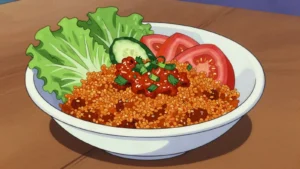 Kisirbulgur salad with pepper paste, pomegranate molasses and herbs
 KubeteCrimean Tatar layered pie of meat, potato and onion
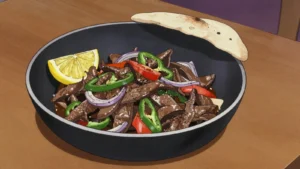 Mugalgallamb or liver flash-fried with pepper and onion in a shallow pan
 Chicharrón de cerdoPork crisped in its own fat with chicha, served with mote
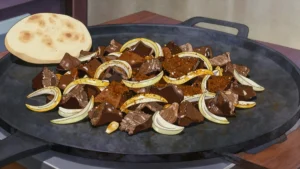 Jerusalem mixed grillchicken hearts, livers and lamb griddled with onion and baharat
 BirianiLayered coastal rice with spiced meat, saffron-tinted and served at weddings
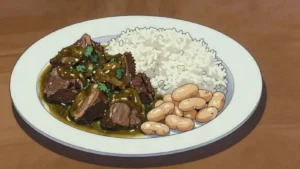 Seco de corderoLamb braised in coriander-chicha sauce with beans and rice
Cumin is tagged on 591 dishes from 104 countries in the atlas. These notes are written from general knowledge and carry no per-fact citation — see About.