
Ingredients
The fish
- 1whole snoek
- about 2 kg, butterflied
- head on or off
- scaled and cleaned
- or a whole mackerel or mullet
The basting
- 4 tablespoonsapricot jam
- 100 gbutter, melted
- 2garlic cloves, crushed
- juice of 1 lemon
- 1 tablespoonwhite wine vinegar
- salt and black pepper
The fire
- hardwood coals
- or good charcoal
- burned down to grey ash
- a hinged grid
- a braai stand
To serve
- lemon wedges
- sweet potato
- or roosterkoek, grilled bread
- with cold beer
Directions
- Check a current local guide if that matters to you. Never burn charcoal or wood indoors or in a closed space. Use it outdoors in genuinely open air only. Keep water or sand near the braai at all times. Never use petrol or spirits to start a fire.
- Keep children and pets well away from the coals. The coals must be burned down to grey ash. Spread the coals out to moderate the heat. Hold your hand about a palm above the grid. You should be able to keep it there four or five seconds. Cut down along one side of the backbone. Leave the skin entirely intact on both sides. Do not remove it or damage it at all.
- Rinse the opened fish and pat it thoroughly dry. Rinse away any remaining blood or scales. Then pat every surface genuinely dry. Take real care with that drying. Melt the butter and stir the apricot jam into it. Warm them gently together until combined. The jam should melt entirely into the butter.
- Break up any large pieces of apricot in it. It should be a smooth pourable mixture. Stir in the garlic, lemon juice and vinegar. Without them the baste is simply too sweet. Season it well with salt and black pepper. It should brush on easily rather than sitting thick.
- Set it beside the braai in a small pot. Oil the hinged grid before the fish goes in. Brush or wipe oil over both sides of the grid. That stops the skin sticking and tearing.
- Lay the fish flat and close the grid over it. Lay it skin side down in the grid to start. It should be held without being crushed. Adjust the clip if the grid is too loose. Put the grid over the coals flesh side up. Give it about ten minutes on that side.
- Brush the baste over the flesh as it cooks. Brush it on generously and repeatedly. Baste it every few minutes throughout. Move the grid aside if flames rise up. Let them die down before returning it.
- Turn the whole grid over to cook the other side. Give the flesh side about eight minutes. Keep basting it throughout that time. The flesh should be opaque and flake easily. Take it off as soon as it is just done.
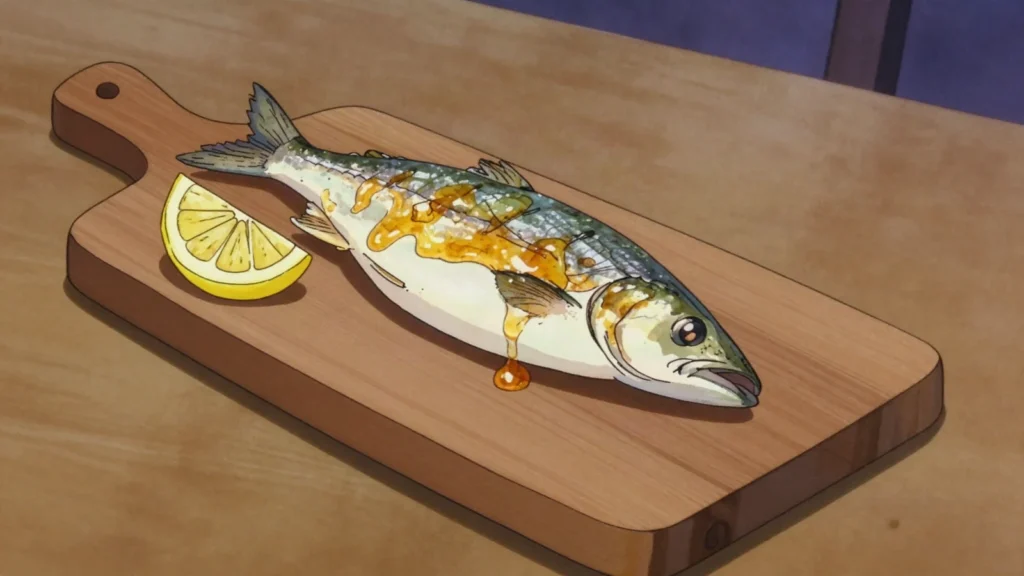
- Let the fish rest for a few minutes off the heat. Three or four minutes is quite enough. Use a wide spatula to help it slide off. Serve it whole on the board rather than plated. Squeeze lemon over the whole fish before serving. Put extra wedges on the board as well. Serve sweet potato or grilled bread alongside. It keeps two days refrigerated once cooked.
Technique
- Never burn charcoal or wood indoors, in a garage, a tent or an enclosed patio — it produces carbon monoxide, which is colourless, odourless and genuinely lethal, and a cooling braai keeps producing it for hours. Keep water or sand nearby, never use petrol or spirits to start a fire, and keep children and pets well away from the coals.
- Snoek has a great many fine sharp bones in the flesh that are easy to swallow. Warn everyone at the table and supervise young children closely.
- Burn the coals down to grey ash before cooking, since flames scorch the fish before it cooks through. Dripping butter and jam cause flare-ups — move the grid aside and let them die down, since burnt jam turns bitter very quickly.
Substitutions
- Snoek is often described as a barracuda relative, but that is not accurate: snoek is Thyrsites atun, a snake mackerel of the family Gempylidae, while true barracuda belong to Sphyraenidae — a quite separate group. The confusion comes from a superficial resemblance, both being long, silvery and sharply toothed. The atlas records the accurate identification and notes the common description is mistaken.
- A whole mackerel or mullet, butterflied the same way, takes this treatment well. Snoek stock status varies by fishery and region and ratings are revised as assessments update, so the atlas does not quote one that may be outdated — check a current local guide if that matters to you.
Variations
- A hinged grid is genuinely essential rather than convenient: it holds the flat fish securely and lets you turn the whole thing in one movement, where fish falls apart on an open grill. Oil both sides of the grid before the fish goes in, since a torn skin lets the fish fall apart.
- Cook it skin side down first for about ten minutes, which protects the flesh and crisps the skin, then about eight on the flesh side, basting generously every few minutes throughout so the glaze builds up in layers. Test with a hand held a palm above the grid: four or five seconds is the right heat.
- The lemon juice and vinegar in the baste are not optional — without them the apricot jam is simply too sweet. Sweetness works here because snoek is a rich oily fish and it cuts that richness, caramelising against the smoky char. Serve the whole fish on a board for everyone to pull flakes from, which is genuinely part of a braai.
History
Snoek, a snake mackerel of the family Gempylidae and no relation to the barracuda, is butterflied and basted with apricot jam and butter over the coals; the fishery dates to the earliest Cape settlement.
Frequently asked questions
What is Snoek braai?
Snoek braai is a main from South Africa: west Coast snoek fish grilled with apricot jam basting. Snoek, a snake mackerel of the family Gempylidae and no relation to the barracuda, is butterflied and basted with apricot jam and butter over the coals; the fishery dates to the earliest Cape settlement.
How long does Snoek braai take to make?
Snoek braai takes 20 minutes of preparation and 25 minutes of cooking. The recipe makes serves 6. It is rated medium to make.
What can I substitute in Snoek braai?
Yes, within limits. Snoek is often described as a barracuda relative, but that is not accurate: snoek is Thyrsites atun, a snake mackerel of the family Gempylidae, while true barracuda belong to Sphyraenidae — a quite separate group. The confusion comes from a superficial resemblance, both being long, silvery and sharply toothed. The atlas records the accurate identification and notes the common description is mistaken. A whole mackerel or mullet, butterflied the same way, takes this treatment well. Snoek stock status varies by fishery and region and ratings are revised as assessments update, so the atlas does not quote one that may be outdated — check a current local guide if that matters to you.
What is the most important thing to get right in Snoek braai?
Check a current local guide if that matters to you. Never burn charcoal or wood indoors or in a closed space. Use it outdoors in genuinely open air only. Keep water or sand near the braai at all times. Never use petrol or spirits to start a fire.