Ingredients
Gravy
- 600 gsnakehead fish or any firm white fish, whole or in fillets
- 1 litrewater
- 400 mlcoconut milk
- 3 tbspprahok, mashed and strained, or 3 tbsp fish sauce
- 1 tspsalt
- 1 tbsppalm sugar
Kroeung
- 4lemongrass stalks, tender core only
- 60 gkrachai (fingerroot), sliced — use twice as much as you think
- 30 gfresh turmeric
- 20 ggalangal
- 6garlic cloves
- 4shallots
- 4kaffir lime leaves
- 1 tspsalt
Noodles and vegetables
- 600 gfresh num banh chok rice noodles (fermented rice vermicelli)
- 1banana blossom, shredded and held in acidulated water
- 150 gbeansprouts
- 150 glong beans, sliced into thin rounds
- 1cucumber, julienned
- Water lily stems or lotus stems, sliced (if available)
- A large handful of Thai basil, mint and rice paddy herb
- 2limes, in wedges
- Sliced chillies, to taste
Directions
- Poach the fish in the litre of water at a bare simmer for 10 to 12 minutes until it flakes, then lift it out, keeping the poaching liquid. Pick the flesh carefully off the bones and skin.
- Pound the kroeung in a stone mortar for 15 to 20 minutes until entirely smooth. Krachai should dominate — its medicinal, gingery sharpness is the signature of the morning gravy, and this is not the same paste as amok kroeung.
- Add the picked fish to the mortar and pound it into the paste until the mixture is fluffy and homogeneous. Pounding rather than blending is what gives the gravy its body.
- Bring the reserved poaching liquid back to a simmer and whisk in the fish-and-kroeung mixture. Simmer 15 minutes, stirring, until it thickens slightly and turns yellow-green.
- Stir in the strained prahok liquor, the coconut milk, salt and palm sugar and simmer a further 10 minutes without boiling hard, or the coconut will split.
- Taste and adjust: it should be savoury, mildly sweet, fragrant and just thick enough to coat the noodles, closer to a thin gravy than a curry.
- Rinse the fresh noodles in cool water and drain them well, then twist each portion into a neat nest — they are always served cool or at room temperature, never hot.
- Pile the raw vegetables and herbs in a heap in the bowl, add the noodle nests, and ladle over the warm gravy at the table. Squeeze lime over and eat immediately, before the noodles soften.
Technique
- The noodles are the dish’s name and its craft: rice is soaked and fermented for days, pounded, then extruded through a press into boiling water. Almost nobody makes them at home; they are bought fresh at dawn from women who carry them in baskets on a shoulder pole.
- Krachai (fingerroot, chha kranh) is not optional and not the same as ginger or galangal. Frozen krachai from a Southeast Asian grocer is the realistic route abroad.
- This is breakfast food, eaten before nine, and the whole assembly of cool noodles, warm gravy and raw vegetables is designed to be refreshing rather than heavy.
Substitutions
- No fresh num banh chok: use Vietnamese bun rice vermicelli, cooked, rinsed cold and drained hard. The texture is close, though it lacks the sour ferment.
- Banana blossom is often unavailable — shredded white cabbage with a squeeze of lime gives the right crunch, if not the astringency.
Variations
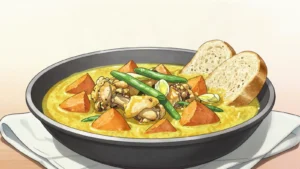
- Num banh chok samlor kari swaps the green gravy for a red coconut curry with sweet potato, common in the north.
- A Siem Reap version tops the noodles with samlor prahok, a much saltier, blunter gravy.
History
Fermented rice noodles served cold with a green fish-based curry sauce made from lemongrass, turmeric and often catfish or other freshwater fish, generally considered Cambodia’s national breakfast dish and closely associated with rural, agrarian Cambodian life, since it was traditionally sold by vendors walking village to village carrying the noodles and sauce on a shoulder pole rather than from a fixed shop. Its fermentation process for the rice noodles themselves, distinct from simple fresh rice noodles found elsewhere in Southeast Asia, gives num banh chok a particular tang and is considered a defining, technically demanding step in properly making the dish. It remains most commonly eaten in the morning, sold fresh and freshly assembled by street vendors across Cambodia’s towns and countryside alike.
Frequently asked questions
What is Num Banh Chok?
Num Banh Chok is a breakfast from Cambodia: morning rice noodles under green fish gravy and raw vegetables. Fermented rice noodles served cold with a green fish-based curry sauce made from lemongrass, turmeric and often catfish or other freshwater fish, generally considered Cambodia’s national breakfast dish and closely associated with rural, agrarian Cambodian life, since it was traditionally sold by vendors walking village to village carrying the noodles and sauce on a shoulder pole rather than from a fixed shop. Its fermentation process for the rice noodles themselves, distinct from simple fresh rice noodles found elsewhere in Southeast Asia, gives num banh chok a particular tang and is considered a defining, technically demanding step in properly making the dish. It remains most commonly eaten in the morning, sold fresh and freshly assembled by street vendors across Cambodia’s towns and countryside alike.
How long does Num Banh Chok take to make?
Num Banh Chok takes 45 min of preparation and 40 min of cooking. The recipe makes 4 servings. It is rated hard to make.
What can I substitute in Num Banh Chok?
Yes, within limits. No fresh num banh chok: use Vietnamese bun rice vermicelli, cooked, rinsed cold and drained hard. The texture is close, though it lacks the sour ferment. Banana blossom is often unavailable — shredded white cabbage with a squeeze of lime gives the right crunch, if not the astringency.
What is the most important thing to get right in Num Banh Chok?
Add the picked fish to the mortar and pound it into the paste until the mixture is fluffy and homogeneous. Pounding rather than blending is what gives the gravy its body.