
Ingredients
Batter
- 250 gplain flour
- 1egg
- 400 mlwarm milk or water
- 50 gsugar
- 1 teaspoondried yeast
- 1/2 teaspoonsalt
- 1 teaspoonground cardamom
- 1/2 teaspoonground turmeric
- a large pinch of saffron threads
- 2 tablespoonsrosewater
To cook
- a little oil or ghee
- a wide flat pan
To serve
- qishta or clotted cream
- dibs, date syrup
- or honey
- sesame seeds
Directions
- Use both together for the traditional result. Crush the saffron threads in a small bowl. Use the back of a spoon to grind them. Add a tablespoon of warm water or milk. Let it steep for at least ten minutes. They never release their full colour that way.
- Warm the milk to just above body temperature. It should feel barely warm to a clean finger. Stir the yeast and sugar into the milk. Let it stand for five minutes until it foams. Put the flour, salt and cardamom in a bowl.
- Add the ground turmeric as well. Combining it needs steady whisking. Pour the yeasted milk into the flour. Whisk it as you pour to avoid lumps. Beat in the egg until combined. Add the steeped saffron and its liquid. Add the rosewater to the batter.
- Whisk it into a smooth thin batter. It should pour easily from a ladle. Add more milk if it seems thick. Thick batter gives a heavy doughy pancake. Cover the bowl over with a cloth.
- Leave it somewhere warm for an hour. It should become bubbly on the surface. Stir it gently before cooking. Cooking them takes a hot flat pan. Heat a wide flat pan over a medium heat. Too much oil gives a fried edge.
- Pour a ladle of batter into the centre. Use the back of the ladle to spread it. Work quickly before the batter sets. Aim for a thin round about twenty centimetres. Scatter sesame seeds over while still wet if you like. Slide it out onto a warm plate.
- Stack them with a cloth over the top. Serving them is done properly warm. Spread qishta or clotted cream over each one. Fold or roll them up to eat them. The batter keeps two days refrigerated.
Technique
- The batter is left to ferment briefly, which gives a slight tang beneath the saffron and cardamom.
- Turmeric is often added alongside saffron for colour, since it supplies the colour cheaply but not the aroma.
Substitutions
- Water can replace the milk entirely for a lighter pancake.
- Honey stands in for date syrup, though the flavour is quite different.
Variations
- Some cooks turn the pancakes and some cook them on one side only.
- A version scattered with sesame seeds is common.
- Similar saffron pancakes are made across the Gulf under related names.
History
A Gulf breakfast batter left to ferment briefly, giving a slight tang under the saffron.
Frequently asked questions
What is Chebab?
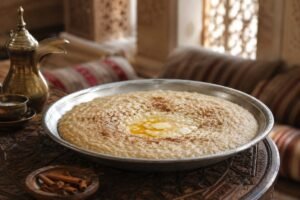
Chebab is a breakfast from Kuwait: thin saffron pancakes cooked on a hot plate, eaten with cream and date syrup. A Gulf breakfast batter left to ferment briefly, giving a slight tang under the saffron.
How long does Chebab take to make?
Chebab takes 20 minutes plus 1 hour fermenting of preparation and 20 minutes of cooking. The recipe makes about 12 pancakes. It is rated medium to make.
What can I substitute in Chebab?
Yes, within limits. Water can replace the milk entirely for a lighter pancake. Honey stands in for date syrup, though the flavour is quite different.
What is the most important thing to get right in Chebab?
Use both together for the traditional result. Crush the saffron threads in a small bowl. Use the back of a spoon to grind them. Add a tablespoon of warm water or milk. Let it steep for at least ten minutes. They never release their full colour that way.