The green leafy aromatics, split by one practical rule: the tough woody ones can take an hour of cooking, and the soft ones are destroyed by two minutes of it.
Where it comes from
Herbs are the aromatic leaves of plants, as against spices, which are seeds, barks, roots and buds. Because leaves do not dry or travel well, herb traditions stayed local far longer than spice traditions did, and they still map closely onto climate: hard-leaved Mediterranean herbs on dry hillsides, soft-leaved herbs where there is water.
The division between the two matters in a kitchen more than any other classification of them. Rosemary, thyme, bay, sage and oregano hold their oils under heat; basil, coriander, parsley, dill, mint and chives lose them almost immediately.
Varieties
- Hard herbs — Rosemary, thyme, bay, sage, oregano, marjoram. Added early, cooked long, and often removed.
- Soft herbs — Parsley, coriander, basil, dill, chervil, tarragon, chives. Added at the very end, or raw.
- Herbs used as vegetables — Persian sabzi and Georgian herb dishes use coriander, dill and parsley by the handful rather than the sprig — a different scale entirely.
- Curry leaf — Not related to curry powder. Fried in oil at the start of a South Indian dish; the aroma is destroyed by drying.
- Lemongrass, pandan, makrut lime leaf — Southeast Asian aromatics, tough and infused rather than eaten.
- Epazote, hoja santa, culantro — Mexican and Caribbean herbs with no European equivalent and no real substitute.
In the kitchen
Dried soft herbs are mostly a waste of a jar — dried basil and parsley taste of hay. Dried hard herbs are legitimate and sometimes better than fresh, because drying concentrates their oils.
Coriander stalks carry more flavour than the leaves and take heat far better. They belong at the start of the dish with the onions, and the leaves at the end.
Bruising or tearing releases aroma; fine chopping with a blunt knife bruises so hard it goes bitter and black, which is the usual reason chopped basil turns unpleasant.
Choosing and keeping
Soft herbs keep like cut flowers — stems in water, loosely covered, in the fridge. Hard herbs keep for a week or two wrapped in a damp cloth.
Dishes with herbs
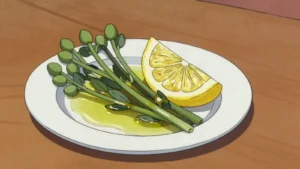 KappariCaper shoots and buds pickled in brine and vinegar, eaten as meze.
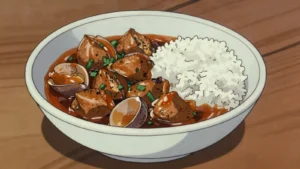 LambiConch stewed in creole seasoning
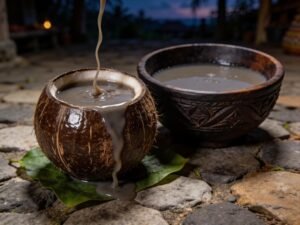 SakauPohnpei's ceremonial kava, pounded on stones and strained through hibiscus bast
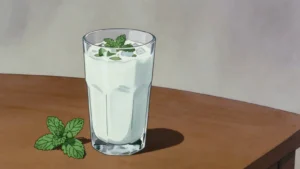 Dughsalted yoghurt drink with herbs, served cold through the summer
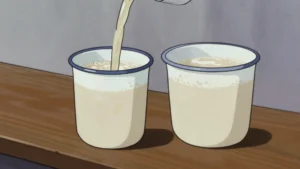 MunkoyoLightly fermented maize drink soured with sweet munkoyo roots
 ZaatarDried wild thyme mixed with sumac and sesame, eaten with oil and bread.
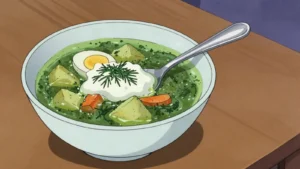 Green borschtspring sorrel soup with boiled egg, potato
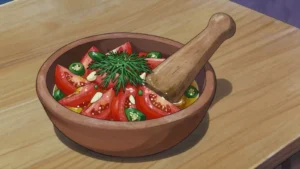 DaggaCrushed tomato, chilli, dill and garlic salad pounded in a clay bowl.
Herbs is tagged on 428 dishes from 155 countries in the atlas. These notes are written from general knowledge and carry no per-fact citation — see About.