
Ingredients
Batter
- 300 graw white rice, soaked 4 hours
- 100 gcooked rice
- 180 mlthick coconut milk
- 1 tspinstant yeast
- 2 tspsugar
- 1 tspsalt
- water, to adjust
To cook
- coconut oil, for the pan
To serve
- chicken or vegetable ishtu (stew), or sweetened coconut milk
Directions
- Drain the soaked rice and grind it with the cooked rice and the coconut milk to a very smooth batter, adding water as needed. Smoothness matters more than speed here; any grit shows in the finished appam.
- Stir in the yeast and sugar, cover, and ferment 8 hours or overnight at warm room temperature. The batter should roughly double, be full of bubbles and smell pleasantly sour.
- Stir in the salt and thin with water to the consistency of single cream. Too thick and the batter will not swirl into a lacy edge; too thin and there is no soft centre.
- Heat an appachatti or a small deep round-bottomed pan over medium heat and wipe it with coconut oil.
- Pour a small ladleful into the centre, then immediately lift the pan by both handles and swirl it once in a circle so the batter climbs the sides. Set it down: the batter runs back to pool thickly in the middle.
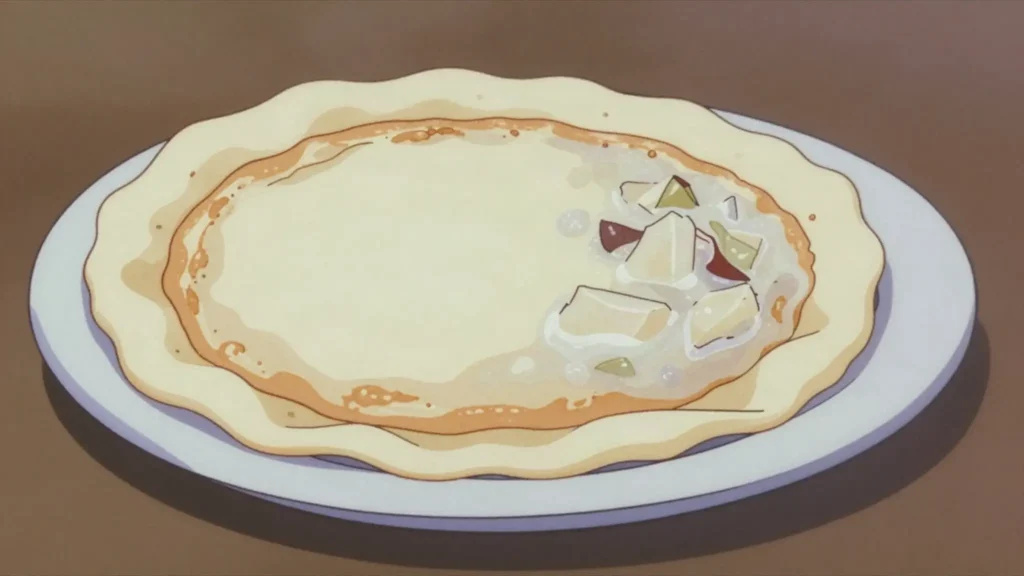
- Cover and cook 2–3 minutes over medium-low heat. Do not turn it. The edges should be lacy, crisp and just golden while the centre stays white, soft and slightly spongy.
- Lift out with a flat spatula and serve immediately, centre-up, with stew ladled into the hollow.
Technique
- One swirl, straight after pouring. Hesitate and the batter has already begun to set; swirl twice and the lace tears.
- The pan must be properly hot but the cooking heat medium-low, or the edges brown before the centre sets.
- The traditional leaven was palm toddy, which is why yeast and a little sugar reproduce the result better than a plain rice-and-lentil ferment does.
Substitutions
- 150 g of rice flour plus 50 g of semolina, whisked with the coconut milk, saves the soaking and grinding, at some cost to texture.
- A small non-stick wok is a workable substitute for an appachatti.
Variations
- Palappam, sweeter and richer with more coconut milk, for feast days.
- Vellayappam, thicker and softer throughout, without the crisp edge.
- Egg appam, with an egg cracked into the hollow before covering.
History
A bowl-shaped, lacy-edged fermented rice pancake, made from a batter of rice and coconut milk cooked in a specific curved pan, developed in Kerala and the wider South Indian coastal region, with coconut milk’s central role reflecting Kerala’s abundant coconut cultivation along its tropical coastline. Its fermentation, allowing the rice-and-coconut batter to rise naturally overnight, gives appam a light, slightly tangy character and its characteristic soft, spongy center contrasted against thin, crisp edges, a specific textural combination achieved through the curved pan’s shape concentrating the thicker batter in the center while the thinner edges cook faster and crisp up. Appam is traditionally served with a mild coconut-based stew or curry, a pairing considered central to properly enjoying the dish within Kerala’s culinary tradition.
Frequently asked questions
What is Appam?
Appam is a breakfast from India: bowl-shaped rice and coconut pancake with lacy edges, eaten with stew. A bowl-shaped, lacy-edged fermented rice pancake, made from a batter of rice and coconut milk cooked in a specific curved pan, developed in Kerala and the wider South Indian coastal region, with coconut milk’s central role reflecting Kerala’s abundant coconut cultivation along its tropical coastline. Its fermentation, allowing the rice-and-coconut batter to rise naturally overnight, gives appam a light, slightly tangy character and its characteristic soft, spongy center contrasted against thin, crisp edges, a specific textural combination achieved through the curved pan’s shape concentrating the thicker batter in the center while the thinner edges cook faster and crisp up. Appam is traditionally served with a mild coconut-based stew or curry, a pairing considered central to properly enjoying the dish within Kerala’s culinary tradition.
How long does Appam take to make?
Appam takes 20 min plus 8 hr fermenting of preparation and 25 min of cooking. The recipe makes about 14 appam. It is rated medium to make.
What can I substitute in Appam?
Yes, within limits. 150 g of rice flour plus 50 g of semolina, whisked with the coconut milk, saves the soaking and grinding, at some cost to texture. A small non-stick wok is a workable substitute for an appachatti.
What is the most important thing to get right in Appam?
Cover and cook 2–3 minutes over medium-low heat. Do not turn it. The edges should be lacy, crisp and just golden while the centre stays white, soft and slightly spongy.