
Ingredients
The chicken
- 1.2 kgchicken pieces
- on the bone
- salt and black pepper
The kroeung paste
- 4lemongrass stalks
- tender part only, chopped
- 6garlic cloves
- 4shallots
- 3cm galangal
- or ginger
- 3cm fresh turmeric
- or 2 teaspoons ground
- 4kaffir lime leaves
- shredded
- 4dried red chillies
- soaked
The rest
- 800 mlcoconut milk
- 500 gsweet potato
- cut into chunks
- 2onions, quartered
- 2 tablespoonsfish sauce
- 1 tablespoonpalm sugar
- 3 tablespoonsoil
- about 300 ml stock
To serve
- a baguette
- or thin rice noodles
- fresh herbs
Directions
- Peel them away and discard them. Chop the pale centre very finely. Lemongrass fibre never softens at all. Chop it as fine as you possibly can. Cambodian food is not generally very hot. Check it rather than guessing. Soak the dried chillies in warm water. Give them about twenty full minutes.
- Drain them and remove the seeds. Keep some seeds for more heat. Peel the tough outer layers away. Peel until you reach the pale core. Discard all the woody outer layers. Chop the pale core very finely. Put the lemongrass in a mortar.
- Add a good pinch of salt to it. Salt acts as an abrasive here. It helps break the fibres down. Add the salt right at the start. Pound the lemongrass thoroughly first. Pound it before anything else goes in. Work it until it breaks right down. That takes several full minutes. Add the galangal and the turmeric. Add the garlic and the shallots. Add the tougher things before the softer.
- Shred the kaffir lime leaves finely. Pound them into the whole paste. Remove the tough central stem first. That central stem never breaks down. Shred the leaf either side of it. Pound all the soaked chillies in. It should turn deep orange-red.
- Keep pounding until it is smooth. Judging the paste takes a look. Rub a little between your fingers. It should feel smooth rather than stringy. Keep pounding if it feels fibrous. Lemongrass fibre must break down. Add a splash of water to turn it. Season the chicken with salt and pepper.
- Heat the oil in a heavy deep pot. Brown all the chicken in batches. Do not crowd the pot at any point. Brown every side of every piece. Add the kroeung paste to the pot. Fry it for about five minutes. Do not rush that frying at all.
- Stir it constantly as it fries. Add a splash of oil if it catches. Pour in the thick coconut milk. Add the thickest part first of all. Let it bubble with the paste briefly. Return the chicken to the pot. Add the rest of the coconut milk. Add the stock and the quartered onion. It should nearly cover the chicken.
- Add more stock later if it dries. A thick curry is what is wanted. Bring it up to a gentle simmer. Keep it well below a rolling boil. Keep it barely bubbling throughout. Cooking it takes about thirty minutes. Let it simmer for about thirty minutes. Chicken on the bone takes that long.
- Add all the sweet potato chunks. Add them for the last twenty minutes. Add the fish sauce and palm sugar. Add them near the end of cooking.
- Taste it and adjust from there. It should be rich, mildly spiced and slightly sweet. Cook it for longer if there is. Judging it takes a careful look. Cook it down further if it is thin. Add more stock if it is too thick. Serving it is always done hot. Serve it with bread or rice noodles. It keeps three days refrigerated.
Technique
- Fry the kroeung paste a full five minutes until it darkens and the oil separates at the edges, which is what shows it is cooked — raw kroeung tastes harsh and grassy. It catches on the base readily, so stir constantly and scrape the bottom.
- Add the thickest coconut cream first and let it bubble with the paste: the cream splits as it heats and its oil then fries the spice paste, which deepens the flavour considerably. That splitting is deliberate here rather than a fault. Afterwards keep the whole pot below a rolling boil, since hard boiling splits the rest of the milk and toughens the chicken.
- Chicken must reach seventy-five degrees at the thickest part with clear juices and no pink at the bone; check with a thermometer away from the bone rather than guessing.
Substitutions
- Ginger stands in for galangal and ground turmeric for fresh, which is a knobbly bright orange rhizome with a cleaner flavour — and which stains hands, boards and cloth badly, so wear gloves if that concerns you.
- A blender works acceptably for the kroeung with a splash of water to turn it, giving a wetter smoother paste; pounding in a mortar crushes rather than chops and releases far more aroma.
Variations
- Pound the lemongrass thoroughly before anything else goes into the mortar, since it is the toughest ingredient, then add galangal and turmeric, then garlic and shallots which break down almost instantly — that order saves real effort. Rub a little between your fingers: it should feel smooth rather than stringy, since lemongrass fibre never softens.
- Add the sweet potato only for the last twenty minutes, since it cooks faster than the chicken and collapses entirely if added early — some breaking up thickens the curry welcomely, but total collapse does not.
- This curry is deliberately mild, being a celebration dish that children eat as well as adults; Cambodian food is generally not very hot and chilli is served separately so each person adjusts. Fish sauce brings all the salt and is invisible in the finished dish, so say clearly it is there.
History
Cambodia’s wedding curry, showing Indian and Malay influence, eaten with bread or thin rice noodles.
Frequently asked questions
What is Samlor Kari?
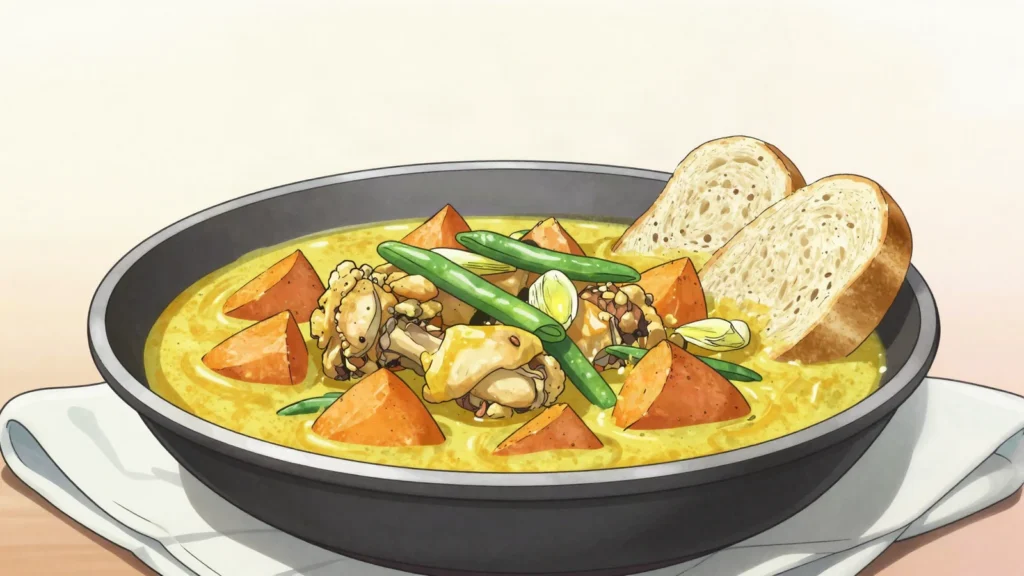
Samlor Kari is a soup & stew from Cambodia: mild coconut curry of chicken and sweet potato scented with lemongrass and turmeric. Cambodia’s wedding curry, showing Indian and Malay influence, eaten with bread or thin rice noodles.
How long does Samlor Kari take to make?
Samlor Kari takes 40 minutes of preparation and 50 minutes of cooking. The recipe makes serves 6. It is rated medium to make.
What can I substitute in Samlor Kari?
Yes, within limits. Ginger stands in for galangal and ground turmeric for fresh, which is a knobbly bright orange rhizome with a cleaner flavour — and which stains hands, boards and cloth badly, so wear gloves if that concerns you. A blender works acceptably for the kroeung with a splash of water to turn it, giving a wetter smoother paste; pounding in a mortar crushes rather than chops and releases far more aroma.
What is the most important thing to get right in Samlor Kari?
Peel them away and discard them. Chop the pale centre very finely. Lemongrass fibre never softens at all. Chop it as fine as you possibly can. Cambodian food is not generally very hot. Check it rather than guessing. Soak the dried chillies in warm water. Give them about twenty full minutes.