Dough cut, pulled, pressed or shaved into strands — a category defined by shape rather than by any one grain, and invented separately in more than one place.
Where it comes from
Wheat noodles are old in China and the archaeological record for grain noodles there is the earliest anywhere. Pasta developed in the Mediterranean around durum wheat, whose hardness suits extrusion and drying. Rice, buckwheat, mung bean and sweet potato starch noodles all developed where those crops grew.
The techniques are genuinely different, not variations: Italian pasta is rolled or extruded, Chinese lamian is pulled from a single lump, Japanese soba is rolled and cut, and glass noodles are made by setting a starch gel and cutting it.
Varieties
- Durum pasta — Extruded or rolled from semolina and water, dried hard. Holds bite because durum protein is strong and the drying is slow.
- Egg pasta and egg noodles — Softer, richer, rolled thin. Fresh rather than dried in most traditions.
- Wheat-alkaline noodles — Ramen, lye-water noodles. Alkaline salts make them yellow, springy and slippery.
- Soba — Buckwheat, sometimes cut with wheat for strength. Nutty, and served hot or cold.
- Rice noodles — From flat wide sheets to fine vermicelli. Soften in hot water rather than boiling hard.
- Glass / cellophane noodles — Mung bean or sweet potato starch. Turn transparent, stay slippery, absorb whatever they are cooked in.
In the kitchen
Dried durum pasta wants a lot of hard-boiling water and salt; rice noodles want a soak or a brief dip and will turn to paste if boiled like pasta. Treating one like the other is the commonest noodle failure.
Starchy pasta water is an ingredient, not waste — it is what lets a sauce cling instead of sliding off.
Dishes with noodles
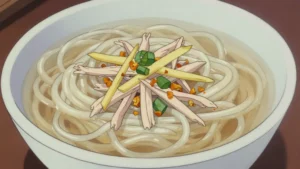 Khao Piak SenChewy tapioca-rice noodles in gingery chicken broth
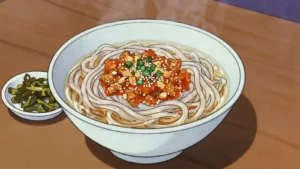 Shan NoodlesRice noodles with garlicky chicken-tomato sauce and pickled greens
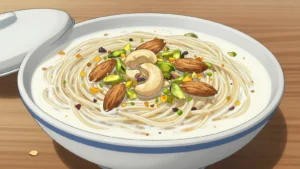 ShemaiSweet vermicelli in milk, essential for Eid mornings
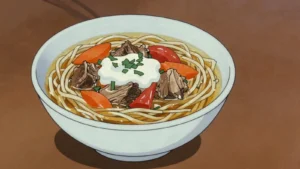 UgroHand-cut thin noodles simmered in meat broth with herbs and sour milk.
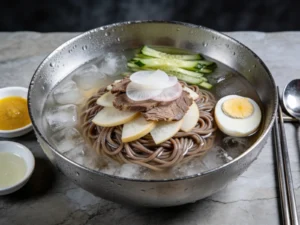 Pyongyang NaengmyeonChewy buckwheat noodles in icy beef-radish broth, the capital's signature dish
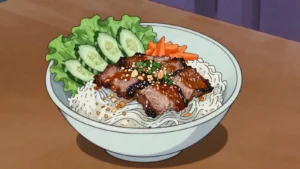 Bun Thit NuongRice vermicelli bowl with charred pork, herbs and nuoc cham
 PhoBeef or chicken rice-noodle soup in star-anise scented broth
 AushNoodle soup with beans, yoghurt and dried mint
Noodles is tagged on 143 dishes from 65 countries in the atlas. These notes are written from general knowledge and carry no per-fact citation — see About.