The white liquid pressed from grated coconut flesh soaked in water — not the water inside the nut — the dairy of the tropics: the body of Thai and Malaysian curries, of Indian and Sri Lankan gravies, of Caribbean rice and Brazilian moqueca, and the cream of a hundred desserts.
Where it comes from
Wherever the coconut palm grows, someone worked out that grating the mature flesh, soaking it in warm water and squeezing gives a rich white milk, and that a second soaking gives a thinner one. The first, thick pressing is coconut cream; the second and third are coconut milk; the clear liquid inside a young coconut is coconut water and a different thing. South India, Sri Lanka, Southeast Asia, the Pacific, coastal East and West Africa, the Caribbean and coastal Brazil all built cooking on it, usually in places where dairy cattle did not thrive.
It behaves in the pan unlike dairy: it splits when boiled hard, releasing its oil — which Thai and Malaysian cooks do deliberately, frying the curry paste in the separated oil before adding the rest — and it thickens as it reduces. Its fat is saturated and solidifies when cold, so a tin often has a thick white layer on top and thin liquid below; both are the same product. Tinned coconut milk made Southeast Asian cooking possible in temperate kitchens, and a good tin is nearly as good as fresh.
Varieties
- Coconut cream — The first thick pressing, or the solid top of a tin; 20–25% fat. For frying curry pastes and for desserts.
- Coconut milk (full-fat) — Around 17% fat in a good tin. The standard for curries, rice and soups.
- Light coconut milk — Diluted; thin and often watery. Not worth buying — dilute full-fat yourself.
- Creamed coconut (block) — Dehydrated coconut flesh in a hard block; dissolved in hot water to make milk of any strength.
- Coconut milk powder — Spray-dried; convenient for small quantities and for thickening.
- Coconut water — The clear liquid from a green coconut; a drink, not a cooking ingredient.
In the kitchen
For a Thai curry, spoon the thick cream from the top of the tin into a hot pan and fry it until the oil separates and glistens, then fry the curry paste in that oil until fragrant before adding the thin milk and everything else. For a gentle curry or a rice, add it whole and simmer without a hard boil. Do not stir constantly; do not cover, which makes it split.
Coconut milk pairs with lemongrass, galangal, lime and chilli (Thailand); with curry leaf, mustard seed and turmeric (Kerala, Sri Lanka); with allspice, thyme and Scotch bonnet (Caribbean rice and peas); with palm oil and coriander (Bahia). Sweet, it sets with sugar and rice or tapioca into a hundred puddings, and whipped chilled coconut cream stands in for dairy cream.
Choosing and keeping
Buy full-fat tinned coconut milk with the fewest ingredients — coconut and water, perhaps a stabiliser; brands vary widely in thickness and flavour, and Thai brands are usually the best. Shake the tin if the recipe wants it mixed; do not if it wants the cream skimmed off.
Unopened tins keep for years. Opened, decant and refrigerate for three or four days, or freeze in portions — it separates on thawing but recombines when heated. Fresh coconut milk spoils within a day.
Dishes with coconut milk
 Roti CanaiFlaky flipped flatbread dipped in dhal or curry, mamak staple
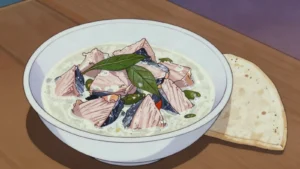 Kandu KukulhuTuna simmered in coconut milk with curry leaves, chilli and pandan
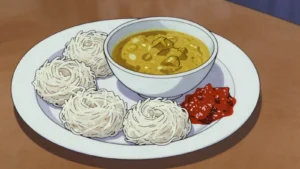 String HoppersSteamed rice-noodle nests with dhal curry and coconut sambol
 Sanwin MakinBaked semolina cake with coconut milk and poppy seeds
 Mandasifried dough puffs sold at markets with tea
 NamambeTahitian chestnut boiled in its pod; floury and mild, eaten by hand.
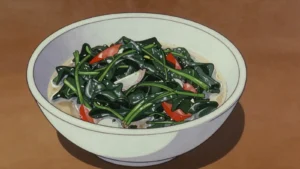 MchichaAmaranth leaves stewed with tomato, onion and often coconut milk
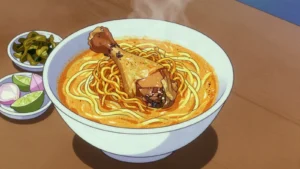 Khao SoiChiang Mai coconut curry noodles topped with crispy noodles and pickles
Coconut milk and cream is tagged on 366 dishes from 78 countries in the atlas. These notes are written from general knowledge and carry no per-fact citation — see About.