
Ingredients
Mussels
- 4 kglive mussels (1 kg per person, Zeeland or bouchot), scrubbed and de-bearded
Marinière base
- 80 gbutter
- 3large onions, finely chopped
- 4celery sticks with their leaves, finely sliced
- 4garlic cloves, sliced
- 300 mldry white wine (Muscadet or a dry Riesling)
- 1 tspcoarsely cracked black pepper
- 3bay leaves
- 4 sprigsthyme
- 40 gflat-leaf parsley, chopped
To serve
- Belgian frites (see the fries recipe), 1.5 kg potatoes’ worth
- 250 gthick egg-yolk mayonnaise
- 1lemon, in wedges
- crusty bread
Directions
- Sort the mussels in a sink of cold water: pull off the beards, scrub off barnacles, and throw away any that are cracked or that stay open after a sharp tap on the counter.
- Have the frites blanched and resting before you start the mussels — the mussels take eight minutes and will not wait.
- Melt the butter in a very large pot over medium heat and sweat the onions, celery and garlic for 8–10 minutes until completely soft but not coloured. Belgian moules use far more onion and celery than the French version.
- Add the bay, thyme, cracked pepper and wine, raise the heat and boil hard for 2 minutes to drive off the raw alcohol.
- Tip in all the mussels at once, clamp the lid on and cook over the highest heat for 4–6 minutes, lifting the pot and shaking it hard twice so the ones on top swap with the ones on the bottom.
- They are done the moment the shells have opened wide and the meat has shrunk slightly from the rim and turned opaque. Take the pot off the heat immediately; another minute makes them shrivel and toughen.
- Discard any that stayed firmly shut. Stir in the parsley and taste the liquor for salt — usually none is needed, as the mussels bring their own.
- Do the second fry of the frites at 180°C (350°F) while the mussels rest for a minute, and salt them at once.
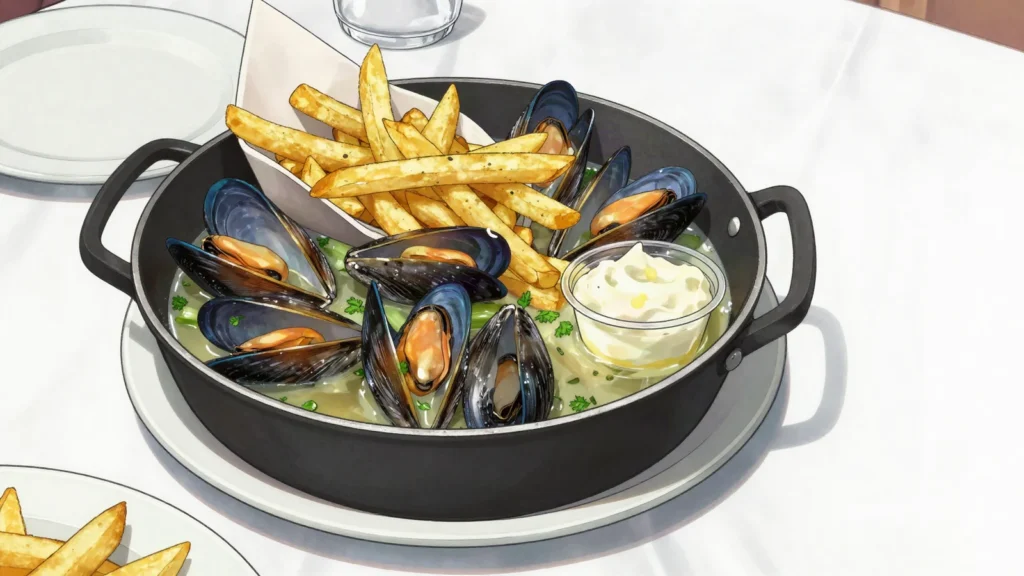
- Serve the mussels in the cooking pot with the lid inverted for empty shells, the frites in a separate dish so they stay crisp, and mayonnaise on the side. Use an empty pair of shells as tongs to pick out the rest, then drink the liquor from a spoon.
Technique
- The mussel season in Belgium runs roughly September to February, when the Zeeland mussels are fattest; out of season they are thin and not worth cooking.
- One kilo a head sounds absurd and is exactly correct — most of the weight is shell.
- A mussel that will not open after cooking was probably dead beforehand. Discard it rather than forcing it. Conversely, mussels that are open before cooking but close when tapped are alive and fine.
- Do not add cream to a marinière. Cream belongs to moules a la crème, which is a different item on the same menu.
Substitutions
- No dry white wine: use 300 ml of a Belgian witbier, which is the local moules à la bière version and works beautifully.
- Farmed rope-grown mussels need very little cleaning and are the practical choice; wild mussels need serious scrubbing.
Variations
- Moules nature: no wine at all, just butter, onion, celery and pepper, cooked in the mussels’ own liquor. The Belgian purist’s order.
- Moules a l’ail, finished with a heavy amount of sliced garlic and a splash of cream, or moules au roquefort, with 100 g of blue cheese melted into the liquor.
History
Mussels, steamed simply in white wine, celery and onion, served alongside a heaping portion of Belgian fries, developed in Belgium from two separately established local traditions: mussels harvested from the North Sea and Belgium’s own particular twice-fried potato technique, producing fries with a notably crisper exterior than most other countries’ single-fried versions. The pairing of the two into one defining national combination developed gradually through Belgian restaurant and home cooking over the 1900s rather than at any single documented point, and Belgium maintains a genuine, long-running dispute with neighboring France over which country actually invented the fried potato itself, despite the dish’s now-firm association with Belgium specifically. Moules-frites remains widely considered Belgium’s national dish, traditionally served in a large pot with the shells doubling as an eating utensil.
Frequently asked questions
What is Moules-frites?
Moules-frites is a main from Belgium: mussels steamed in white wine, with fries and mayonnaise. Mussels, steamed simply in white wine, celery and onion, served alongside a heaping portion of Belgian fries, developed in Belgium from two separately established local traditions: mussels harvested from the North Sea and Belgium’s own particular twice-fried potato technique, producing fries with a notably crisper exterior than most other countries’ single-fried versions. The pairing of the two into one defining national combination developed gradually through Belgian restaurant and home cooking over the 1900s rather than at any single documented point, and Belgium maintains a genuine, long-running dispute with neighboring France over which country actually invented the fried potato itself, despite the dish’s now-firm association with Belgium specifically. Moules-frites remains widely considered Belgium’s national dish, traditionally served in a large pot with the shells doubling as an eating utensil.
How long does Moules-frites take to make?
Moules-frites takes 30 min of preparation and 20 min of cooking. The recipe makes 4 servings. It is rated medium to make.
What can I substitute in Moules-frites?
Yes, within limits. No dry white wine: use 300 ml of a Belgian witbier, which is the local moules à la bière version and works beautifully. Farmed rope-grown mussels need very little cleaning and are the practical choice; wild mussels need serious scrubbing.
What is the most important thing to get right in Moules-frites?
A mussel that will not open after cooking was probably dead beforehand. Discard it rather than forcing it. Conversely, mussels that are open before cooking but close when tapped are alive and fine.