A small-leaved Mediterranean shrub with a warm, dry, slightly minty scent — the woody herb most tolerant of long cooking, and the backbone of stocks, stews and roasts from Provence to the Caribbean.
Where it comes from
Thyme grows wild on dry hillsides around the Mediterranean and has been in the kitchen since the Greeks. It is one of the three herbs in a bouquet garni with bay and parsley, the principal flavour of herbes de Provence, the herb of French braises and roasted birds, and — carried by colonists — the herb of Jamaican jerk, Creole gumbo and the English farmhouse kitchen. Its oil, thymol, is an antiseptic, which is why it also turned up in embalming and in mouthwash.
The tiny leaves strip easily from the woody stems once the sprig is dry; fresh, the stems can go in whole and be pulled out later. Unlike soft herbs, thyme gains from cooking — its flavour opens up over an hour in a pot — and it dries better than almost any other herb, keeping most of its character.
Varieties
- Common (garden) thyme — The standard cooking thyme. Small grey-green leaves, warm and savoury.
- Lemon thyme — The same shape with a clear lemon scent from a different oil. Good with fish and chicken; softer in a stew.
- Wild thyme (serpolet) — Low, creeping, intensely aromatic; gathered on hillsides in Provence and Greece. Stronger than garden thyme.
- Za’atar (Origanum syriacum) — The Levantine hyssop that gives the za’atar blend its name — a thyme–oregano relative with the flavour of both.
- Orange and caraway thyme — Garden varieties with the named scents. Novelties, mostly.
In the kitchen
Thyme can go in at the start. Whole sprigs tied into a stock or laid under a roasting chicken; leaves stripped and chopped into a marinade or a stuffing; a few sprigs in the oil when potatoes go into the oven. It is one of the few herbs that a long braise improves rather than kills.
Strip the leaves by pulling the sprig backwards through the tines of a fork, or through pinched fingers against the direction of growth. A teaspoon of dried thyme is roughly a tablespoon of fresh leaves.
Choosing and keeping
Fresh thyme keeps a week or two in the fridge wrapped in damp paper, and longer than most herbs; it also dries well hung in a bunch in a warm room, and the dried leaves keep their flavour for a year.
Bought dried thyme should be green-grey and fragrant when rubbed. A jar that smells of dust is old.
Dishes with thyme
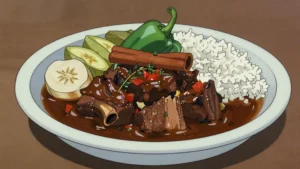 ManicouSmoked opossum stewed with rum, cloves and herbs
 Soup joumouPumpkin soup eaten January 1 to celebrate independence
 Chicken footTwisted strips of fried seasoned dough, crunchy and eaten by the bag
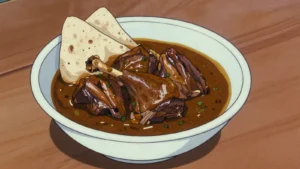 Curry duckDuck curried with green seasoning, river-lime favorite
 Mititeigrilled skinless garlicky sausages
 Callaloo soupCreamy dasheen-leaf soup, often with crab
 Dholl purisoft split-pea flatbreads with curry, rougaille and pickles; island icon
 ShitoDark hot pepper sauce of dried fish, shrimp and spices
Thyme is tagged on 217 dishes from 76 countries in the atlas. These notes are written from general knowledge and carry no per-fact citation — see About.