
Ingredients
Beef
- 1.2 kgbeef chuck or shin, in 4 cm cubes, patted dry
- 2 tspsalt
- 1 tspcoarsely ground black pepper
- 40 gplain flour, for dusting
- 50 gbutter
- 1 tbspbeef dripping or oil
Stew
- 3large onions, sliced into half-moons
- 500 mlBelgian dark abbey or Flemish brown ale (Leffe Brune, Chimay Bleue or an oud bruin)
- 250 mlbeef stock
- 2 tbspsirop de Liege (apple-pear syrup) or dark brown sugar
- 2 tbspcider vinegar
- 3bay leaves
- 4 sprigsthyme
- 6juniper berries, lightly crushed
The mustard bread
- 2thick slices of pain de campagne or dense white bread
- 3 tbspstrong Dijon or Tierenteyn mustard
To serve
- Belgian frites, or boiled potatoes
Directions
- Season the beef cubes and toss them in the flour, shaking off the excess. Brown them hard in the butter and dripping in a heavy casserole, in three batches, until each face is properly dark — this browning is most of the finished flavour.
- Set the beef aside, lower the heat, and cook the onions in the same pot for 15 minutes, scraping the base, until they are soft, sweet and taking on colour.
- Return the beef, pour in the beer and let it come to a boil, stirring the bottom clean of every brown speck.
- Add the stock, sirop de Liege, vinegar, bay, thyme and juniper. The liquid should just cover the meat.
- Spread the bread slices thickly with the mustard and lay them mustard-side down directly on the surface of the stew.
- Cover and cook in a 150°C (300°F) oven, or on the lowest possible flame, for 2 hr 15 min to 2 hr 30 min. Do not stir for the first hour.
- The bread will disintegrate into the sauce and thicken it — this is the traditional liaison, not flour or cornflour. Break up any surviving pieces with a spoon at the two-hour mark.
- It is ready when a cube of beef falls apart under light pressure from a spoon and the sauce is glossy and dark brown, coating the back of a spoon.
- Taste and balance: carbonade should be distinctly sweet-sour. Add a splash more vinegar if it is cloying, another spoon of syrup if the beer is bitter. Rest 15 minutes and serve with frites.
Technique
- Choose the beer carefully; it is half the dish. A dark abbey ale or a Flemish oud bruin gives the right malt sweetness and acidity. A hoppy IPA or a stout will turn the sauce harsh and bitter.
- The mustard-smeared bread is the authentic thickener and also the acid balance. Do not skip it and reach for cornflour.
- Carbonade is better on the second day, when the sweet-sour edges have settled into each other. Belgians routinely make it a day ahead.
- It is close to a French beef bourguignon in structure but has no wine, no mushrooms and no bacon — beer, onions and sugar are the point.
Substitutions
- No sirop de Liege: use 2 tbsp of dark brown sugar or 1 tbsp of apple butter with a squeeze of lemon.
- For a non-alcoholic version, use 500 ml of strong dark malt-based non-alcoholic beer plus an extra tablespoon of vinegar; do not replace it with stock alone.
Variations
- Stoofvlees, the Flemish name, sometimes made with a spoonful of speculoos biscuit crumbs alongside the mustard bread for extra spice.
- Carbonade with prunes, a Hainaut habit, adding 100 g of pitted prunes for the last 45 minutes.
History
A rich beef stew, braised slowly in Belgian beer rather than wine, often finished with a touch of brown sugar or gingerbread to balance the beer’s bitterness, developed in Flanders, the Dutch-speaking region of Belgium known for its strong brewing tradition. Its use of beer as the primary braising liquid, rather than the wine more typical of similar French stews like boeuf bourguignon, reflects Belgium’s own particularly significant beer culture and the practical logic of cooking with what was most abundantly and affordably brewed locally. Carbonade flamande remains one of Belgium’s most iconic traditional dishes, commonly served with the country’s distinctive twice-fried potato chips alongside it, forming a specifically Belgian meal combination.
Frequently asked questions
What is Carbonade flamande?
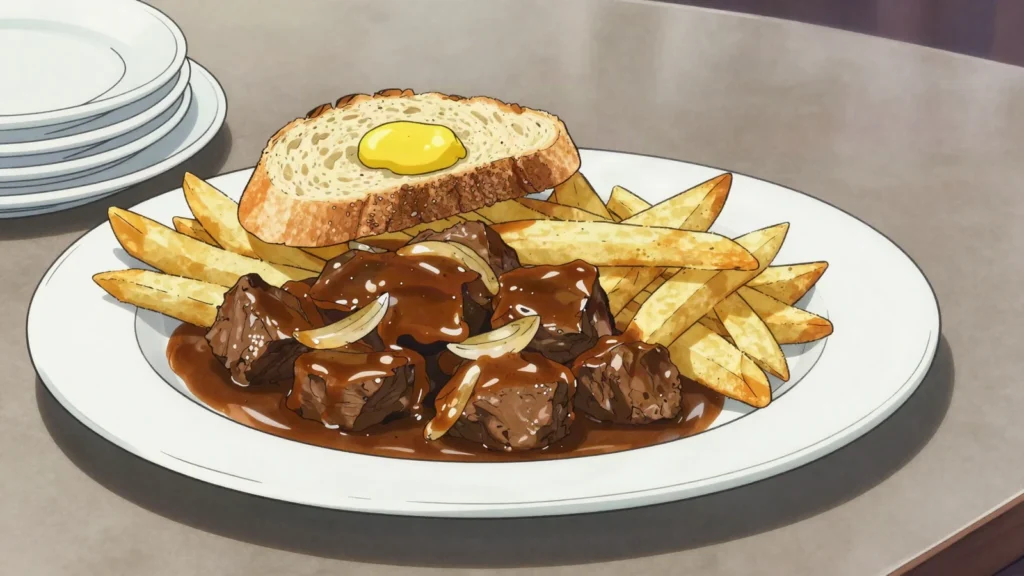
Carbonade flamande is a main from Belgium: beef stewed in dark abbey beer, slightly sweet-sour, with fries. A rich beef stew, braised slowly in Belgian beer rather than wine, often finished with a touch of brown sugar or gingerbread to balance the beer’s bitterness, developed in Flanders, the Dutch-speaking region of Belgium known for its strong brewing tradition. Its use of beer as the primary braising liquid, rather than the wine more typical of similar French stews like boeuf bourguignon, reflects Belgium’s own particularly significant beer culture and the practical logic of cooking with what was most abundantly and affordably brewed locally. Carbonade flamande remains one of Belgium’s most iconic traditional dishes, commonly served with the country’s distinctive twice-fried potato chips alongside it, forming a specifically Belgian meal combination.
How long does Carbonade flamande take to make?
Carbonade flamande takes 25 min of preparation and 2 hr 30 min of cooking. The recipe makes 4 servings. It is rated medium to make.
What can I substitute in Carbonade flamande?
Yes, within limits. No sirop de Liege: use 2 tbsp of dark brown sugar or 1 tbsp of apple butter with a squeeze of lemon. For a non-alcoholic version, use 500 ml of strong dark malt-based non-alcoholic beer plus an extra tablespoon of vinegar; do not replace it with stock alone.
What is the most important thing to get right in Carbonade flamande?
Cover and cook in a 150°C (300°F) oven, or on the lowest possible flame, for 2 hr 15 min to 2 hr 30 min. Do not stir for the first hour.