The crisp, watery, faintly bitter stalk that is one third of the French mirepoix and the Louisiana trinity — a vegetable that flavours almost everything and is rarely the point of anything.
Where it comes from
Wild celery, smallage, grows in marshy ground around the Mediterranean and was used by the Greeks and Romans as a medicine and a flavouring, not a food; the leaves were woven into victors’ garlands before laurel was. Italian gardeners bred the fleshy, mild stalk in the seventeenth century, and by the nineteenth it was a fashionable raw vegetable served in tall glasses on Victorian tables. Celeriac, the swollen root, and celery seed, from the wild plant, are the same species used differently.
Its role in cooking is aromatic. Chopped with onion and carrot it is the base of French, Italian and much of American cooking — a soffritto, a mirepoix, the trinity of gumbo with onion and green pepper — where it gives a savoury, slightly bitter depth and then disappears. Chinese cooking uses a thinner, stronger celery in stir-fries; the leaves, which most people throw away, have more flavour than the stalks.
Varieties
- Green (Pascal) celery — The standard long, pale green, crisp stalks. For cooking and eating raw.
- Golden (self-blanching) celery — Paler, milder, more tender; the traditional English variety.
- Chinese celery (kun choi) — Thin, hollow, dark stalks with a strong flavour; cooked, never raw, in stir-fries and soups.
- Celeriac (celery root) — The knobbly root variety; nutty and earthy. Mashed, in remoulade, roasted, in soups.
- Celery seed — Tiny, bitter, intensely flavoured; in pickles, Bloody Marys and celery salt.
- Celery leaves — The tops, stronger than the stalk; use like a herb in stocks and stuffings.
In the kitchen
In a base, dice it small with onion and carrot and cook slowly in fat until soft before anything else goes in; that is where its flavour is released. Whole stalks and leaves go into stocks and are strained out. Braised — cooked slowly in stock and butter — celery becomes a vegetable in its own right, soft and sweet.
Raw, it wants salt and fat: with blue cheese, with peanut butter, in a Waldorf salad with apple and walnut, or in a Sicilian salad with olives and capers. Peel the strings from the outside of old, coarse stalks with a peeler.
Choosing and keeping
Tight, crisp, pale stalks that snap; the leaves fresh and green. Limp celery revives in iced water. Wrapped in foil in the fridge a head keeps two weeks or more; in a plastic bag it goes soft quickly.
The outer stalks are stronger and stringier — for cooking; the inner heart is tender and sweet — for eating raw. Keep the leaves for stock.
Dishes with celery
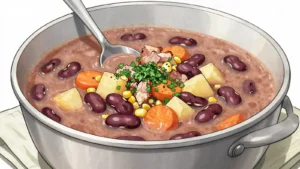 ManeštraIstrian bean and vegetable pot, cousin of minestrone
 Begova čorbacreamy chicken and okra 'bey's soup'
 Buffalo wingsFried wings tossed in cayenne-butter sauce, with blue cheese dip
 BusecaTripe stewed with white beans, tomato and chorizo, a winter dish
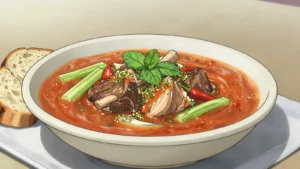 Chorba friklamb and cracked green wheat soup with tomato, coriander and mint
 CaesarVodka and clam-tomato juice cocktail with celery-salt rim
 StoempRustic mash of potatoes and vegetables, with sausage.
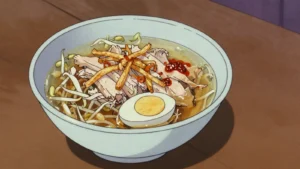 SaotoJavanese-Surinamese chicken broth with bean sprouts, egg, crisp shallots
Celery is tagged on 111 dishes from 70 countries in the atlas. These notes are written from general knowledge and carry no per-fact citation — see About.