The two-shelled molluscs of the shore — mussels, clams, cockles, oysters, scallops — the cheapest and most sustainable of all seafood, steamed open in minutes and eaten from Brittany to New England to Sydney, and raw where the water is clean.
Where it comes from
Shell middens — heaps of discarded bivalve shells — mark human settlements on every coast for tens of thousands of years; these were the first seafood and among the easiest, gathered from rocks and sand at low tide. Mussels are now farmed on ropes and poles from Galicia to New Zealand and are the most sustainable animal protein there is, filtering their food from the sea and needing nothing added. Clams are dug from sand and mud; oysters have been farmed since the Romans; scallops are dredged or dived.
Each has its dishes. Mussels in white wine and shallots — moules marinière — and with frites in Belgium; the Spanish and Portuguese with chorizo or in a cataplana; in Thai broth with lemongrass. Clams in a New England chowder, in Portuguese amêijoas à bulhão pato with garlic and coriander, in Italian spaghetti alle vongole, in Japanese miso soup, in Chinese black bean sauce. Oysters raw with lemon or shallot vinegar, or grilled, or in a Louisiana po’boy. Scallops seared hard and briefly, or raw as sashimi and ceviche. Cockles boiled and shaken in vinegar on a Welsh or Kentish seafront.
Varieties
- Blue mussel — The common European and North American mussel; rope-grown farmed mussels are clean and plump. Steamed, in sauces, stuffed.
- Green-lipped mussel — The large New Zealand mussel; meaty, good grilled or in a sauce.
- Hard-shell clams (littleneck, cherrystone, quahog, palourde) — Sweet and briny; small ones raw or in pasta, large ones in chowder.
- Razor clams — Long, thin shells; sweet meat, quickly grilled or steamed. Spanish navajas.
- Oysters (native, rock, Pacific) — Raw on the half shell; native flat oysters in winter, rock oysters year-round. Also grilled, fried and in soups.
- Scallops (king, queen) and cockles — Scallops seared or raw; small cockles boiled and pickled, or in Welsh and Italian dishes.
In the kitchen
Scrub mussels and clams, pull the beard from mussels, and discard any that are open and do not close when tapped, or that are cracked. Steam in a wide pan with a splash of wine or water, a lid on, for three to five minutes, shaking, until they open; discard any that stay firmly shut. The liquor they release is the sauce — strain it if gritty. Do not overcook: a mussel that shrinks and toughens has had two minutes too long.
Clams for pasta go into the pan with garlic and oil and open into it; the pasta finishes in the liquor. Oysters are shucked with a short, stout knife at the hinge and eaten from the shell, or dropped into a hot pan for seconds. Scallops are dried, seasoned and seared in a very hot pan for a minute or two a side until golden and barely opaque; the roe is eaten or not by taste. Purge clams in salted water for an hour to expel sand.
Choosing and keeping
Buy live, from a fishmonger, with tightly closed or closing shells, and cook within a day, stored in the fridge in a bowl under a damp cloth — never in water or a sealed bag, which suffocates them. They should smell of the sea. Cooked shellfish keeps a day.
Farmed rope-grown mussels are cleaner and less gritty than wild; frozen cooked mussels and clams are acceptable for sauces. Oysters keep a week live, cup side down, cold; do not eat a dead or dry one. Shellfish from clean, monitored waters is the safety rule for anything raw.
Dishes with mussel
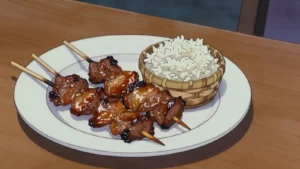 Moo PingSweet-garlicky grilled pork skewers, breakfast with sticky rice
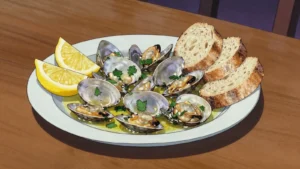 Amêijoas à Bulhão Patoclams in garlic, coriander and white wine
 SushiVinegared rice with raw fish or seafood, as nigiri or rolls
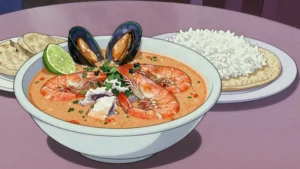 MariscadaCreamy seafood soup loaded with shellfish
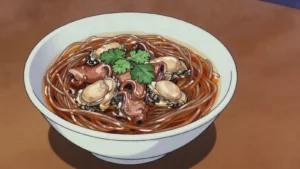 Oyster VermicelliThick bonito broth with thin wheat noodles, oysters and pork intestine
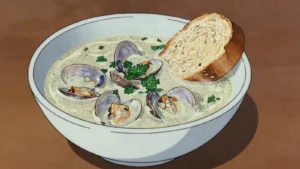 Soup tektekBroth of tiny wedge clams with garlic, thyme and a little cream
 Bo La LotMinced beef rolled in wild betel leaf and grilled until the leaf blackens
 YakisobaWheat noodles griddled with cabbage, pork and sweet-savoury sauce.
Mussels, clams and the bivalves is tagged on 96 dishes from 43 countries in the atlas. These notes are written from general knowledge and carry no per-fact citation — see About.