
Ingredients
Potatoes
- 1.5 kgBintje potatoes (or another floury variety), peeled
- cold water, for soaking
- fine salt, to finish
Frying fat
- 2 kgbeef tallow (blanc de boeuf / ossewit), or 2 litres of a neutral oil
Sauces, to serve
- 200 gthick mayonnaise (egg-yolk based, not runny)
- 100 gsauce andalouse (mayonnaise with tomato paste and finely diced sweet pepper)
- 100 gsauce samourai (mayonnaise with harissa)
- paper cones and small wooden forks
Directions
- Cut the potatoes into batons a full 1 cm to 1.3 cm square — Belgian frites are noticeably thicker than French fries, which is what lets the inside stay fluffy.
- Soak the cut potatoes in cold water for 15 minutes to wash off surface starch, then drain and dry them completely in a clean cloth. Wet potato in hot fat is dangerous and gives limp frites.
- Melt the beef tallow in a deep fryer or heavy pot and bring it to 140–150°C (275–300°F). Never fill the pot more than half full.
- Blanch the frites in batches for 6–8 minutes at this low temperature. They should go floppy and pale, cooked right through, with no colour at all. Test one: it should bend without snapping.
- Lift them out, spread them on a rack and let them cool for at least 20 minutes, ideally an hour. This rest is what sets the crust in the second fry.
- Raise the fat to 175–180°C (350–350°F). Fry the blanched potatoes in small batches for 2–3 minutes until deep gold, rigid and audibly crisp when knocked against the basket.
- Drain for a few seconds, tip into a bowl, and salt immediately with fine salt while they are still glistening, tossing so it sticks.
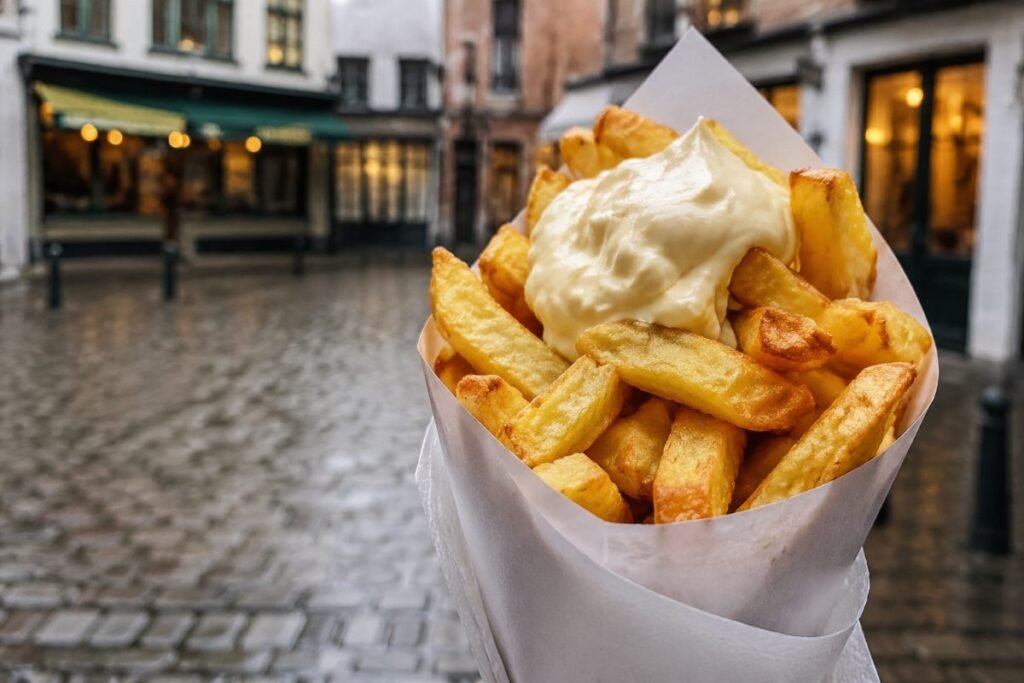
- Pile into a paper cone, load a heavy spoonful of sauce on top, stick in a small wooden fork and eat standing up.
Technique
- Two fries are non-negotiable: the first cooks the potato, the second builds the crust. Doing it in one go gives a fry that is either raw inside or burnt outside.
- Beef tallow is the traditional and legally defended fat at a Belgian friterie; it gives a savoury depth that oil cannot match. Vegetarians should be told which fat was used.
- Bintje is the Belgian potato of choice: floury enough to go fluffy, low enough in sugar not to burn. Waxy or new potatoes will never work.
- Frites are Belgian, not French, and the frituur or fritkot serving them is protected as national cultural heritage.
Substitutions
- For a vegetarian version, fry in sunflower or rapeseed oil at exactly the same temperatures; the texture is identical, the flavour is cleaner and less rich.
- No Bintje: Agria, Maris Piper or Russet all fry well. Avoid Charlotte, Nicola and other salad potatoes.
Variations
- Frites with stoofvleessaus, the gravy from a carbonade ladled over the cone, sold at almost every fritkot.
- Mitraillette: a half baguette filled with a fried cutlet or sausage, then packed with frites and sauce.
History
Twice-fried potato strips, first fried at a lower temperature to cook through, then fried again at a higher temperature to achieve a distinctively crisp exterior, a specific two-stage technique that Belgium claims to have originated, contesting France’s more internationally recognized association with the French fry. One popular but historically disputed Belgian legend traces the dish’s invention to poor villagers along the Meuse River who fried potato in place of small fish during a harsh winter when the river had frozen over, though this specific origin story is not fully verified by historians. Belgian fries are traditionally served in a paper cone with mayonnaise rather than ketchup, sold from dedicated stands called friteries found throughout the country.
Frequently asked questions
What is Belgian fries?
Belgian fries is a street food from Belgium: twice-fried chips in a paper cone with thick sauces. Twice-fried potato strips, first fried at a lower temperature to cook through, then fried again at a higher temperature to achieve a distinctively crisp exterior, a specific two-stage technique that Belgium claims to have originated, contesting France’s more internationally recognized association with the French fry. One popular but historically disputed Belgian legend traces the dish’s invention to poor villagers along the Meuse River who fried potato in place of small fish during a harsh winter when the river had frozen over, though this specific origin story is not fully verified by historians. Belgian fries are traditionally served in a paper cone with mayonnaise rather than ketchup, sold from dedicated stands called friteries found throughout the country.
How long does Belgian fries take to make?
Belgian fries takes 20 min of preparation and 25 min of cooking. The recipe makes 4 servings. It is rated medium to make.
What can I substitute in Belgian fries?
Yes, within limits. For a vegetarian version, fry in sunflower or rapeseed oil at exactly the same temperatures; the texture is identical, the flavour is cleaner and less rich. No Bintje: Agria, Maris Piper or Russet all fry well. Avoid Charlotte, Nicola and other salad potatoes.
What is the most important thing to get right in Belgian fries?
Melt the beef tallow in a deep fryer or heavy pot and bring it to 140–150°C (275–300°F). Never fill the pot more than half full.