
Ingredients
What to buy
- straight lambic, on draught
- in a traditional Brussels café
- rare outside the region
- or a bottled gueuze
- which is blended lambic
- Cantillon, Boon, 3 Fonteinen, Girardin
- see the note on why no method is given
To serve
- at 10 to 12 degrees
- in a tumbler or a stemmed glass
- flat, from the cask
- no head to speak of
To eat with
- aged cheese
- brawn and pickles
- shrimp croquettes
- oysters
- sharp mustard and radishes
- anything rich or fatty
Directions
- Lambic is wheat beer fermented by wild airborne yeasts.
- It is sour, flat and dry. It is brewed only in the Zenne valley around Brussels.
- Now to an honest statement, which comes first.
- This entry gives no method for making lambic.
- The atlas states that plainly.
- Now to the reason, and the atlas will be precise about it.
- The atlas states that plainly.
- Now to what the reason is not.
- It is not a safety reason. The atlas states that firmly.
- Now to why that matters to say.
- Beer is a hostile place for harmful bacteria.
- It is acidic, it contains alcohol and it contains hops.
- Spontaneously fermented beer is not a botulism risk.
- The atlas states that plainly rather than inventing a hazard.
- Now to a note about that. The atlas declines to describe several things on safety grounds.
- This is not one of them. Saying so keeps the other warnings meaningful.
- The atlas states that plainly.
- Now to what the reason actually is.
- Lambic cannot be reproduced elsewhere.
- The atlas states that plainly.
- Now to why. It is fermented by the microbes in the air of one valley.
- Those microbes live in the brewery, the beams and the barrels.
- They are a specific population built over generations.
- The atlas states that plainly.
- Now to what follows. The same recipe brewed elsewhere gives a different beer.
- That is not a failure but the definition of the thing.
- The atlas states that plainly.
- Now to the second part of the reason.
- It takes one to three years in oak barrels.
- The atlas states that plainly.
- Now to a note about that. The barrels themselves carry the culture.
- A new barrel is not the same as an old one.
- Breweries guard their barrels accordingly.
- The atlas records that plainly.
- Now to the honest summary. This is a place, a building and a span of years.
- It is not a recipe. The atlas states that plainly.
- Now to what the atlas gives instead.
- It records what lambic is and how it is made.
- It records how to buy it and how to drink it.
- That is the honest thing to give.
- The atlas states that plainly.
- Now to the place. The Zenne valley and the Pajottenland lie southwest of Brussels.
- The atlas records that plainly.
- Now to a note about that. It is farmland and small towns.
- The breweries are small and old.
- The atlas records that plainly.
- Now to the grain. Lambic uses unmalted wheat alongside barley malt.
- Roughly a third wheat is usual.
- The atlas records that plainly.
- Now to the hops, which are unusual.
- Lambic uses aged hops. The atlas states that plainly.
- Now to what that means. The hops are two or three years old.
- They have lost most of their bitterness and aroma.
- The atlas records that plainly.
- Now to why. Hops are used here as a preservative rather than a flavour.
- Aged hops still resist bacteria.
- They no longer make the beer bitter.
- The atlas states that plainly.
- Now to a note about the smell of them.
- Aged hops smell cheesy. That is expected rather than a fault.
- The atlas records that plainly.
- Now to the coolship. The wort is run into a coolship.
- The atlas records that plainly.
- Now to what that is. A koelschip is a wide shallow open vessel.
- It sits in a loft with louvred windows.
- The atlas records that plainly.
- Now to what it does. The hot wort cools overnight in the open air.
- Airborne yeasts and bacteria settle into it.
- That is the inoculation. The atlas states that plainly.
- Now to a note about that. Nothing is added.
- No cultured yeast goes in at all.
- That is what spontaneous fermentation means.
- The atlas states that plainly.
- Now to the season. Lambic is brewed only in the cold months.
- Roughly October to April. The atlas records that plainly.
- Now to why. Summer air carries the wrong organisms.
- Summer nights are too warm to cool the wort properly.
- The atlas states that plainly.
- Now to a note about that. That seasonality is genuine and it is still observed.
- It is not romanticism. The atlas states that plainly.
- Now to the organisms. Saccharomyces does the initial alcoholic fermentation.
- Brettanomyces works over months and years.
- Lactobacillus and Pediococcus produce the sourness.
- The atlas records that plainly.
- Now to a note about Brettanomyces.
- It is the yeast that gives lambic its character.
- It produces barnyard, leather and horse-blanket notes.
- Those descriptions sound unappealing and the beer is not.
- The atlas records that plainly.
- Now to a note about that vocabulary.
- Beer writers use those words seriously.
- They are describing something real.
- The atlas records the vocabulary without endorsing it.
- Now to the barrels. The beer goes into oak or chestnut barrels.
- Many are old wine or port casks.
- The atlas records that plainly.
- Now to a note about the wood. The barrels are not there for oak flavour.
- They are there to hold the culture and to let a little air through.
- The atlas states that plainly.
- Now to the ageing. One year, two years, three years.
- Each barrel develops differently.
- The atlas records that plainly.
- Now to a note about that. No two barrels come out the same.
- That variation is why blending exists.
- The atlas states that plainly.
- Now to blending. Most lambic is blended into gueuze.
- The atlas holds a separate entry for that.
- The atlas cross-references rather than repeating.
- Now to straight lambic. Unblended lambic is drunk in the region.
- The atlas states that plainly.
- Now to what it is like. It is flat, with almost no carbonation.
- It is sour and dry. It is cloudy and pale gold.
- The atlas records that plainly.
- Now to an honest note about it.
- It is a demanding drink. It tastes nothing like beer as most people know it.
- First-time drinkers often dislike it.
- The atlas says that rather than pretending.
- Now to a fair addition. It rewards persistence.
- It is complex and it is not sweet.
- The atlas records that plainly.
- Now to where to drink it. In old Brussels cafés that serve it from the cask.
- In the breweries themselves. The atlas records that plainly.
- Now to a note about availability.
- Straight lambic rarely travels.
- It is flat, so it does not bottle in the ordinary way.
- Gueuze is what you will find abroad.
- The atlas states that plainly.
- Now to serving it. Ten to twelve degrees.
- In a tumbler or a stemmed glass.
- The atlas records that plainly.
- Now to why not colder. Cold flattens the aroma and sharpens the acid unpleasantly.
- The atlas states that plainly.
- Now to a note about the head. There is no head.
- That is correct. Do not expect one.
- The atlas states that plainly.
- Now to what it goes with. Aged cheese.
- Brawn and pickles. Shrimp croquettes.
- Oysters. The atlas records that plainly.
- Now to why. Acidity cuts fat exactly as a sharp wine does.
- That is what this beer is for at a table.
- The atlas states that plainly.
- Now to a note about that. Lambic works as a food drink far better than most beer.
- It functions where a dry white wine would.
- The atlas records that plainly.
- Now to the derived beers. Gueuze is blended lambic refermented in the bottle.
- Kriek is lambic steeped with cherries.
- Faro is lambic sweetened with candy sugar.
- Framboise uses raspberries. The atlas holds separate entries for those.
- Now to a note about sweetened versions.
- Many commercial fruit lambics are heavily sweetened.
- Some are sweetened after filtering out the live culture.
- Those taste like soft drinks. The atlas records that plainly and without disparagement.
- Now to how to tell. Look for oude or vieille on the label.
- Those words mark the traditional unsweetened kind.
- The atlas states that plainly.
- Now to a note about that. Oude Geuze and Oude Kriek carry a protected traditional designation.
- That designation exists precisely to separate the two.
- The atlas records that plainly.
- Now to alcohol. This is an alcoholic drink.
- Lambic is usually around five percent.
- The atlas records that plainly.
- Now to who should not drink it.
- Anyone pregnant should not drink alcohol.
- Anyone driving should not. Anyone who does not want to should not be pressed.
- The atlas states that plainly and moves on.
- Now to keeping it. Straight lambic from the cask is drunk fresh.
- Bottled gueuze keeps for years and improves.
- Store bottles upright, cool and dark.
- The atlas states that plainly.
Technique
- The reason for no method is not safety, and the atlas is explicit about that. Beer is a hostile place for harmful bacteria — acidic, alcoholic and hopped — and spontaneously fermented beer is not a botulism risk. Saying so keeps the atlas’s other warnings meaningful.
- The reason is that lambic cannot be reproduced elsewhere. It is fermented by the microbes in the air of one valley, living in the brewery, the beams and the barrels as a specific population built over generations. The same recipe brewed elsewhere gives a different beer, which is the definition of the thing rather than a failure. It then takes one to three years in oak. This is a place, a building and a span of years, not a recipe.
- Lambic uses aged hops, two or three years old, which have lost their bitterness and aroma. Hops are used here as a preservative rather than a flavour, and aged hops still resist bacteria without making the beer bitter. They smell cheesy, which is expected.
- The wort cools overnight in a koelschip — a wide shallow open vessel in a louvred loft — and airborne yeasts and bacteria settle into it. Nothing is added and no cultured yeast goes in at all. That is what spontaneous fermentation means.
- It is brewed only in the cold months, roughly October to April, because summer air carries the wrong organisms and summer nights are too warm to cool the wort. That seasonality is genuine and still observed rather than romanticism.
- Saccharomyces does the initial fermentation, Brettanomyces works over months and years, and Lactobacillus and Pediococcus produce the sourness. Brettanomyces gives the barnyard, leather and horse-blanket notes — descriptions that sound unappealing for a beer that is not.
- The barrels are not there for oak flavour but to hold the culture and let a little air through. No two come out the same, and that variation is precisely why blending exists.
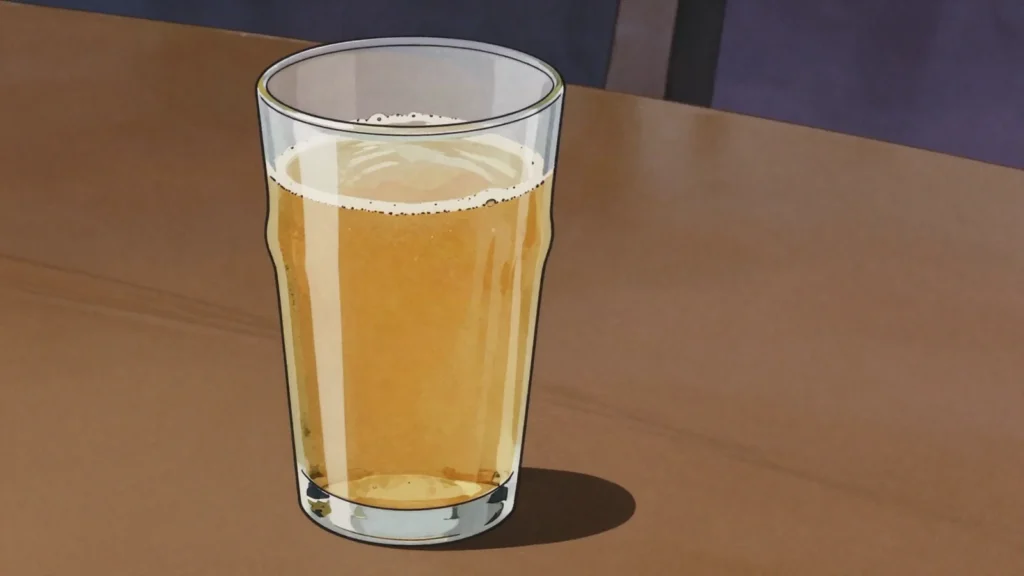
- Straight lambic is flat with no head, sour, dry and cloudy. That is correct — do not expect a head. It is a demanding drink that tastes nothing like beer as most people know it, and first-time drinkers often dislike it; the atlas says so rather than pretending.
- Serve it at ten to twelve degrees. Cold flattens the aroma and sharpens the acid unpleasantly.
- Straight lambic rarely travels, being flat and therefore hard to bottle conventionally. Gueuze is what you will find abroad.
- Acidity cuts fat exactly as a sharp wine does, which makes lambic work as a food drink far better than most beer — it functions where a dry white would.
- Many commercial fruit lambics are heavily sweetened, sometimes after the live culture has been filtered out, and taste like soft drinks. Look for oude or vieille on the label, which marks the traditional unsweetened kind — Oude Geuze and Oude Kriek carry a protected traditional designation that exists precisely to separate the two.
- Do not drink alcohol if you are pregnant or driving.
Substitutions
- Gueuze is blended bottled lambic and is what you will actually find.
- Oude Kriek or Oude Framboise are the traditional fruit versions.
- American and other coolship beers are made in the same spirit elsewhere.
- Berliner Weisse and Gose are the German sour wheat beers.
- A dry sparkling cider fills a similar place at a table.
- Non-alcoholic kombucha shares the sourness and nothing else.
Variations
- Gueuze blends young and old lambic and refements in the bottle.
- Kriek steeps it with sour cherries.
- Framboise uses raspberries.
- Faro sweetens it with candy sugar.
- Straight lambic from the cask is the unblended original.
- Mars was the weak second-runnings beer, now largely gone.
History
Brewed only in the Zenne valley and Pajottenland around Brussels, where airborne yeasts settle in open cooling tuns; the style is centuries old.
Frequently asked questions
What is Lambic?
Lambic is a wine & spirit from Belgium: sour wheat beer fermented by wild yeasts, flat and tart. Brewed only in the Zenne valley and Pajottenland around Brussels, where airborne yeasts settle in open cooling tuns; the style is centuries old.
How long does Lambic take to make?
Lambic takes 5 minutes of preparation and none of cooking. The recipe makes buy by the bottle. It is rated easy to make.
What can I substitute in Lambic?
Yes, within limits. Gueuze is blended bottled lambic and is what you will actually find. Oude Kriek or Oude Framboise are the traditional fruit versions. American and other coolship beers are made in the same spirit elsewhere. Berliner Weisse and Gose are the German sour wheat beers. A dry sparkling cider fills a similar place at a table. Non-alcoholic kombucha shares the sourness and nothing else.
What is the most important thing to get right in Lambic?
The atlas states that plainly rather than inventing a hazard.