
Ingredients
Green curry paste (prik gaeng khiao wan)
- 15green bird’s eye chillies, stemmed
- 3long green chillies, chopped
- 2 tspcoriander seed, toasted and ground
- 1 tspcumin seed, toasted and ground
- ½ tspwhite peppercorns
- 3 tbspchopped lemongrass, tender part only
- 1 tbspchopped galangal
- 1 tspchopped kaffir lime zest
- 2 tbspchopped coriander root
- 4 tbspchopped shallot
- 3 tbspchopped garlic
- 1 tspshrimp paste (kapi), roasted
- 1 tspsalt
Curry
- 600 mlcoconut milk, unshaken, the thick cream spooned from the top
- 500 gboneless chicken thigh, sliced 1 cm thick
- 100 gpea aubergines
- 150 gThai apple aubergines, quartered and held in salted water
- 3 tbspfish sauce
- 2 tbsppalm sugar, shaved
- 6kaffir lime leaves, torn
- 1long red chilli, sliced on the diagonal
- 1large handful Thai sweet basil (horapha)
To serve
- steamed jasmine rice, or khanom jeen fermented rice noodles
- prik nam pla: 2 tbsp fish sauce with sliced chillies and lime
Directions
- Pound the paste in a granite mortar in order of hardness: salt with the chillies first, then the lemongrass, galangal and lime zest, then the coriander root, shallot and garlic, then the ground spices, and finally the kapi. Work for 20 to 30 minutes until it is a completely smooth, vivid green paste with no fibres.
- Spoon 200 ml of the thick coconut cream from the top of the tin into a wok and boil it over medium-high heat for 4 to 5 minutes, stirring, until it separates and clear oil pools at the edges. This is called cracking the cream and it is the step Western versions skip.
- Fry 4 tbsp of the paste in that separated oil for 3 to 4 minutes, pressing and stirring, until it darkens slightly and smells sweet and pungent rather than raw.
- Add the chicken and turn it in the paste for 2 minutes until coated and just sealed.
- Season now, while the mixture is concentrated: add the palm sugar and fish sauce and let them caramelise for a minute.
- Pour in the remaining coconut milk, bring to a gentle simmer and cook 5 minutes. Never let a coconut curry boil hard or it splits and turns grainy.
- Add the apple aubergines and simmer 5 minutes, then the pea aubergines and cook 3 minutes more until they are tender but still pop between the teeth.
- Add the torn lime leaves and check the balance: a Thai green curry should be salty first, then sweet, then hot, with a clear coconut richness. Adjust with fish sauce and palm sugar, not water.
- Turn off the heat and stir in the basil and sliced red chilli so the leaves wilt in the residual heat and keep their perfume.
- Serve in a bowl with jasmine rice alongside, or ladled over khanom jeen for breakfast, with prik nam pla on the table.
Technique
- Khiao wan means sweet green, which describes the colour, not the taste; the sweetness is a note within a salty, hot curry, not its dominant flavour.
- The green comes from fresh green chillies and coriander root, so the curry pales as it cooks. A neon green curry usually means added food colouring or spinach.
- Pounding by hand ruptures the cells and releases oils that a blender only bruises. If you must use a machine, add a little coconut cream to help it turn and expect a rougher paste.
Substitutions
- No fresh galangal or kaffir lime: frozen versions are far better than dried, which contribute almost nothing.
- Vegetarian green curry is standard in Thai Buddhist cooking: leave out the kapi, use light soy or fermented soybean in place of the fish sauce, and use tofu, bamboo shoot and aubergine.
- Good shop-bought paste can be improved by frying it in cracked coconut cream and adding fresh pounded lemongrass, lime zest and coriander root.
Variations
- Gaeng khiao wan gai, with chicken, the most common version.
- Gaeng khiao wan luk chin pla, with springy fish balls, sold with khanom jeen noodles.
- Gaeng khiao wan nuea, with beef shin simmered until tender, richer and darker.
History
A curry made from a paste of green chili, lemongrass, galangal and other aromatics blended with coconut milk, typically cooked with meat, fish or vegetables, documented across Thailand as one of the country’s most widely recognized curry styles, its green colour derived directly from fresh green chilies and herbs pounded into the curry paste base. Its preparation traditionally begins with a curry paste made using a mortar and pestle, a labor-intensive technique that Thai cooks have historically considered essential to achieving the full aromatic depth of the finished curry, compared to paste made using a modern blender or food processor. Green curry remains one of Thailand’s most internationally recognized dishes, closely associated with Thai cuisine’s broader reputation for balancing spice, herbs and coconut-based richness.
Frequently asked questions
What is Green Curry?
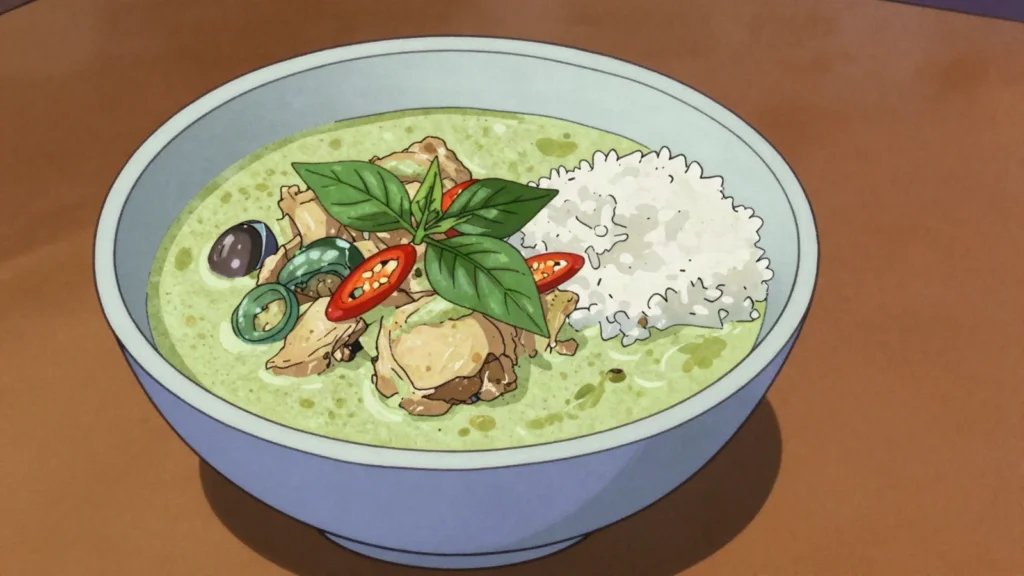
Green Curry is a main from Thailand: coconut curry of green chili paste, chicken and Thai basil. A curry made from a paste of green chili, lemongrass, galangal and other aromatics blended with coconut milk, typically cooked with meat, fish or vegetables, documented across Thailand as one of the country’s most widely recognized curry styles, its green colour derived directly from fresh green chilies and herbs pounded into the curry paste base. Its preparation traditionally begins with a curry paste made using a mortar and pestle, a labor-intensive technique that Thai cooks have historically considered essential to achieving the full aromatic depth of the finished curry, compared to paste made using a modern blender or food processor. Green curry remains one of Thailand’s most internationally recognized dishes, closely associated with Thai cuisine’s broader reputation for balancing spice, herbs and coconut-based richness.
How long does Green Curry take to make?
Green Curry takes 40 min of preparation and 25 min of cooking. The recipe makes 4 servings. It is rated medium to make.
What can I substitute in Green Curry?
Yes, within limits. No fresh galangal or kaffir lime: frozen versions are far better than dried, which contribute almost nothing. Vegetarian green curry is standard in Thai Buddhist cooking: leave out the kapi, use light soy or fermented soybean in place of the fish sauce, and use tofu, bamboo shoot and aubergine. Good shop-bought paste can be improved by frying it in cracked coconut cream and adding fresh pounded lemongrass, lime zest and coriander root.
What is the most important thing to get right in Green Curry?
Fry 4 tbsp of the paste in that separated oil for 3 to 4 minutes, pressing and stirring, until it darkens slightly and smells sweet and pungent rather than raw.