
Ingredients
Base
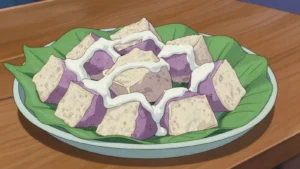
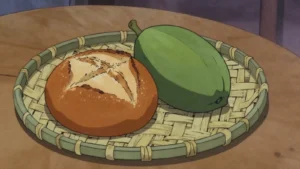
- 1.5 kgtaro, or very ripe bananas, or a mixture
Coconut
- 600 mlthick coconut cream, from fresh coconuts if possible
Sometimes
- a pinch of salt
- sugar, in sweeter versions
Equipment
- a wooden pounding board and a stone or wooden pounder
- or a heavy mortar
To serve
- at a Sunday meal, or at a feast
Directions
- Peel it, cut it into chunks and boil it until completely soft. Cook it past tender, since anything still firm will not pound smooth and leaves lumps. A knife should go in with no resistance at all.
- Pound the hot cooked taro on the board, folding it over on itself between strokes.
- Work it hot, since a cooled taro paste is stiff and will not come together. Keep the pounder and your hands wet, since the paste sticks readily.
- Pound for ten to fifteen minutes, longer than seems necessary. Stop when it is entirely smooth with no visible lumps and it stretches slightly when pulled.
- Grate the coconut, add a little warm water and squeeze it hard through a cloth. Squeeze thoroughly, since a good deal of cream stays in the flesh otherwise.
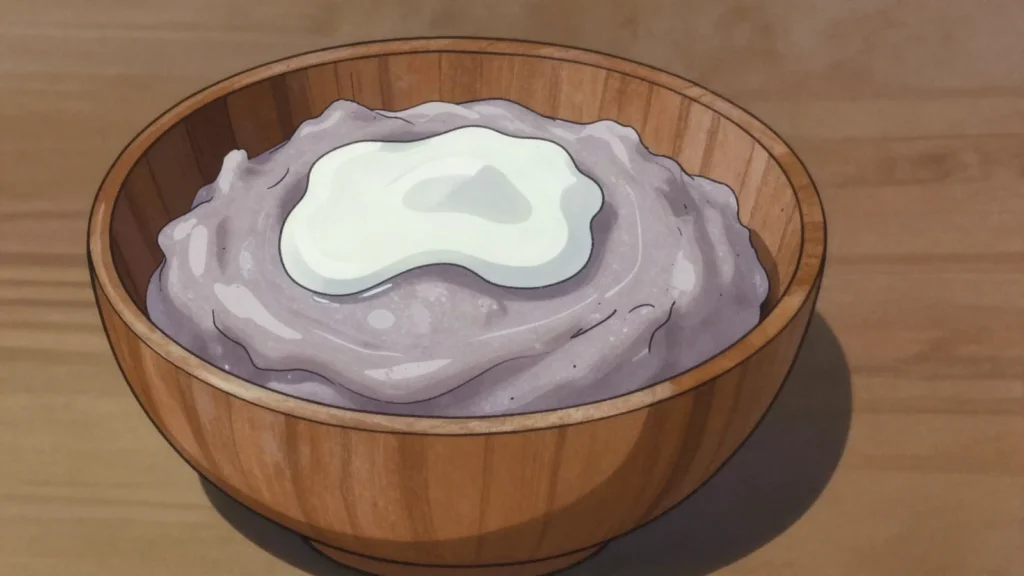
- Pour the thick coconut cream over the pounded paste and work some of it in. The dish is otherwise very plain and it needs it.
- Serve it warm, in a bowl or on a leaf, with the coconut cream poured over. It stiffens considerably as it cools and it is best warm.
Technique
- Pounding rather than mashing is what gives the smooth elastic texture.
- Raw taro irritates the skin, so peel it with gloves or oiled hands.
- Work it hot, since cooled taro paste will not come together.
Substitutions
- Ripe bananas in place of taro, which is sweeter.
- Good tinned coconut cream in place of fresh.
Variations
- Made with banana, which is sweeter and softer.
- Cooked in an earth oven for a feast.
- Made sweet, with sugar added.
History
A dish of taro leaves cooked with coconut milk, closely related to similar taro-leaf-and-coconut preparations found across the wider Pacific Islands, including Fijian rourou and Samoan palusami, reflecting a shared regional culinary pattern built around taro and coconut, two crops long central to Pacific Islander agriculture and diet across many centuries of settlement throughout Micronesia and the broader Pacific. As with related dishes elsewhere in the region, taro leaves must be cooked thoroughly rather than eaten raw due to naturally occurring compounds that irritate the mouth and throat if undercooked, a necessity that shaped the slow coconut-milk cooking method common to fafa and its regional relatives. It remains an everyday staple across Micronesian households rather than a dish reserved for specific celebrations.
Frequently asked questions
What is Fafa?
Fafa is a main from Micronesia: soft taro or banana pounded to a smooth paste and dressed with coconut cream. A dish of taro leaves cooked with coconut milk, closely related to similar taro-leaf-and-coconut preparations found across the wider Pacific Islands, including Fijian rourou and Samoan palusami, reflecting a shared regional culinary pattern built around taro and coconut, two crops long central to Pacific Islander agriculture and diet across many centuries of settlement throughout Micronesia and the broader Pacific. As with related dishes elsewhere in the region, taro leaves must be cooked thoroughly rather than eaten raw due to naturally occurring compounds that irritate the mouth and throat if undercooked, a necessity that shaped the slow coconut-milk cooking method common to fafa and its regional relatives. It remains an everyday staple across Micronesian households rather than a dish reserved for specific celebrations.
How long does Fafa take to make?
Fafa takes 30 min of preparation and 1 hr of cooking. The recipe makes 6 servings. It is rated medium to make.
What can I substitute in Fafa?
Yes, within limits. Ripe bananas in place of taro, which is sweeter. Good tinned coconut cream in place of fresh.
What is the most important thing to get right in Fafa?
Grate the coconut, add a little warm water and squeeze it hard through a cloth. Squeeze thoroughly, since a good deal of cream stays in the flesh otherwise.