The most-eaten bird on earth, and the meat that carries other flavours better than it asserts its own — which is why it appears in almost every cuisine and tastes different in each.
Where it comes from
The domestic chicken descends mainly from the red junglefowl of Southeast Asia, with some input from related species. It spread early and everywhere, kept for eggs and for the fact that a household could eat one bird in a day without preserving anything.
Almost all chicken sold now comes from fast-growing breeds slaughtered at a few weeks old. Older, slower birds — a boiling fowl, a capon, a French label rouge bird — have firmer meat and far more flavour, and need longer, wetter cooking.
Varieties
- Breast — Very lean, dries out at the moment it is done. Best brined, or cooked on the bone with the skin on.
- Thigh and leg — Darker, fattier, and almost impossible to overcook. The cut for curries, braises and grilling.
- Wings — Skin, collagen and very little meat, which is exactly why they crisp so well.
- Carcass and feet — Stock. Feet are nearly pure collagen and set a broth to jelly.
- Boiling fowl — An old laying hen. Tough roasted, superb simmered for hours, and the traditional base of a serious broth.
In the kitchen
Chicken is done at temperature, not by colour or by clear juices, and the breast is done well before the thigh. Cooking a whole bird to a safe thigh temperature guarantees a dry breast — which is the argument for spatchcocking it or jointing it and cooking the parts separately.
Skin crisps only when it is dry. Patting it and leaving it uncovered in the fridge for a few hours does more than any technique in the pan.
Choosing and keeping
Do not wash raw chicken. It does not clean it, and it aerosolises campylobacter across the sink and worktop.
Dishes with chicken
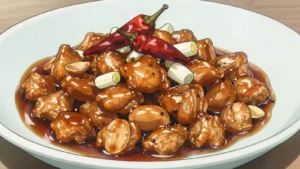 Kung Pao ChickenStir-fried diced chicken with peanuts and dried chilies in tangy Sichuan sauce
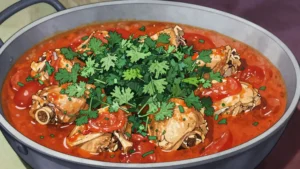 Chakhokhbilichicken stewed with tomatoes and huge handfuls of fresh herbs
 Kathi RollParatha wrapped around skewered kebab, raw onion and chutney, eaten walking
 Morog PolaoCelebratory chicken pilaf, mild and aromatic
 SalbutesPuffed fried tortillas with chicken, cabbage, tomato
 Korean Fried ChickenDouble-fried chicken glazed sweet-spicy, paired with beer and pickled radish
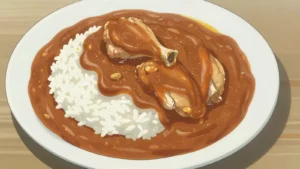 Sauce arachideCreamy peanut sauce with chicken or beef, served over rice
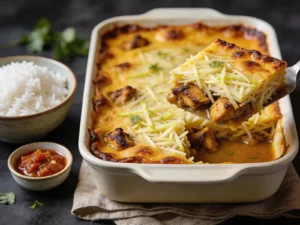 PomBaked casserole of grated pomtajer root and citrusy chicken; party centerpiece
Chicken is tagged on 239 dishes from 129 countries in the atlas. These notes are written from general knowledge and carry no per-fact citation — see About.