A fruit with thousands of named varieties that markets have narrowed to a handful, and one where cooking behaviour splits cleanly between those that hold and those that collapse.
Where it comes from
The domestic apple descends from Malus sieversii, a wild apple still growing in the mountains of Kazakhstan, and travelled west along the Silk Road, crossing with European crab apples on the way. Almaty’s name means roughly ‘father of apples’, and the forests around it are the species’ home.
Apples do not come true from seed — a pip from a good apple makes a tree bearing something else, usually worse. Every named variety is a clone, propagated by grafting, and some of them are centuries old and genetically identical to the original tree.
Varieties
- Bramley and other cookers — High acid, low sugar, and the flesh collapses to a purée. Sauce, and the filling of a British apple pie.
- Firm dessert apples — Braeburn, Granny Smith, Boskoop. Hold their shape in a tart, where a cooker would turn to liquid.
- Sweet eating apples — Gala, Fuji, Golden Delicious. Low acid, and they cook to something flat and sugary.
- Russets — Rough brown skin, dense, nutty, low water. Excellent with cheese.
- Cider apples — Bitter and tannic, close to inedible raw. Grown only for fermenting.
- Crab apples — Small, hard, very high in pectin. Jelly, and a setting aid for other jams.
In the kitchen
Whether an apple holds its shape is a property of the variety, not the recipe. A tarte tatin needs a firm apple; an apple sauce needs a cooker. Substituting one for the other is the commonest failure.
Apples brown because a damaged cell releases an enzyme that oxidises phenols. Acid slows it and heat stops it — lemon juice works, and so does dropping slices into water.
Apple skins carry most of the pectin, which is why an apple sauce made with the skins on sets and one made without stays loose.
Choosing and keeping
Apples give off ethylene, which ripens everything near them. Useful for hard avocados, ruinous for potatoes and leafy greens.
Cold and slightly humid is right. Most supermarket apples have already been in controlled storage for months.
Dishes with apple
 Boulets à la liégeoisePork-beef meatballs in sweet-sour Liège syrup sauce.
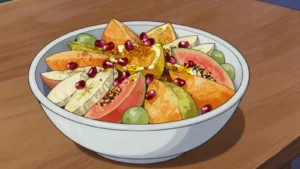 Fruit ChaatChopped seasonal fruit tossed with chaat masala, lemon and a little syrup
 Charosetpaste of fruit, nuts and wine eaten at the Passover seder
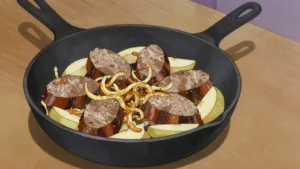 VantrabiankaLiver and buckwheat sausage, boiled then fried in slices.
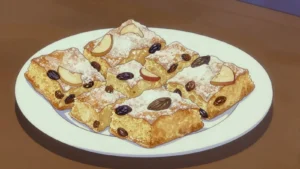 Bustrengodense cornmeal cake with apples, figs, raisins
 EnsaladaChilled fruit punch of chopped apple, pineapple and lettuce in juice
 Plăcintăfilled pastry with apple, sweet cheese or pumpkin
 Tarte TatinCaramelised upside-down apple tart, served warm.
Apple is tagged on 117 dishes from 63 countries in the atlas. These notes are written from general knowledge and carry no per-fact citation — see About.