A New World fruit that reached almost every cuisine on earth within about a century, and whose heat is a chemical defence that only mammals can feel.
Where it comes from
Chillies were domesticated in the Americas — five separate species, of which Capsicum annuum is the one behind most familiar types. Portuguese and Spanish trade carried them to Africa, India and Asia in the sixteenth century, and they were absorbed so completely that it now takes an effort to remember Sichuan, Thai, Hungarian and Indian cooking all managed without them until quite recently.
Capsaicin binds to a receptor that responds to heat, which is why chilli genuinely feels hot rather than tasting hot. Birds lack that receptor and eat chillies freely, which is exactly the point — the plant wants birds, which spread its seed intact, and not mammals, which grind it up.
Varieties
- Fresh green chillies — Grassy and sharp. Jalapeño, serrano, bird’s eye, finger chillies.
- Fresh red chillies — The same fruit ripened. Sweeter, fruitier, often hotter.
- Dried Mexican chillies — Ancho, guajillo, pasilla, chipotle. Each a specific fruit dried a specific way, and not interchangeable — chipotle is a smoked jalapeño, ancho a dried poblano.
- Kashmiri and paprika types — Grown for deep colour and little heat.
- Very hot varieties — Habanero, scotch bonnet, naga. Fruity as well as fierce, and used in tiny amounts.
- Pastes and sauces — Gochujang, harissa, sambal, doubanjiang, chilli crisp — each a whole tradition rather than a generic hot sauce.
- Aleppo, Urfa, Maras — Coarse dried Turkish flakes, mild, with raisin and tobacco notes.
In the kitchen
Most of the capsaicin is in the white pith, not the seeds. Removing the pith removes the heat and keeps the flavour, which is the whole technique behind Mexican dishes that use dried chillies by the handful and are not fiery.
Capsaicin dissolves in fat and alcohol, not water. Milk, yoghurt and coconut milk work against chilli burn; a glass of water spreads it around.
Dried chillies want toasting briefly and then soaking. Toasting too long makes them bitter, and that bitterness carries right through a sauce.
Choosing and keeping
Capsaicin stays on skin and transfers to eyes hours later. Gloves for the hot ones, or oil on your hands rather than water afterwards.
Dishes with chili
 Mangrove oysterstidal oysters boiled or grilled, dipped in lime and chili
 Ebbehspicy tangy bowl of boiled cassava, smoked fish, lime and chili broth
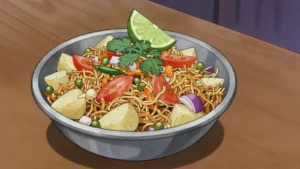 ChatpatePuffed rice tossed with noodles, lime, chilli and raw onion, mixed to order
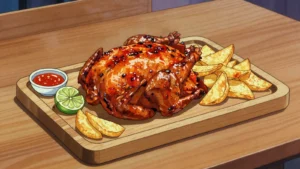 Piri-piri chickenflame-grilled chicken basted in fiery piri-piri marinade
 Mbongo tchobiInky fish stew flavoured with charred mbongo spice bark
 Nasi KatokPlain rice, fried chicken and sambal in paper; beloved cheap meal
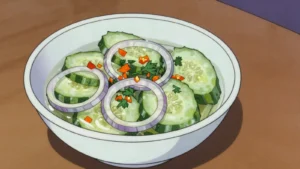 Bajan pickleCucumber, onion and hot pepper in lime and vinegar, fiercely hot
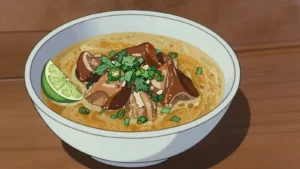 Supu ya makongoroGelatinous cow trotter broth with chili and lime, eaten at breakfast
Chili is tagged on 571 dishes from 137 countries in the atlas. These notes are written from general knowledge and carry no per-fact citation — see About.