The tiny, upright, very hot chilli of Southeast Asia and East Africa — a few of them in a mortar or a pan and the whole dish is lit.
Where it comes from
Bird’s eye is the common English name for a group of small, pointed, intensely hot chillies grown across Southeast Asia — prik kee noo in Thailand, cili padi in Malaysia, siling labuyo in the Philippines — and, under the name piri-piri, across Mozambique, Angola and southern Africa, where the Portuguese carried them in the sixteenth century. The name comes from their size and the belief that birds spread the seed; birds do, being immune to capsaicin.
They are small because they are close to the wild ancestral chilli, and the heat is concentrated accordingly: a fruit the size of a fingernail can carry as much capsaicin as a whole jalapeño. Thai cooking uses them fresh, pounded into curry pastes and nam prik or sliced into salads; the African tradition dries them and steeps them in oil, vinegar and lemon to make the piri-piri sauce that Portuguese and Mozambican grilled chicken is named for.
Varieties
- Prik kee noo (Thai) — The tiny green or red Thai chilli, hot and sharp. Sold in bunches and used by the handful in Thai kitchens.
- Cili padi (Malay) — The same chilli in Malaysia and Singapore. Pounded with belacan for sambal and sliced raw into soy sauce for dipping.
- Siling labuyo — The Filipino native bird’s eye — very small, very hot, and the pepper of spiced vinegar dips.
- Piri-piri / peri-peri — The African bird’s eye. Dried or fresh, the basis of the sauce, and grown in Mozambique and Malawi.
- Chiltepin — The wild Mexican relative — round, tiny, ferociously hot and fleeting. Gathered wild in Sonora and dried.
- Pequin — A slightly larger Mexican cousin, dried and crushed, with a smoky, citrusy heat.
In the kitchen
Count them out. Two or three whole bird’s eyes, bruised and dropped into a curry or a soup, heat it thoroughly and can be removed before serving; sliced with seeds into a salad, the same three will make it very hot. Recipes that say ‘ten chillies’ are usually talking about these and usually mean it.
Pounded with garlic and salt in a mortar they release far more heat and aroma than chopped with a knife — the Thai method for nam prik and curry pastes, and the reason a pestle matters in that kitchen.
Choosing and keeping
Fresh bird’s eyes should be firm, glossy and upright-looking; they soften and wrinkle within a week or two. They freeze well whole and can be sliced from frozen, which is the practical way to keep a supply.
Dried, they keep for a year and are the right form for piri-piri oil and sauce. Handle with the same care as any hot chilli: the oils are on the fingers long after the chopping.
Dishes with birds eye chilli
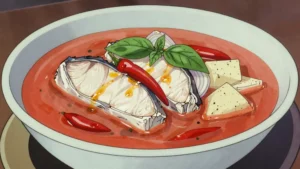 PepesupFiery fish pepper soup, weekend and celebration staple
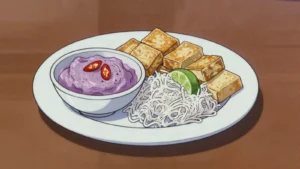 Mam TomPurple fermented shrimp paste, whipped with lime and chilli until it foams
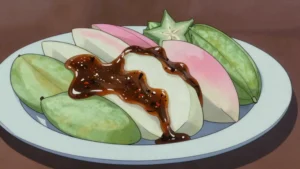 RujakUnripe fruit tossed in a dressing of palm sugar, tamarind, chilli and shrimp paste
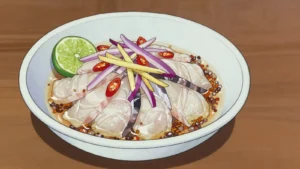 UmaiRaw fish sliced thin and dressed with lime, onion, chilli and salt
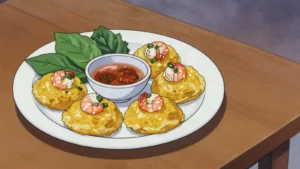 Banh KhotSmall crisp coconut-rice cakes with a prawn on top, wrapped in mustard leaf
 Caluludried fish layered with greens, okra and palm oil
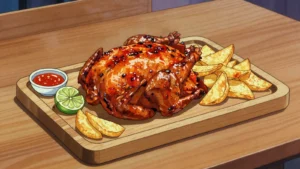 Piri-piri chickenflame-grilled chicken basted in fiery piri-piri marinade
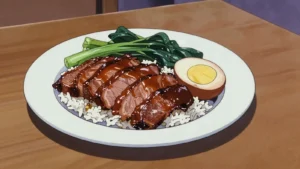 Khao Kha MooPork leg braised in soy and five spice, sliced over rice with pickled greens
Bird’s eye chilli is tagged on 85 dishes from 32 countries in the atlas. These notes are written from general knowledge and carry no per-fact citation — see About.