A seed that supplies liquid, fat, flesh, flour, sugar, vinegar and a container, and one of the very few plant fats that is solid at room temperature.
Where it comes from
The coconut palm spread across the Indian and Pacific Oceans partly by floating — the husk is buoyant and the seed survives long immersion — and partly with Austronesian voyagers, who carried it deliberately. It grows on sandy coasts where little else does.
Coconut milk is not the water inside the nut. It is made by grating the white flesh and pressing it with hot water; the first press is thick and the later ones thin, and traditional recipes distinguish between them.
Varieties
- Coconut water — The clear liquid in a young green nut. A drink, not a cooking ingredient.
- Coconut milk and cream — Pressed from grated flesh. Milk for simmering, cream for finishing.
- Desiccated and fresh grated — Texture and flavour in sweets, curries and sambals.
- Coconut oil — Solid below about 24°C. Very stable and heat-tolerant; virgin oil tastes strongly of coconut and refined oil does not.
- Coconut sugar and palm sugar — Boiled-down sap. Caramel-like, less sweet than cane sugar, and central to Southeast Asian cooking.
- Coconut vinegar — Fermented sap. The souring agent of Filipino cooking.
- Copra and coconut flour — Dried flesh, and the defatted meal left after pressing oil.
In the kitchen
Coconut milk splits when boiled hard — the fat separates out. In much of Southeast Asian cooking that is deliberate and the split oil is what the spice paste is fried in; in a smooth curry or a dessert it is a fault, and the answer is a gentle simmer and no lid-rattling boil.
Tinned coconut milk separates in the tin. Whether you shake it or spoon the thick cream off the top is a real decision, not an oversight.
Coconut flour absorbs an enormous amount of liquid — far more than wheat flour — and cannot be substituted by weight into a recipe written for anything else.
Dishes with coconut
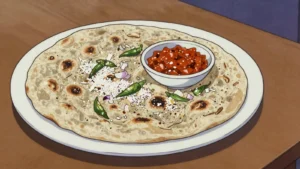 Pol RotiThick griddled flatbread of flour and scraped coconut, torn and dipped in sambol
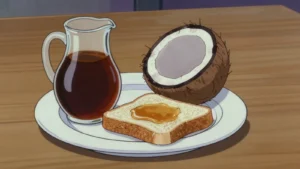 Coconut Toddy SyrupPalm sap boiled to a thick dark syrup; spread on bread and puddings.
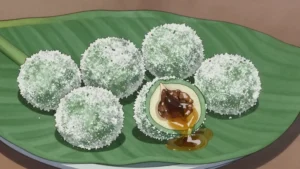 KleponPandan rice balls that burst with molten palm sugar
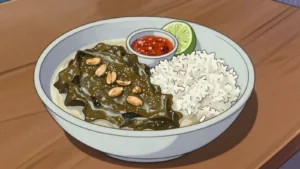 Matapacassava leaves ground with peanuts, garlic and coconut milk
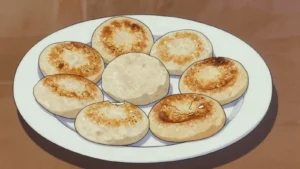 Akar CadakaSago flour mixed with grated coconut and roasted on a hot clay plate
 Khanom BuangCrisp folded rice-flour taco filled with meringue and golden egg threads or coconut
 KareweFresh coconut-palm toddy tapped twice daily, sweet and lightly fermenting
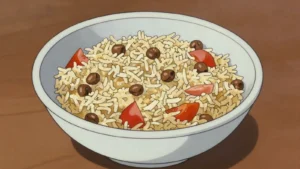 Arroz con guandúCoconut rice with pigeon peas, a holiday staple
Coconut is tagged on 385 dishes from 84 countries in the atlas. These notes are written from general knowledge and carry no per-fact citation — see About.