
Ingredients
The chicken
- 1.5 kgchicken pieces
- on the bone
- juice of 2 sour oranges
- or 2 limes
- salt and pepper
The epis
- 1onion
- 1green pepper
- 6garlic cloves
- a bunch of parsley
- 3spring onions
- a few sprigs of thyme
- 1scotch bonnet, optional
- 3 tablespoonsoil
- juice of 1 lime
The sauce
- 2onions, sliced
- 4tomatoes, chopped
- 3 tablespoonstomato paste
- 1green pepper, sliced
- 2stock cubes
- about 400 ml water
- 3 tablespoonsoil
- salt
To serve
- white rice
- or rice and beans
- fried plantain
Directions
- Check it rather than guessing. Wash hands after handling raw chicken. Wash boards and knives as well. Do not let raw juices touch other food. Put all the epis ingredients in a blender. Blend it to a coarse green paste. It should not be a smooth puree. Oil helps it blend and preserves it. Add enough to keep it turning. It should be a thick green paste. Put the extra epis into a jar.
- Cover the surface with a film of oil. It keeps several weeks that way. Wash the chicken in the citrus juice. Rub the juice all over the pieces. Rub epis all over the chicken. Season it with salt and pepper. Use a generous amount of epis. Work it into every single piece.
- Cover it over and then refrigerate it. Two hours is a good minimum here. Heat the oil in a large heavy pot. Lift the chicken from the marinade. Keep it for the sauce afterwards. Wet epis burns in the hot pan. Brown the chicken on all sides. Work in batches rather than crowding.
- Lift them out and set them aside. Add the sliced onions to the pot. Cook them for a good ten minutes. The onions should soften right down. Add all the sliced green pepper. Cook it for about five minutes. Add the reserved epis to the pot.
- Cook it for about three minutes. Cooking the epis takes its raw edge off. Stir it constantly so it does not catch. Add the chopped tomatoes to the pot. Cook them down for about eight minutes. Add all the tomato paste to them. Fry it for two or three minutes. Add the chicken back to the pot.
- Add the water and stock cubes. Season the whole pot with salt. Add enough to come partway up. It should not cover the chicken. Add more later if it dries out. Bring it up to a gentle simmer. Cover it and then let it cook. Give it about forty full minutes.
- Check it rather than trusting a clock. Judging it takes a proper check. Take the lid off near the end. Let the sauce reduce and thicken. It should be thick and clinging.
- Reduce it further if it is loose. Add a whole scotch bonnet near the end. Add it whole and quite unbroken. Lift it right out before serving. It can burst on a spoon otherwise. Taste the sauce and adjust the salt. It should be deeply savoury and herbal.
- Add a squeeze of lime if it is flat. Adjust the salt to lift the whole thing. Serving it is always done hot. Spoon it out over plain white rice. Serve rice and beans if you like. Serve fried plantain alongside. It keeps three days refrigerated.
Technique
- Epis is the Haitian seasoning base and the whole flavour of the dish: parsley, spring onion, thyme, garlic, pepper and onion blended coarse with lime and oil. It goes into almost every savoury dish, keeps weeks refrigerated under a film of oil and freezes well, so most Haitian kitchens keep a jar and making it in batches saves real time.
- Scrape the epis off the chicken before browning and keep it for the sauce: wet epis burns in the hot pan and stops the chicken browning. Cook it in the sauce for about three minutes to take its raw edge off, stirring constantly so it does not catch.
- Chicken must be cooked right through: check the thickest part for seventy-five degrees avoiding the bone, or look for meat pulling from the bone and entirely clear juices. Wash hands, boards and knives after handling it raw.
Substitutions
- Lime stands in for sour orange, which sits between sweet orange and lime in sharpness; washing meat in citrus before cooking is standard Haitian practice and also seasons and firms the flesh. Some cooks rinse it after and some leave the juice on.
- A whole unbroken scotch bonnet added near the end perfumes the sauce without releasing all its heat; lift it out before serving so it cannot burst on someone’s spoon.
Variations
- The atlas also carries pollo guisado, the Dominican braised chicken from the same island; the real distinction is that pollo guisado is built on a burnt sugar base where poul an sos leans on epis.
- Marinate overnight if you can, which is what most Haitian cooks do and makes a real difference; two hours is a workable minimum.
- Rice, stewed meat and fried plantain together is the standard everyday Haitian plate, often with a little pikliz.
History
Chicken washed in sour orange, seasoned with epis and stewed in tomato sauce, the standard Haitian weekday plate.
Frequently asked questions
What is Poul an sos?
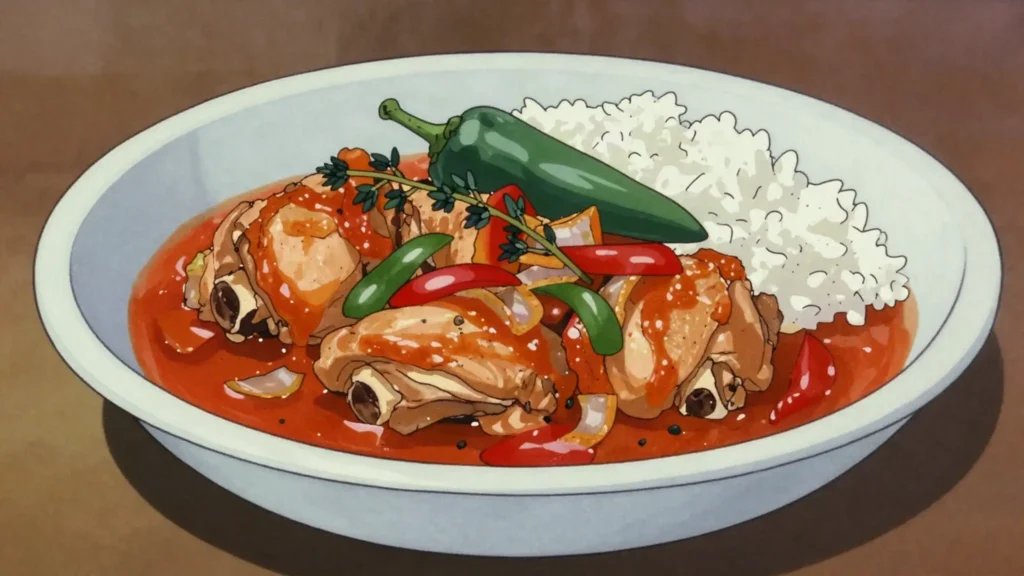
Poul an sos is a main from Haiti: chicken stewed in tomato-onion creole sauce. Chicken washed in sour orange, seasoned with epis and stewed in tomato sauce, the standard Haitian weekday plate.
How long does Poul an sos take to make?
Poul an sos takes 30 minutes plus marinating of preparation and 1 hour of cooking. The recipe makes serves 6. It is rated medium to make.
What can I substitute in Poul an sos?
Yes, within limits. Lime stands in for sour orange, which sits between sweet orange and lime in sharpness; washing meat in citrus before cooking is standard Haitian practice and also seasons and firms the flesh. Some cooks rinse it after and some leave the juice on. A whole unbroken scotch bonnet added near the end perfumes the sauce without releasing all its heat; lift it out before serving so it cannot burst on someone’s spoon.
What is the most important thing to get right in Poul an sos?
Check it rather than guessing. Wash hands after handling raw chicken. Wash boards and knives as well. Do not let raw juices touch other food. Put all the epis ingredients in a blender. Blend it to a coarse green paste. It should not be a smooth puree. Oil helps it blend and preserves it. Add enough to keep it turning. It should be a thick green paste. Put the extra epis into a jar.