
Ingredients
Potato base
- 1.5 kgyellow floury potatoes
- 4 tbspají amarillo paste
- juice of 3 limes
- 60 mlvegetable oil
- 2 tspsalt
- white pepper
Filling
- 400 gtinned tuna, drained, or poached shredded chicken
- 6 tbspmayonnaise
- 1red onion, finely diced
- 1 stickcelery, finely diced
- salt
- lime juice
To layer and garnish
- 2avocados, sliced
- 2hard-boiled eggs
- black olives
- parsley
Directions
- Boil the potatoes whole in their skins until completely tender, then peel them while they are still hot.
- Pass them through a ricer or a food mill while hot. Never use a food processor: it works the starch and turns the potato to glue, and a causa should be dense but light.
- Let the riced potato cool to just warm, then work in the ají amarillo paste, lime juice, oil, salt and white pepper by hand.
- Knead it for several minutes until it turns smooth, slightly elastic and an even deep yellow. It should hold a shape when pressed and come away cleanly from your hands.
- Taste it now and correct the lime and the salt. The potato is most of what you will eat, and once the terrine is assembled there is no adjusting it.
- Mix the tuna or chicken with the mayonnaise, red onion, celery, a pinch of salt and a squeeze of lime.
- Line a loaf tin or a ring mould with cling film, leaving plenty overhanging.
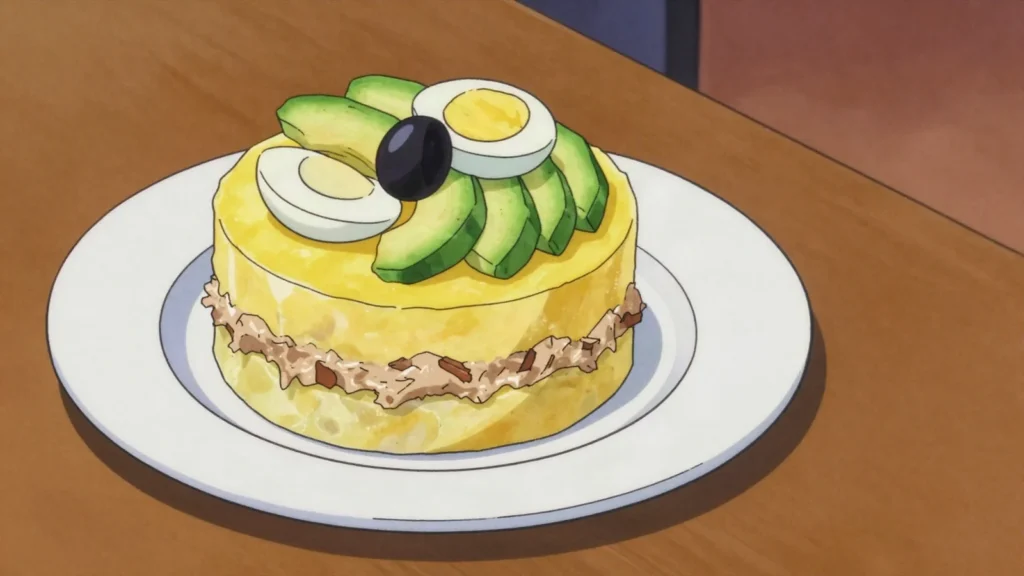
- Press in a third of the potato in an even layer, then a layer of sliced avocado, then all the filling, then the remaining potato.
- Press every layer down firmly as you go. Air pockets are what make a causa slump when you turn it out.
- Chill for at least 2 hours, and longer if you have the time. It is served cold and it needs that time to set properly.
- Turn it out, peel away the film, and garnish with sliced egg, olives, avocado and parsley.
- Serve cold, cut into thick slices or portioned straight from the ring.
Technique
- Rice it hot, never process it, chill it properly. Everything that goes wrong with causa goes wrong at one of those three points.
- Ají amarillo is not interchangeable with any other chilli. It is fruity and only moderately hot, and it is the flavour of the dish.
- Accounts link the name to money raised por la causa during the war of 1879, though layered potato dishes in Peru are considerably older than that.
Substitutions
- Any floury yellow potato, though papa amarilla gives the colour and the crumbly texture the dish was built on.
- Jarred or frozen ají amarillo paste, both widely sold and both perfectly good.
Variations
- Causa limeña with tuna, which is the standard.
- With crab or prawn, which is the version served in coastal restaurants.
- Built in individual rings as a plated starter.
History
A layered dish of mashed, chili-and-lime-seasoned yellow potato, filled with chicken, tuna or avocado, developed in Peru using potato, a crop domesticated in the Andes many thousands of years before Spanish colonization and central to Peruvian cooking across a huge span of the country’s culinary history. One popular but not fully verified account traces the dish’s name to a Quechua or Spanish colonial-era phrase connected to a cause or a fundraising effort, suggesting the dish may have originally been sold specifically to raise money for a particular cause, though this etymology is not definitively confirmed by food historians. Causa remains a popular and internationally recognized dish within contemporary Peruvian cuisine, often served as a visually presented, molded appetizer in modern restaurant settings.
Frequently asked questions
What is Causa?
Causa is a salad & side from Peru: layered lime-and-ají potato terrine filled with tuna or chicken. A layered dish of mashed, chili-and-lime-seasoned yellow potato, filled with chicken, tuna or avocado, developed in Peru using potato, a crop domesticated in the Andes many thousands of years before Spanish colonization and central to Peruvian cooking across a huge span of the country’s culinary history. One popular but not fully verified account traces the dish’s name to a Quechua or Spanish colonial-era phrase connected to a cause or a fundraising effort, suggesting the dish may have originally been sold specifically to raise money for a particular cause, though this etymology is not definitively confirmed by food historians. Causa remains a popular and internationally recognized dish within contemporary Peruvian cuisine, often served as a visually presented, molded appetizer in modern restaurant settings.
How long does Causa take to make?
Causa takes 40 min plus 2 hr chilling of preparation and 30 min of cooking. The recipe makes 8 servings. It is rated medium to make.
What can I substitute in Causa?
Yes, within limits. Any floury yellow potato, though papa amarilla gives the colour and the crumbly texture the dish was built on. Jarred or frozen ají amarillo paste, both widely sold and both perfectly good.
What is the most important thing to get right in Causa?
Pass them through a ricer or a food mill while hot. Never use a food processor: it works the starch and turns the potato to glue, and a causa should be dense but light.