The purple-skinned onion that is mild and sweet enough to eat raw — in salads, on kebabs, pickled pink — and that loses both its colour and its point when cooked.
Where it comes from
Red onions are varieties of the common onion whose skins and outer flesh layers carry anthocyanin pigments; they are grown around the world and have particular homes in Italy (the Tropea onion of Calabria, so sweet it is eaten like fruit), Turkey and the Middle East (the onion for kebabs and salads), India (where the everyday onion is a small red one) and Mexico (pickled with habanero for the Yucatán’s cebolla encurtida). They are generally milder and higher in sugar than yellow onions, though this varies by variety more than by colour.
Their colour is the reason to use them, and it is fragile: cooked, red onion turns a dull grey-brown and tastes like a slightly sweeter yellow onion. Raw or pickled it stays purple-pink, and pickling in vinegar or lime juice actually brightens it, which is why quick-pickled red onion appears on tacos, in Turkish salads with sumac, and on Peruvian ceviche.
Varieties
- Common red onion — Medium, round, deep purple skin. For salads, sandwiches and quick pickles.
- Tropea (cipolla rossa di Tropea) — Long, torpedo-shaped Calabrian onion, exceptionally sweet and mild; eaten raw and made into jam. Protected by name.
- Indian small red onion — Small, pungent red onion, the everyday onion of Indian cooking; sliced raw with lemon as a side.
- Red torpedo / Italian red — Elongated varieties, sweet and mild; for grilling and salads.
- Wethersfield and Southport red — Old American storage varieties, firmer and more pungent.
In the kitchen
Slice thin and soak in cold water for ten minutes to take the edge off, or salt and squeeze, or dress with lime or vinegar and leave — after twenty minutes the onion is softened, pink and sweet. Quick pickle: thin slices in vinegar, a little sugar and salt for half an hour, or overnight in the fridge.
Raw with sumac and parsley on a kebab; with tomato and cucumber in a Greek salad; with lime and habanero on Yucatán pork; grilled in thick rings or roasted in wedges where a little colour loss is acceptable and the sweetness caramelises. For a cooked base, a yellow onion is better and cheaper.
Choosing and keeping
Firm, heavy, with tight glossy skins and no soft neck or sprouting. They keep several weeks somewhere cool, dry and dark; refrigerate only once cut, wrapped tightly — they scent everything.
Quick-pickled red onion keeps two weeks in the fridge and only gets better. Cut red onion left uncovered oxidises and turns brownish at the edges within a day.
Dishes with red onion
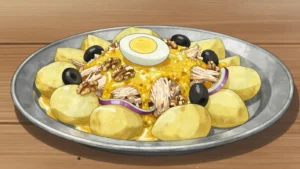 Ají de gallinaShredded chicken in creamy ají amarillo-walnut sauce over potatoes
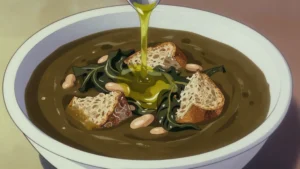 RibollitaTuscan twice-boiled bread, bean and cavolo nero soup
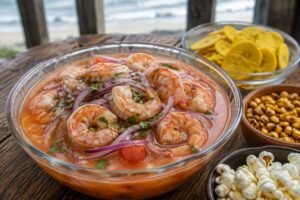 Ceviche de camarónShrimp in tomato-citrus marinade, eaten with chifles and popcorn
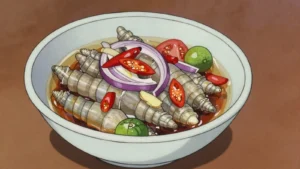 TamilokWoodworm from rotting mangrove trunks, eaten raw with vinegar, calamansi and chilli
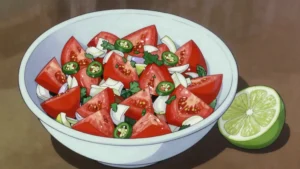 Kachumbarifresh tomato, onion and chili salad squeezed with lime
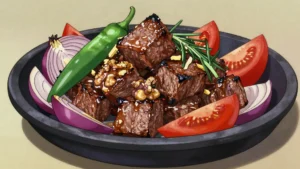 Tibsbeef or lamb sautéed with onion, rosemary and chili
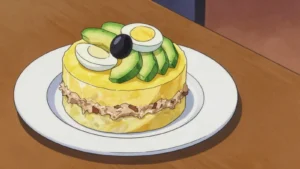 CausaLayered lime-and-ají potato terrine filled with tuna or chicken
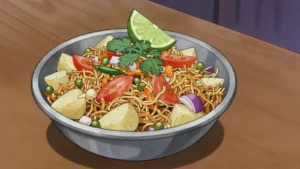 ChatpatePuffed rice tossed with noodles, lime, chilli and raw onion, mixed to order
Red onion is tagged on 82 dishes from 45 countries in the atlas. These notes are written from general knowledge and carry no per-fact citation — see About.