The buttery, mild green fruit of a Central American tree — the only fruit that is mostly fat — mashed into guacamole, sliced over everything, and the ingredient whose ripeness is the whole art of using it.
Where it comes from
The avocado was domesticated in Mexico and Central America thousands of years ago; the Aztec name ahuacatl gave Spanish aguacate and the sauce ahuacamolli, guacamole. The Spanish spread it through the Caribbean and to the Philippines; it reached California in the nineteenth century, where the Hass variety was found as a chance seedling in a La Habra garden in the 1920s and now accounts for most of the world’s crop. Mexico remains by far the largest grower.
It is unlike any other fruit in being rich in oil rather than sugar, with a texture more like butter than flesh, and it does not ripen on the tree — it is picked hard and softens over days at room temperature. That ripening window is short and its end is brown mush, which is the entire difficulty of the avocado. Cut flesh oxidises and browns within the hour; lime juice slows it and is why it is in guacamole.
Varieties
- Hass — Small to medium, pebbly skin that turns from green to purple-black as it ripens; rich, nutty, creamy. Most of the world’s avocados.
- Fuerte — Smooth, thin green skin that stays green; larger, slightly less rich, with a cleaner taste. The old Californian standard.
- Reed — Round, large, thick green skin; buttery and mild. A summer variety.
- Bacon and Zutano — Smooth-skinned, watery, mild green varieties; earlier in season, less prized.
- Caribbean and Florida avocados — Very large, smooth-skinned, lower in oil, more watery and less rich; often sold as ‘slimcado’.
- Criollo — The small, thin-skinned native Mexican avocado, eaten skin and all; the original.
In the kitchen
Judge ripeness by a gentle press near the stem, not a squeeze in the middle: it should yield slightly. Halve it lengthways around the stone, twist the halves apart, and free the stone with a tap of the knife heel or a spoon. Scoop or slice; season with salt and lime at once, which it needs in quantity.
Guacamole is avocado mashed with lime, salt, chilli, onion and coriander — nothing else is necessary. Beyond it, avocado goes with tomato, egg, smoked fish, prawns, citrus and chilli, and in Brazil and the Philippines it is eaten sweet, with sugar or in a shake. It does not take heat well; warm it gently or not at all.
Choosing and keeping
Buy hard and ripen at home on the counter, two to five days; a paper bag with a banana speeds it. Once ripe, the fridge holds it two or three more days. A ripe Hass is purple-black and yields at the stem; a soft, dented or sunken one is over.
Cut avocado browns fast. Lime or lemon juice on the cut surface, cling film pressed onto it and the fridge buy a day; leaving the stone in does little. Mashed avocado freezes acceptably with lime juice worked in.
Dishes with avocado
 MondongoSlow tripe soup with vegetables and legumes, weekend restorative
 CausaLayered lime-and-ají potato terrine filled with tuna or chicken
 CasadoLunch plate of rice, beans, plantain, salad, and a protein
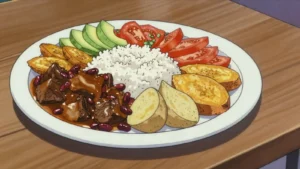 MelangeBuffet plate piling rice, beans, cassava, plantain and stew together
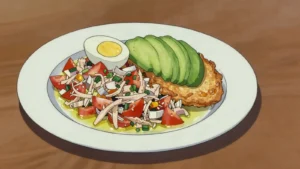 BuljolShredded salt cod tossed raw with tomato, onion, pepper and oil
 KpokpoiSteamed fermented maize meal loosened with palm oil, eaten with palm nut soup
 TortaCrusty bolillo sandwich stuffed with meats, beans, avocado
 TequeñosFried dough fingers wrapped around melting white cheese, party essential
Avocado is tagged on 68 dishes from 37 countries in the atlas. These notes are written from general knowledge and carry no per-fact citation — see About.