The citrus of the tropics — sharper, more floral and more bitter-edged than a lemon, and the sourness in Mexican, Thai, Vietnamese, Indian and Caribbean cooking where a lemon would taste out of place.
Where it comes from
Several distinct fruits share the name. The Key or Mexican lime, small, round, seedy and very aromatic, is the ancient lime of Southeast Asia that reached the Mediterranean with the Arabs and the Americas with the Spanish; it is the lime of Mexico, India and the Caribbean. The Persian or Tahiti lime — larger, seedless, thicker-skinned and milder — is a hybrid that dominates supermarket shelves in Europe and North America because it ships and keeps better.
The makrut lime, often still called kaffir lime, is a third thing: a knobbly, nearly juiceless fruit grown for its leaves and zest, which carry an intense citrus-flower perfume and are the scent of Thai green curry and tom yum. In the Persian Gulf and Iran, whole limes are dried in the sun until black and hard; these limoo amani are cracked into stews and give a sour, musty, deep flavour that fresh lime does not.
Varieties
- Persian / Tahiti lime — The large seedless supermarket lime. Milder and less perfumed than a Key lime, juicy, dependable.
- Key / Mexican lime — Small, round, seedy, thin-skinned, sharply aromatic. The lime of Mexican and Indian cooking and of Key lime pie.
- Makrut (kaffir) lime — Grown for its leaves and bumpy zest rather than juice. The leaves, torn or finely sliced, perfume Thai and Cambodian curries and soups.
- Kalamansi (calamansi) — The small Philippine citrus, orange inside and very sour; squeezed over noodles and into dipping sauces, and the base of a national drink.
- Limoo amani (black lime) — Whole limes sun-dried to a hollow, black shell. Cracked or pierced and cooked into Gulf and Persian stews for a deep, funky sourness.
- Finger lime — The Australian native with caviar-like pearls of juice inside. Mostly a garnish.
In the kitchen
Lime juice goes in at the end, raw. Heat kills its aroma faster than lemon’s, and its bitterness comes forward. In Mexican and Southeast Asian cooking a wedge is served on the side so each eater adds it fresh — that is not decoration but the last step of the recipe.
Roll a lime hard under your palm before cutting and it gives up far more juice; a few seconds in a microwave or warm water does the same. Makrut leaves are used whole and removed, or sliced hair-thin and eaten; the central rib is tough and is cut out first.
Choosing and keeping
Choose limes that are heavy and give a little; thin-skinned ones are juicier. Bright green is not a sign of quality — a lime yellowing slightly is riper and sweeter, not spoiled. They dry out fast at room temperature; keep them in the fridge.
Lime juice freezes well. Makrut leaves freeze perfectly in a bag and are best bought that way where fresh ones are not sold; dried leaves have almost no scent left.
Dishes with lime
 Smokie pasuaBoiled sausage split lengthways and stuffed with kachumbari and chilli
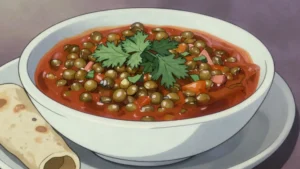 Ndengugreen gram stewed with coconut or tomato, eaten with chapati
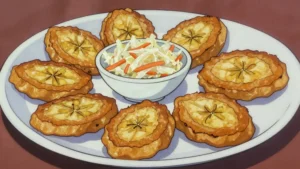 Bannann pezeTwice-fried flattened plantain slices
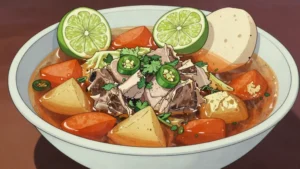 Fah-fahpeppery goat and vegetable soup eaten with spongy bread
 Aloo ParathaGriddled flatbread stuffed with spiced potato, served with curd and pickle
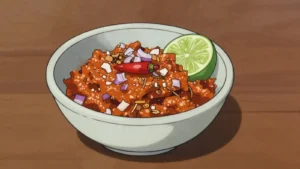 Pol SambolGrated coconut relish with chili, lime and Maldive fish
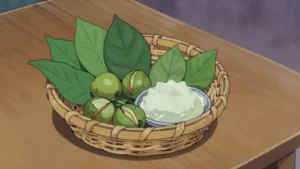 Bua MalusAreca nut with betel leaf and lime, chewed constantly and offered to guests
 ChuflaySingani lengthened with ginger ale and lime over ice
Lime is tagged on 927 dishes from 125 countries in the atlas. These notes are written from general knowledge and carry no per-fact citation — see About.