
Ingredients
The Shan tofu
- 200 gchickpea flour
- gram flour or besan
- or yellow split pea flour
- 1 litrewater
- 1 teaspoonsalt
- half a teaspoon ground turmeric
- optional, for colour
The dressing
- 3 tablespoonstamarind water
- or juice of 2 limes
- 2 tablespoonslight soy sauce
- or fish sauce
- 1 tablespoonsugar
- or to taste
- 2 clovesgarlic, crushed
- half a teaspoon salt
The chilli oil
- 4 tablespoonspeanut oil
- or any neutral oil
- 2 tablespoonschilli flakes
- 4 clovesgarlic, sliced thinly
- half a teaspoon turmeric
The salad
- 1small onion, sliced paper-thin
- 2spring onions, chopped
- a large handful coriander
- 3 tablespoonsroasted peanuts
- crushed
- 2 tablespoonstoasted chickpea flour
- optional
- a handful of shredded cabbage
- optional
To serve
- at room temperature
- extra chilli, on the side
- a wedge of lime
Directions
- Whisk the chickpea flour with a third of the water. Whisk it into a completely smooth batter. Work out every lump at this stage. A sieve helps if lumps persist. Add the salt and the turmeric. Now let the batter rest for thirty minutes. Bring the remaining water to a boil in a pan.
- Use a heavy pan with a thick base. The mixture catches very easily otherwise. Pour it in a steady stream while whisking. Whisk constantly and vigorously throughout.
- Keep whisking so no lumps form. The mixture becomes too thick to whisk. Cook it for at least ten minutes. Fifteen minutes is better if you can manage. Use a long spoon rather than a short one. Line it with cling film or oiled paper. Spread it to about two centimetres thick. Smooth the top with a wet spatula.
- Let it cool completely at room temperature. Then chill it for at least two hours. Heat the oil gently in a small pan. Add the sliced garlic to the warm oil. Fry it slowly until golden and crisp. Lift the garlic out and set it aside. Take the pan off the heat completely.
- Add the chilli flakes and the turmeric. Adding chilli to very hot oil scorches it. Let the oil cool down and infuse fully. If using tamarind, make tamarind water first. Soak a lump of tamarind pulp in hot water. Mash it with your fingers to release it. Strain out the seeds and the fibre.
- Whisk it with soy sauce, sugar and garlic. Taste it and balance the sour against the sweet. It should be sharp, salty and slightly sweet. Adjust it now rather than after dressing. Turn out the set tofu onto a board.
- Cut it into slices or into thick batons. Handle it gently, since it is soft. Put the sliced tofu into a wide bowl. Add the paper-thin sliced onion. Soak the onion in cold water for ten minutes first. That takes the fierce raw edge off it.
- Drain it well before adding it. Add the spring onions and the coriander. Add the shredded cabbage if using it. Pour over the dressing and the chilli oil. Wash your hands thoroughly first, obviously. Toss until everything is lightly coated. Do not overwork it into a mush.
- Scatter the crushed peanuts over the top. Add the fried garlic you set aside. Add toasted chickpea flour if you have it. Toast it in a dry pan until it smells nutty. Serve it at room temperature immediately. It is not served hot or fridge-cold. Cover it so it does not dry out. Freezing destroys the smooth set completely.
Technique
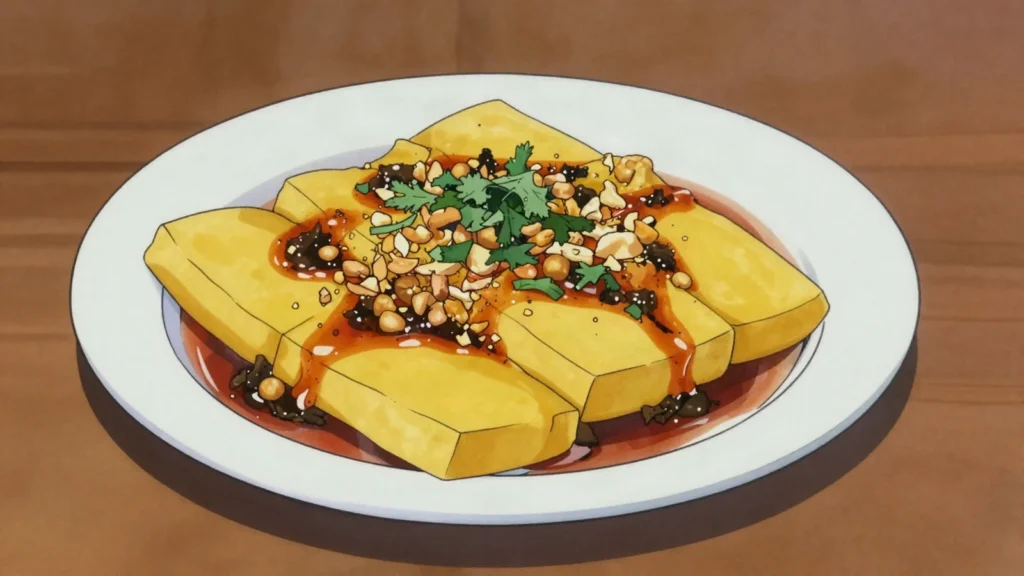
- Shan tofu contains no soy at all. It is set from cooked chickpea flour, the same principle as polenta or Ligurian panissa, and it exists because soybeans did not grow well in the Shan hills while pulses did. It is much softer than soy tofu, and that softness is correct.
- Cook the batter for a full ten to fifteen minutes. This is the step people rush. Undercooked chickpea flour tastes raw, chalky and bitter, and no amount of dressing hides it.
- The thickening mixture spits like hot porridge and the bubbles throw scalding batter. Use a long spoon, wear long sleeves and stand back a little.
- Take the pan off the heat before the chilli flakes go into the oil. Chilli scorches in very hot oil and turns bitter and unusable.
- Soak the sliced onion in cold water for ten minutes before it goes in. It takes the fierce raw edge off without cooking it.
- Toss the salad by hand. Thoke means tossed or mixed by hand, and hands let you feel how much you are breaking the soft tofu — a spoon does not.
- Dress it only just before eating. Within an hour a dressed Burmese salad goes watery and the crunchy elements go soft.
- Shan State has seen armed conflict for decades, with large numbers of people displaced, and parts of it remain in conflict. Shan food is now eaten across Myanmar, and that spread has its own displacement history. The atlas records the context without turning a salad into a political essay.
Substitutions
- Yellow split pea flour replaces chickpea flour and is used in some regions; grind dried split peas finely if you cannot buy the flour.
- Lime juice replaces tamarind water, giving a cleaner and sharper sourness.
- Fish sauce replaces soy sauce for a more savoury dressing, though soy keeps the dish vegetarian.
- Any neutral oil replaces peanut oil, which matters if you are cooking for someone with a nut allergy — though the peanuts in the salad would need leaving out as well.
- Shredded cabbage, cucumber or shredded green mango can all be added for extra crunch.
- Toasted chickpea flour is optional; it adds body and a toasted note that is characteristic of Burmese salads.
Variations
- Tohu nway is the same batter served hot and loose, like a thick soup, poured over rice noodles for breakfast.
- Tohu gyaw is Shan tofu cut into pieces and deep-fried until crisp outside and molten within.
- Laphet thoke, the fermented tea leaf salad, is the most famous of the Burmese thoke family and follows the same principles.
- Shan noodles, khao soi in the Burmese sense, are commonly served alongside the tofu salad.
- Some vendors add shredded green mango or cucumber for extra sourness and crunch.
- A version dressed with sesame oil rather than chilli oil is milder and is made for children.
History
Salad of Shan tofu made from chickpea flour rather than soy, developed in hills where soybeans were scarce and chickpeas plentiful.
Frequently asked questions
What is Tohu Thoke?
Tohu Thoke is a salad & side from Myanmar: shan chickpea tofu salad with tamarind, chili and peanuts. Salad of Shan tofu made from chickpea flour rather than soy, developed in hills where soybeans were scarce and chickpeas plentiful.
How long does Tohu Thoke take to make?
Tohu Thoke takes 20 minutes of preparation and 20 minutes, plus 2 hours setting of cooking. The recipe makes serves 4. It is rated medium to make.
What can I substitute in Tohu Thoke?
Yes, within limits. Yellow split pea flour replaces chickpea flour and is used in some regions; grind dried split peas finely if you cannot buy the flour. Lime juice replaces tamarind water, giving a cleaner and sharper sourness. Fish sauce replaces soy sauce for a more savoury dressing, though soy keeps the dish vegetarian. Any neutral oil replaces peanut oil, which matters if you are cooking for someone with a nut allergy — though the peanuts in the salad would need leaving out as well. Shredded cabbage, cucumber or shredded green mango can all be added for extra crunch. Toasted chickpea flour is optional; it adds body and a toasted note that is characteristic of Burmese salads.
What is the most important thing to get right in Tohu Thoke?
Use a heavy pan with a thick base. The mixture catches very easily otherwise. Pour it in a steady stream while whisking. Whisk constantly and vigorously throughout.