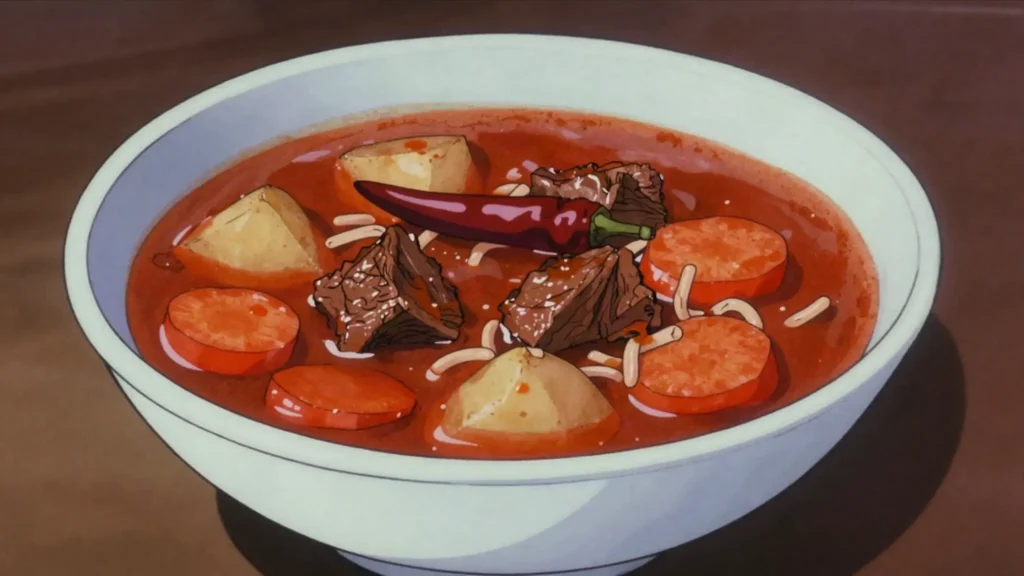

Ingredients
Soup
- 800 gbeef shin or chuck, cut into 2 cm cubes
- 60 gpork lard or 3 tbsp sunflower oil
- 3onions (500 g), finely chopped
- 3 tbspHungarian sweet paprika (edesnemes)
- 1 tspcaraway seeds, crushed in a mortar
- 4garlic cloves, crushed with 1 tsp salt
- 1green TV paprika pepper, sliced
- 1tomato, peeled and chopped
- 2 litreswater
- 3carrots, sliced into rounds
- 1parsley root or small parsnip, sliced
- 500 gwaxy potatoes, cut into 2 cm cubes
- 2bay leaves
- salt and black pepper
- 1 tsphot paprika paste (eros pista), optional
Csipetke
- 100 gplain flour
- 1egg
- pinch of salt
Directions
- Melt the lard in a heavy pot or bogracs and cook the onion over low heat for 15 minutes until deep gold and jammy. Rushing this stage costs the soup its sweetness.
- Take the pot off the heat, stir in the sweet paprika and caraway and let them bloom 20 seconds in the residual heat, then add a splash of water at once so the paprika cannot burn.
- Return to medium heat, add the beef and stir until the cubes are coated and have released and reabsorbed their juices, about 10 minutes.
- Add the garlic paste, pepper and tomato, cover, and let the meat stew in its own liquid on the lowest heat for 30 minutes.
- Pour in the water, add the bay, bring to a bare simmer and cook uncovered for 1 hour to 1 hour 15 minutes, until the beef is tender but still holding its shape.
- Meanwhile knead the flour, egg and salt to a stiff dough, rest 15 minutes, then pinch off fingernail-sized pieces of csipetke and set aside on a floured board.
- Add the carrot, parsley root and potato and simmer 15 minutes, then drop in the csipetke and cook 5–6 minutes more, until they float and taste cooked through.
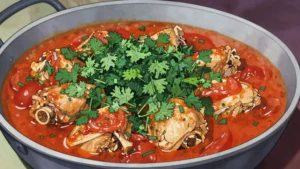
- Season, and rest the pot off the heat for 10 minutes. Gulyas is a soup: it should be brick red, brothy and eaten with a spoon, with fat glinting on the surface.
- Serve with fresh white bread and eros pista or pickled peppers on the side.
Technique
- In Hungary gulyas means this soup. The thick meat stew served abroad as goulash is porkolt or paprikas, and calling it gulyas is the single most common misunderstanding of Hungarian cooking.
- Never let paprika hit hot fat directly. It scorches within seconds and turns the whole pot bitter and brown.
- Caraway and the fresh garlic paste are not optional seasonings; with paprika and onion they make the four-part flavour signature of the dish.
Substitutions
- No parsley root: parsnip is closest, with a little chopped parsley stalk added for the herbal edge.
- Beef shin can be replaced by short rib or oxtail on the bone, adding 30 minutes of simmering.
Variations
- Bogracsgulyas is cooked outdoors over a wood fire in a suspended kettle and tastes noticeably smokier.
- Szekelygulyas is a different animal entirely: pork with sauerkraut and sour cream.
- Some Alfold cooks skip the potato and double the csipetke.
History
Began as gulyás, meaning herdsman, a stew cooked over open fires by the cattle drivers of the Hungarian Great Plain from at least the Middle Ages, using dried, twice-cooked meat cubes that rehydrated into a stew on the trail — closer to a portable ration than the dish eaten today. Paprika, made from a New World chili pepper that reached Hungary via Ottoman and Balkan trade routes, was not stirred in until the 1700s and 1800s, and it was that addition that gave goulash its now-defining red colour and flavour. Hungarian nationalists of the 1800s, resisting Habsburg rule, promoted gulyás as an authentically Hungarian dish, cementing its status as a national symbol well before the modern stew recipe had even fully settled.
Frequently asked questions
What is Goulash?
Goulash is a soup & stew from Hungary: paprika beef soup with potatoes and pinched csipetke noodles. Began as gulyás, meaning herdsman, a stew cooked over open fires by the cattle drivers of the Hungarian Great Plain from at least the Middle Ages, using dried, twice-cooked meat cubes that rehydrated into a stew on the trail — closer to a portable ration than the dish eaten today. Paprika, made from a New World chili pepper that reached Hungary via Ottoman and Balkan trade routes, was not stirred in until the 1700s and 1800s, and it was that addition that gave goulash its now-defining red colour and flavour. Hungarian nationalists of the 1800s, resisting Habsburg rule, promoted gulyás as an authentically Hungarian dish, cementing its status as a national symbol well before the modern stew recipe had even fully settled.
How long does Goulash take to make?
Goulash takes 30 min of preparation and 2 hr 15 min of cooking. The recipe makes 6 servings. It is rated medium to make.
What can I substitute in Goulash?
Yes, within limits. No parsley root: parsnip is closest, with a little chopped parsley stalk added for the herbal edge. Beef shin can be replaced by short rib or oxtail on the bone, adding 30 minutes of simmering.
What is the most important thing to get right in Goulash?
Never let paprika hit hot fat directly. It scorches within seconds and turns the whole pot bitter and brown.