The slim, curved, dark seeds with a warm anise-and-earth flavour that taste of rye bread, sauerkraut and the whole kitchen of Central and Northern Europe — and, in North Africa, of harissa and Tunisian spice.
Where it comes from
Caraway grows wild across Europe and western Asia and is one of the continent’s oldest native spices; seeds were found in Stone Age dwellings in Switzerland. It became the spice of the German-speaking, Scandinavian, Dutch and Eastern European kitchens — in rye bread, in sauerkraut, with pork and goose, in cheeses and in the liqueurs aquavit and kümmel — and, by a separate route, one of the three spices of Tunisian harissa with coriander and cumin.
It is often confused with cumin, which it resembles, and translations between European languages muddle the two constantly; but caraway is darker, more curved and tastes of anise and rye rather than of earth and musk. Nigella, sometimes called black caraway, and ajwain, sometimes called Ethiopian caraway, are other seeds again.
Varieties
- Caraway seed — Dark brown, ridged, crescent-shaped. Whole in bread, cabbage, pork and cheese; ground in harissa and Tunisian tabil.
- Ground caraway — For spice pastes and rubs; fades quickly.
- Nigella (kalonji, ‘black caraway’) — Small black teardrop seeds with an oregano-onion taste; on Indian naan and Turkish bread. A different plant.
- Ajwain (carom, ‘Ethiopian caraway’) — Tiny seeds tasting strongly of thyme; in Indian fried snacks and breads. A different plant.
In the kitchen
Whole seeds go into rye bread dough, into a pot of sauerkraut or braised cabbage, into the fat under a roast pork or goose, and into the brine for pickles; they can be added at the start and cook without harm. Toasted and ground they go into harissa, tabil and some sausage mixes.
Caraway pairs with pork, cabbage, potatoes, apples, cheese and rye — the whole palette of Central Europe — and with chilli and coriander in Tunisia. A teaspoon of seed for a pot of cabbage or a loaf of bread is the usual measure.
Choosing and keeping
Whole caraway keeps its flavour for two or three years sealed; the seeds should be dark, whole and fragrant when crushed. Ground caraway fades within months.
When a Central or Eastern European recipe in translation says ‘cumin’, it very often means caraway; the context — cabbage, rye, pork — usually settles it.
Dishes with caraway
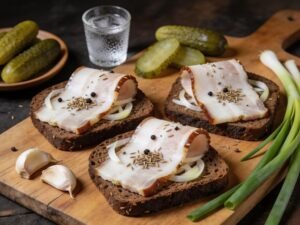 Salosalted pork fatback with garlic, sliced onto rye bread
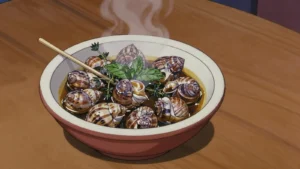 BabboucheSpiced snail broth with thyme, aniseed and liquorice root, drunk from small bowls
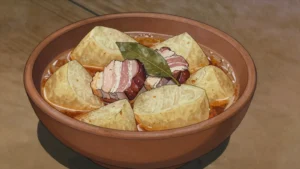 Bujta repasour turnip and pork stew from pig-slaughter feasts
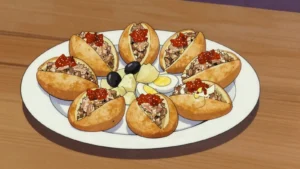 Fricassésmall fried bun stuffed with tuna, harissa, olives, egg and potato
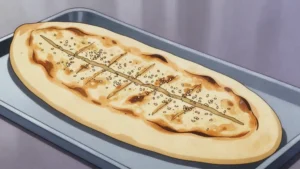 Barbarithick ridged breakfast flatbread topped with sesame
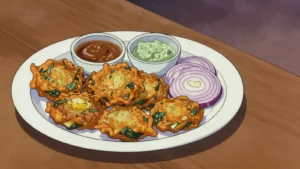 PakoraVegetables dipped in spiced gram-flour batter and deep-fried in bubbling oil
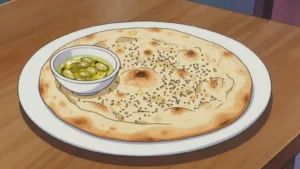 Tameesgiant Afghan-style tandoor bread, Hejazi breakfast partner for ful
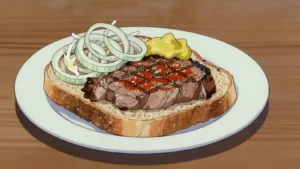 Cigánska pečienkaGrilled pork steak in bread with mustard, onion and horseradish
Caraway is tagged on 157 dishes from 58 countries in the atlas. These notes are written from general knowledge and carry no per-fact citation — see About.