Rendered pork fat — and its cousins tallow, suet, schmaltz and dripping — the cooking fats of the world before vegetable oil, and still the secret of the crispest pastry, the best refried beans, the flakiest tamales and the proper roast potato.
Where it comes from
Every culture that kept animals cooked in their fat, and pork fat, rendered clean and white, was the fat of Europe, China, Mexico and much of the Americas until the twentieth century’s vegetable oils displaced it with a health argument that has since largely reversed. Lard from the back fat is mild and firm; leaf lard from around the kidneys is the finest, nearly flavourless and the pastry-maker’s choice. Beef tallow and suet are the British and Central European fats of Christmas pudding, mincemeat and Yorkshire pudding; schmaltz, rendered chicken or goose fat, is Jewish and Central European; ghee has its own page.
Their virtues are practical. Solid fats make flakier, shorter pastry than oil — lard’s large crystals are why a lard crust shatters; suet’s high melting point is why a steamed pudding rises light. They take high heat: lard fries at 190°C without smoking, which is why churros, carnitas, pommes frites (in Belgium, beef tallow) and fish and chips (traditionally, dripping) were cooked in them. And they carry flavour: refried beans, tamales, Chinese pastry, Mexican carnitas and Hungarian everything taste of the fat they are cooked in.
Varieties
- Lard (rendered back fat) — White, mild, firm at room temperature. For frying, pastry, refried beans, tamales and Chinese and Hungarian cooking.
- Leaf lard — From around the kidneys; the purest and most neutral, for pie crusts and biscuits.
- Manteca (Mexican) — Lard rendered from carnitas or with pork scraps, often browned and flavoursome; the fat of Mexican cooking.
- Suet and tallow — Beef (or mutton) fat: raw suet grated for puddings and dumplings; tallow rendered for frying chips and roast potatoes.
- Schmaltz — Rendered chicken or goose fat, often with onion; spread on bread, in chopped liver, matzo balls and latkes.
- Dripping — The rendered fat and juices from a roast, saved and reused for roast potatoes and Yorkshire pudding.
In the kitchen
Render your own: cut pork back fat or trimmings small, cover with a little water, and cook very slowly until the water is gone and the fat has melted clear and the solids have turned to golden cracklings; strain and pot. For pastry, use lard cold and cut it into the flour like butter, or half lard and half butter for flavour and flake. For roast potatoes, heat lard, tallow or dripping until smoking before the parboiled potatoes go in.
Refried beans are cooked beans fried in lard with onion and mashed; tamale dough is masa beaten with lard until it floats; carnitas is pork simmered in its own lard for hours; Chinese flaky pastry is lamination with lard. Suet, grated and mixed with flour and breadcrumbs, is the base of steamed puddings, dumplings and Christmas pudding. Schmaltz on rye bread with salt is a dish.
Choosing and keeping
Fresh rendered lard is white and odourless and keeps for months in the fridge and a year in the freezer; commercial hydrogenated lard keeps indefinitely but is inferior for pastry. Yellowed lard that smells of old fat is rancid. Ask a butcher for back fat or leaf fat, cheaply.
Suet is sold fresh by butchers or shredded and boxed; the boxed kind keeps for months. Keep dripping in a covered pot in the fridge and top it up from each roast.
Dishes with lard
 PukacapasRound baked pie of cheese with red locoto chilli, eaten hot
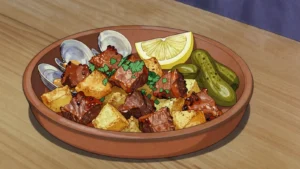 Carne de porco à alentejanamarinated pork cubes fried with clams, coriander and cubed potatoes
 VindalooGoan pork stewed in vinegar, garlic and Kashmiri chilli, sharp and dark red
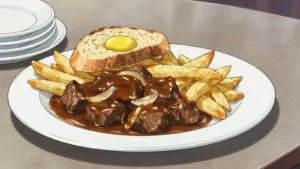 Carbonade flamandeBeef stewed in dark abbey beer, slightly sweet-sour, with fries.
 LabskausMash of corned beef, potato and beetroot with herring, gherkin and fried egg.
 Api con pastelHot purple-corn drink with fried cheese pastry, market morning
 Meat pieSmall pastry cups filled with seasoned minced beef and gravy
 MbejuGriddled starch-and-cheese flatcake, crumbly winter treat
Lard and the animal fats is tagged on 288 dishes from 84 countries in the atlas. These notes are written from general knowledge and carry no per-fact citation — see About.