
Ingredients
Broth (chintan, Tokyo style)
- 1.5 kgchicken carcasses and wings, blood rinsed out in cold water
- 800 gpork neck bones or trotter
- 1onion, halved
- 1leek, split
- 30 gginger, sliced
- 6dried shiitake
- 20 gkombu
- 20 gniboshi (dried sardines), heads and guts removed
- 5 litrescold water
Tare and aroma oil
- 180 mlJapanese dark soy sauce
- 60 mlmirin, 30 ml sake
- 10 gkombu, 5 g katsuobushi
- 1 tbspsugar
- 60 mlrendered chicken fat or lard, with 1 sliced spring onion fried in it
Chashu and ajitama
- 800 gpork belly, rolled and tied
- 200 mlsoy sauce, 200 ml sake, 100 ml mirin, 40 g sugar, 4 garlic cloves, 20 g ginger
- 4eggs, at room temperature
To assemble
- 600 gfresh ramen noodles made with kansui (alkaline salts)
- 100 gmenma (seasoned bamboo shoots)
- 4 sheetsnori
- 3spring onions, finely sliced
Directions
- Soak the bones in cold water 30 minutes, then blanch them in boiling water for 5 minutes, drain and scrub off every trace of grey scum. This is the difference between a clear broth and a murky one.
- Cover the clean bones with the 5 litres of cold water and bring to a bare tremble, never a rolling boil. Skim for the first 20 minutes.
- Add onion, leek, ginger and shiitake and hold at 90–95°C (195–205°F) for 6–8 hours, topping up with water. Add the kombu and niboshi only in the final 30 minutes, off a hard boil, or they turn bitter. Strain through cloth.
- For the chashu, sear the rolled belly all over in a dry pan, then simmer it in the soy, sake, mirin, sugar, garlic and ginger with water to cover for 2 hours at a bare simmer, turning every 30 minutes, until a skewer meets no resistance. Cool in the liquid, then chill firm before slicing.
- For the ajitama, boil the eggs exactly 6 minutes 30 seconds from the fridge into already boiling water, plunge into iced water, peel, and marinate 8–12 hours in the cooled chashu liquid let down with an equal volume of water.
- Make the tare: warm the soy, mirin, sake and sugar with the kombu and katsuobushi to 70°C (160°F), steep 20 minutes off the heat, then strain. This is the seasoning of the bowl, and the broth itself stays unsalted.
- Warm the bowls with boiling water until they are too hot to hold comfortably; a cold bowl drops the soup by 10°C (50°F) in a minute.
- Put 40 ml of tare and 1 tbsp of aroma oil in each hot bowl, then pour in 350 ml of boiling broth and stir once so it emulsifies.
- Boil the noodles in a large pot of unsalted water for 60–90 seconds for thin noodles, until they still snap slightly at the core, then drain them violently, shaking out every drop of water.
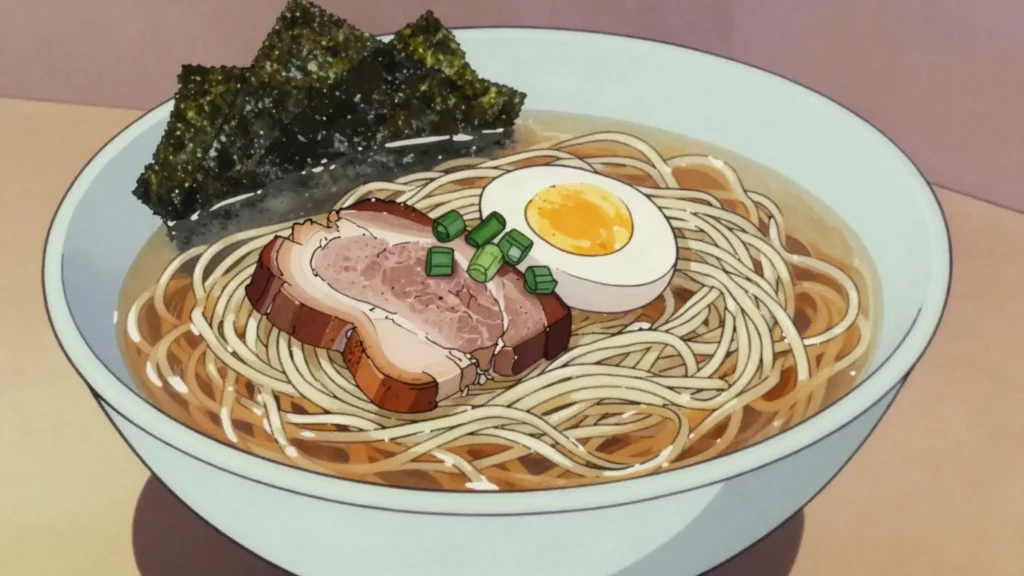
- Lay the noodles in the bowl and straighten them with chopsticks so they run in one direction, then arrange the chashu, halved ajitama, menma, spring onion and nori on top. Serve at once and eat fast, before the noodles soften.
Technique
- Ramen is a system, not a recipe: broth, tare, aroma oil, noodles and toppings are made separately and assembled in seconds. Change the tare and the same broth becomes shio, shoyu or miso ramen.
- Kansui, alkaline carbonate water, is what makes ramen noodles yellow, springy and slippery. Without it you have Italian pasta in soup.
- A chintan broth is held below the boil for clarity; tonkotsu is the opposite, boiled hard for 12 hours so the collagen and fat emulsify into a white broth.
- Never salt the broth. All the salt is in the tare, which lets you tune each bowl.
Substitutions
- No time for an 8 hour broth: a 2 hour pressure-cooked chicken wing broth with kombu and shiitake gives a respectable weeknight shoyu ramen.
- Dried ramen noodles are far better than fresh supermarket ones with no kansui; failing that, add 1 tsp of baked baking soda per litre of noodle water.
- Chashu can be made from pork shoulder, which is more forgiving than belly and slices without falling apart.
Variations
- Tonkotsu of Hakata, milky white pork bone broth with thin straight noodles and a kaedama refill.
- Sapporo miso ramen, with the tare fried in a wok with minced pork, bean sprouts and sweetcorn, finished with butter.
- Tsukemen, where thick cold noodles are dipped into a concentrated hot broth served separately.
History
Adapted from Chinese wheat-noodle soups brought by Chinese traders and workers into port cities, especially Yokohama’s Chinatown, in the late 1800s. It stayed a regional, mostly Chinese-restaurant dish until postwar American wheat aid flooded Japan with cheap flour, and returning soldiers and displaced workers needed fast, filling food; ramen carts and shops spread nationally through the 1950s. Momofuku Ando’s 1958 invention of instant ramen, born from watching long queues at a black-market ramen stall in Osaka, turned the dish into a global pantry staple, even as fresh ramen shops kept developing distinct regional broths, from Sapporo’s miso to Hakata’s tonkotsu pork bone.
Frequently asked questions
What is Ramen?
Ramen is a soup & stew from Japan: wheat noodles in pork, soy or miso broth with chashu and egg. Adapted from Chinese wheat-noodle soups brought by Chinese traders and workers into port cities, especially Yokohama’s Chinatown, in the late 1800s. It stayed a regional, mostly Chinese-restaurant dish until postwar American wheat aid flooded Japan with cheap flour, and returning soldiers and displaced workers needed fast, filling food; ramen carts and shops spread nationally through the 1950s. Momofuku Ando’s 1958 invention of instant ramen, born from watching long queues at a black-market ramen stall in Osaka, turned the dish into a global pantry staple, even as fresh ramen shops kept developing distinct regional broths, from Sapporo’s miso to Hakata’s tonkotsu pork bone.
How long does Ramen take to make?
Ramen takes 1 hr of preparation and 8 hr for the broth, plus overnight for the egg of cooking. The recipe makes 4 bowls. It is rated hard to make.
What can I substitute in Ramen?
Yes, within limits. No time for an 8 hour broth: a 2 hour pressure-cooked chicken wing broth with kombu and shiitake gives a respectable weeknight shoyu ramen. Dried ramen noodles are far better than fresh supermarket ones with no kansui; failing that, add 1 tsp of baked baking soda per litre of noodle water. Chashu can be made from pork shoulder, which is more forgiving than belly and slices without falling apart.
What is the most important thing to get right in Ramen?
Soak the bones in cold water 30 minutes, then blanch them in boiling water for 5 minutes, drain and scrub off every trace of grey scum. This is the difference between a clear broth and a murky one.