
Ingredients
The chicken
- 1whole chicken
- jointed into 8 or 10 pieces
- or 1.5 kg chicken pieces
- on the bone, skin on
The marinade
- 1 kgonions
- sliced thinly
- yes, that much
- juice of 6 limes
- or 4 lemons
- 3 tablespoonsDijon mustard
- 6 clovesgarlic, crushed
- 3 tablespoonsgroundnut oil
- 1stock cube
- or 2 teaspoons salt
- 1 teaspoonblack pepper
- 2bay leaves
For cooking
- 3 tablespoonsgroundnut oil
- 1Scotch bonnet chilli
- left whole and unbroken
- about 300 ml water or stock
- 1 tablespoonDijon mustard
- extra, to finish
Sometimes added
- 2carrots, sliced
- a few green olives
- 1 tablespoonnététou
- fermented locust bean
To serve
- plain white rice
- broken rice, if you have it
- or couscous
- lime wedges
Directions
- Slice them thinly rather than chopping them. Thin slices break down far better. Combine the sliced onions in a large bowl. Add the lime juice generously. Add the mustard and crushed garlic. Add the oil and the stock cube. Add the pepper and the bay leaves. Mix it all together thoroughly. Turn them so they are fully coated.
- Cover the bowl and refrigerate it. Four hours is the minimum here. Turn the chicken once during marinating. Marinate in the refrigerator, never at room temperature. Acid slows growth but does not stop it.
- Keep it cold throughout the marinating. Use a separate board for raw chicken. Wash hands, boards and knives thoroughly. Do not wash the raw chicken itself. Lift the chicken pieces out of the marinade. Shake the onions off each piece. Set the onions and liquid aside.
- Grill the pieces until well browned. They do not need to cook through yet. Grill outdoors in open air only. A very hot pan works indoors instead. Fry the chicken in oil if you prefer. Brown it well on all sides in a hot pan.
- Heat the oil in a large heavy pot. Add all of the marinated onions. Cook the onions over a medium heat. Stir them regularly so they do not catch. Cook them for a full thirty minutes. They must become genuinely soft and sweet. Return the browned chicken to the pot. Add any juices that collected. Add the water or the stock now.
- Add the whole Scotch bonnet chilli. Leave it completely unbroken at this stage. Add the carrots or olives if using them. Cover the pot partly and lower the heat. Simmer it for about thirty minutes. The chicken should be cooked right through. Check the thickest part near the bone. Stir in the extra spoonful of mustard.
- Add it near the end, not at the start. Adding some late keeps that edge. Taste it and balance it carefully. It should be sharp, sweet and savoury. Add more lime if it tastes flat. Add salt gradually and taste again. It should be thick and clinging.
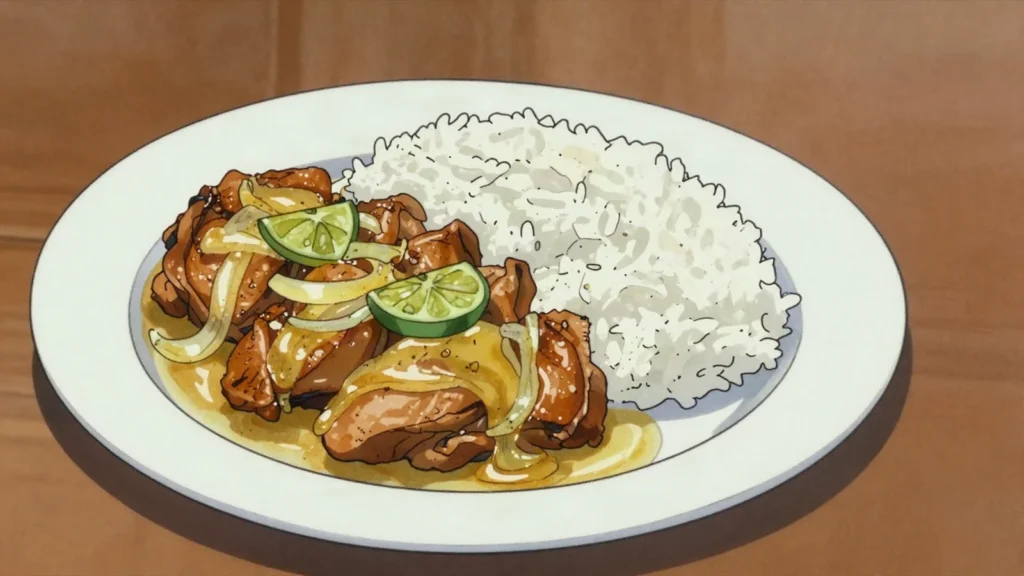
- Simmer it uncovered for ten minutes. Do not thicken the sauce with flour. Remove the chilli before serving. Serve it with plain white rice. Spoon the chicken and onions over the rice. Make sure everyone gets plenty of onion. Serve lime wedges on the table. Eating is done with the right hand. Wash hands before and after the meal. Leftovers keep three days refrigerated.
Technique
- A kilo of onion to one chicken is correct and many cooks use more. The onions are the body of the sauce, not a background aromatic, and their sweetness is what balances the sharp lime. Without enough of them the dish is simply sour.
- Cook the onions a full thirty minutes until genuinely soft and sweet. This is the step people rush, and undercooked onions leave the sauce harsh — the sweetness only develops with time.
- Stir in an extra spoonful of mustard near the end. Mustard loses its sharpness with cooking, so adding some late keeps that edge.
- Marinate in the refrigerator, never at room temperature. Acid slows bacterial growth but does not stop it, and raw chicken left warm is a genuine risk. Do not wash the raw chicken either — washing splashes bacteria around the kitchen and only cooking removes them from the meat.
- Shake the onions off the chicken before grilling or browning. Onion left clinging burns.
- Charcoal produces carbon monoxide, which has no colour, smell or taste and kills in enclosed spaces. Grill outdoors only; a very hot pan or oven grill works indoors, and frying is what many households do anyway.
- Leave the Scotch bonnet whole. Unbroken it perfumes the pot; burst it makes everything fiercely hot. Warn the table.
- Do not thicken the sauce with flour. The collapsed onions are the thickening, and if it is thin, reduce it uncovered.
- Yassa is Senegalese in origin, from Casamance and associated with the Jola people, and it spread north along the river trade routes. Mauritania makes it as its own dish now, and both things are true — a dish can be borrowed and become local without that making it a copy.
- The Dijon mustard and the stock cubes are French colonial imports absorbed into the cooking. The atlas records that rather than treating them as inauthentic; cuisines absorb what arrives and make it theirs.
Substitutions
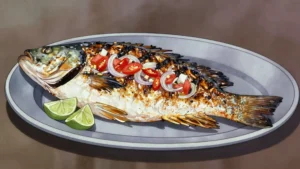
- Fish replaces chicken for yassa poisson, which is at least as common; grill it and add it near the end, since fish cooks quickly.
- Lamb or beef replace chicken for yassa viande and need longer simmering.
- Lemons replace limes, though lime is the usual choice.
- Any neutral oil replaces groundnut oil.
- A habanero replaces a Scotch bonnet closely.
- Stock cubes are near universal in the region; salt and a good stock do the same job.
- Couscous or ordinary long grain rice replace broken rice.
Variations
- Yassa poisson, made with grilled fish, is at least as common as the chicken version and is the Casamance original in many accounts.
- Yassa viande uses lamb or beef and needs a longer simmer.
- Some cooks add green olives, which is a common Senegalese addition.
- A version with nététou, fermented locust bean, has a deeper savoury note.
- Some households add carrots, which sweeten the sauce further.
- Thieboudienne and mafé are the other great dishes of the same Senegalese repertoire.
History
Borrowed from Casamance in southern Senegal; onions, lime and imported mustard combine in a sauce that spread north along the river trade routes.
Frequently asked questions
What is Yassa poulet?
Yassa poulet is a main from Mauritania: chicken smothered in tangy mustard, onion and lime sauce. Borrowed from Casamance in southern Senegal; onions, lime and imported mustard combine in a sauce that spread north along the river trade routes.
How long does Yassa poulet take to make?
Yassa poulet takes 20 minutes plus 4 hours marinating of preparation and 1 hour of cooking. The recipe makes serves 6. It is rated easy to make.
What can I substitute in Yassa poulet?
Yes, within limits. Fish replaces chicken for yassa poisson, which is at least as common; grill it and add it near the end, since fish cooks quickly. Lamb or beef replace chicken for yassa viande and need longer simmering. Lemons replace limes, though lime is the usual choice. Any neutral oil replaces groundnut oil. A habanero replaces a Scotch bonnet closely. Stock cubes are near universal in the region; salt and a good stock do the same job. Couscous or ordinary long grain rice replace broken rice.
What is the most important thing to get right in Yassa poulet?
Slice them thinly rather than chopping them. Thin slices break down far better. Combine the sliced onions in a large bowl. Add the lime juice generously. Add the mustard and crushed garlic. Add the oil and the stock cube. Add the pepper and the bay leaves. Mix it all together thoroughly. Turn them so they are fully coated.