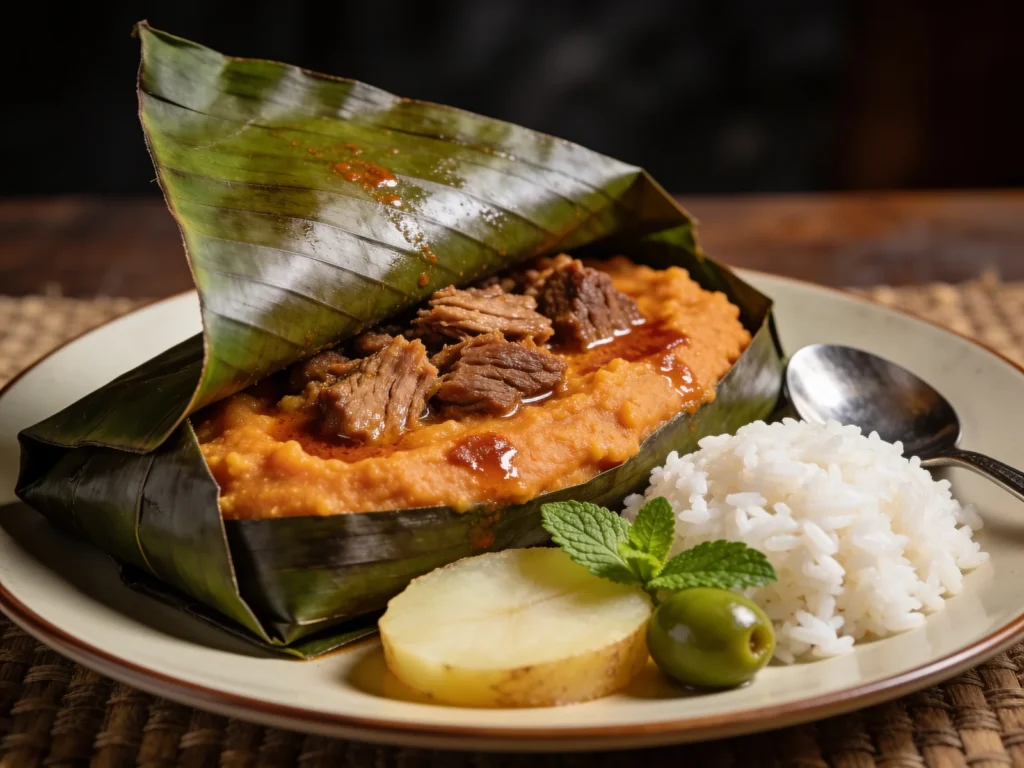

Ingredients
Masa
- 1 kgmasa de maiz (fresh nixtamalised corn dough), or 700 g masa harina mixed with 900 ml warm water
- 200 gmanteca (pork lard), softened
- 300 mlof the potato and achiote cooking water, warm
- 2 tbspachiote (annatto) paste, dissolved in a little hot water
- 1 tbspsalt
- Juice of 1 sour orange (naranja agria)
Pork and marinade
- 1.2 kgpork shoulder with some fat, in 6 large chunks
- Juice of 2 sour oranges, about 150 ml
- 6garlic cloves, crushed
- 1 tbspachiote paste
- 1 tspground cumin
- 2 tspsalt
- 1 tspblack pepper
- 1onion, grated
Filling
- 100 gwhite rice, rinsed and soaked 30 min, left raw
- 3potatoes, peeled and sliced 5 mm thick
- 1onion, in thin rings
- 2tomatoes, in thin rounds
- 1green sweet pepper (chiltoma), in rings
- 6 sprigsfresh spearmint (yerba buena)
- 12pitted green olives
- 3 tbspraisins or 6 prunes (optional)
- 1chilli, sliced (optional)
Wrapping
- 12large banana leaf pieces, about 35 cm square, plus 6 outer pieces of leaf or foil
- Kitchen string or strips of banana leaf spine
- 1very large pot with a rack or a bed of leaf ribs in the base
Directions
- Marinate the pork overnight in the sour orange juice, garlic, achiote, cumin, salt, pepper and grated onion. Sour orange is the Nicaraguan souring agent and it both flavours and tenderises the meat.
- Boil the potato slices in salted water with a spoon of achiote for 5 minutes so they are half cooked, then drain, keeping the coloured water for the masa.
- Beat the masa: work the lard into the corn dough with your hands for 8–10 minutes, adding the warm potato water, achiote, salt and sour orange juice a little at a time, until it is soft, deep orange and just short of pourable, like a very thick batter.
- Test it by dropping a small piece into a glass of cold water. If it floats, enough air has been beaten in; if it sinks, keep working.
- Soften the banana leaves by passing them over a gas flame or dipping them in boiling water for a few seconds each side, until they turn glossy and flexible. Unsoftened leaves crack along the ribs when folded.
- Assemble each parcel: lay two leaves in a cross, put a large ladle of masa in the centre and spread it to a rough 18 cm circle. Onto it lay a chunk of pork with its marinade, a spoon of raw rice, two potato slices, onion rings, tomato, chiltoma, olives, raisins, chilli and a sprig of mint.
- Fold the leaf up over the filling from all four sides into a tight rectangular parcel, wrap it in the outer leaf or foil, and tie it firmly in both directions with string. It must be tight; a loose parcel lets water in and the masa dissolves.
- Stand the parcels upright and packed together in the pot on a rack or a bed of leaf ribs, add boiling water to come one third of the way up, cover tightly and weight the lid.
- Boil steadily for 4 hours, topping up with boiling water as needed and never letting the pot run dry. Do not open before 3 hours.
- One is done when the masa has set firm all the way through, comes cleanly away from the leaf, and the pork is falling apart. Rest the parcels 20 minutes so the masa firms further.
- Serve them still wrapped, one per person, opened at the table so the steam and the smell of leaf and mint come out together, with bread, pickled onion and strong black coffee. This is Sunday morning in Nicaragua.
Technique
- The rice goes in raw. It cooks in the parcel, absorbing the pork fat and juices, and pre-cooked rice turns to paste over four hours.
- Yerba buena, spearmint, is the signature of a Nicaraguan nacatamal and is what distinguishes it from a Guatemalan or Mexican tamal. One sprig per parcel is enough.
- The float test for the masa is the same principle as for a tamal anywhere: air beaten into the lard is what makes the finished dough light rather than dense.
- Nacatamales are made in batches of dozens for weekends and holidays because they take a whole day; families reheat them by steaming, never in the oven.
Substitutions
- No sour orange: use 2 parts orange juice to 1 part lime juice plus 1 part grapefruit juice, which is the standard workaround.
- No fresh masa: masa harina reconstituted with warm water works, though the texture is slightly less tender. Do not use polenta or cornflour, which are not nixtamalised and will not set the same way.
- Banana leaves can be replaced by parchment inside foil, but you lose the leaf perfume that is half the dish.
Variations
- Nacatamal with chicken instead of pork, common where pork is scarce.
- Yoltamal, a sweet fresh-corn tamale eaten with cream, a different dish from the same tradition.
- Nacatamal de gallina india, made with free-range hen for special occasions.
History
A large tamale, its corn masa wrapped around a filling of pork, rice, potato, tomato, pepper and often prunes or olives, wrapped in banana leaf and steamed for several hours, developed in Nicaraguan home cooking as an elaborate, labor-intensive dish traditionally prepared specifically for weekend mornings and special occasions rather than routine weekday meals. Its considerably larger size and more elaborate filling compared to tamales found in neighboring Central American and Mexican traditions distinguishes nacatamal as its own particular Nicaraguan specialty within the broader Mesoamerican tamale family. It remains especially closely associated with Sunday breakfast across Nicaragua, commonly prepared the night before and left to steam overnight in preparation for weekend family gatherings.
Frequently asked questions
What is Nacatamal?
Nacatamal is a main from Nicaragua: large banana-leaf tamale with pork, rice, potato; Sunday breakfast. A large tamale, its corn masa wrapped around a filling of pork, rice, potato, tomato, pepper and often prunes or olives, wrapped in banana leaf and steamed for several hours, developed in Nicaraguan home cooking as an elaborate, labor-intensive dish traditionally prepared specifically for weekend mornings and special occasions rather than routine weekday meals. Its considerably larger size and more elaborate filling compared to tamales found in neighboring Central American and Mexican traditions distinguishes nacatamal as its own particular Nicaraguan specialty within the broader Mesoamerican tamale family. It remains especially closely associated with Sunday breakfast across Nicaragua, commonly prepared the night before and left to steam overnight in preparation for weekend family gatherings.
How long does Nacatamal take to make?
Nacatamal takes 1 hr 30 min plus overnight marinating of preparation and 4 hr of cooking. The recipe makes 6 large nacatamales. It is rated hard to make.
What can I substitute in Nacatamal?
Yes, within limits. No sour orange: use 2 parts orange juice to 1 part lime juice plus 1 part grapefruit juice, which is the standard workaround. No fresh masa: masa harina reconstituted with warm water works, though the texture is slightly less tender. Do not use polenta or cornflour, which are not nixtamalised and will not set the same way. Banana leaves can be replaced by parchment inside foil, but you lose the leaf perfume that is half the dish.
What is the most important thing to get right in Nacatamal?
Fold the leaf up over the filling from all four sides into a tight rectangular parcel, wrap it in the outer leaf or foil, and tie it firmly in both directions with string. It must be tight; a loose parcel lets water in and the masa dissolves.