
Ingredients
The noodles
- 150 gglass noodles
- mung bean vermicelli
- soaked in warm water
The protein
- 200 gminced pork
- 200 graw prawns
- peeled and deveined
- or squid, or a mixture
The dressing
- 4 tablespoonsfish sauce
- juice of 4 limes
- or more, to taste
- 2 tablespoonspalm sugar
- or caster sugar
- 4 clovesgarlic, finely chopped
- 4to 8 bird’s eye chillies
- chopped, to taste
The vegetables and herbs
- 1small red onion, sliced thinly
- or 4 shallots
- 3spring onions, cut into lengths
- 2tomatoes, cut into wedges
- optional
- 2 stickscelery, sliced thinly
- optional
- a large handful of coriander
- a handful of mint
- optional
To finish
- 3 tablespoonsroasted peanuts
- roughly crushed
- 2 tablespoonsdried shrimp
- soaked and chopped, optional
Directions
- Soak them in warm water. Give them ten minutes until pliable. Rinse them in cold water at once. That stops the cooking. Cut the drained noodles with scissors. Cut them into shorter lengths. Drain them thoroughly. Wet noodles dilute the dressing. Cook the pork and prawns separately. Poach them in a little water.
- Break the mince up in simmering water. Give it three or four minutes. Mince carries surface bacteria through the interior. There should be no pink. Poach them for two minutes only. They should turn pink and curl loosely.
- Drain and cool both. Hot protein wilts the herbs and onion. Add the fish sauce. Add the chopped garlic and chilli. It should be sharply sour first.
- Taste it before it goes on. It should taste slightly too strong alone. Adjust it to your tolerance. Slice the onion very thinly. Soak the slices in cold water ten minutes if you find it harsh. Drain and dry them. Soak them in warm water ten minutes.
- Chop them roughly. Put the noodles in a large bowl. Add the cooled pork and prawns. Add the onion, spring onion and celery. Add the dressing.
- Toss it thoroughly with your hands or tongs. Toss them properly so the dressing reaches everything. Add the coriander and mint last. Toss them through gently. Add them last too. Scatter them over at the end. They swell and go soft.
- Make the dressing slightly loose to allow for it. Serve it at room temperature. Serve it with rice. Serve it as one dish among several. Everyone takes from all of them.
Technique
- Never boil glass noodles. Soak them in warm water until pliable, dip them in boiling water for twenty or thirty seconds, then rinse in cold. They overcook in seconds into mush.
- Cut the drained noodles with scissors into shorter lengths. Uncut they are impossible to eat with a spoon and tangle rather than tossing.
- Cool the pork and prawns before they go in. Hot protein wilts the herbs and onion and makes the salad watery — a yam is a room-temperature dish.
- Dress it shortly before serving. Glass noodles absorb liquid enormously, so they swell and soften, the onion weeps and the herbs darken — within an hour it is a different dish. Make the dressing slightly loose to allow for the absorption.
- Make the dressing assertive and taste it alone before it goes on. It should be sharply sour first, then salty, hot and faintly sweet, and should taste slightly too strong on its own, since the noodles and vegetables dilute it.
- The sugar is not there to sweeten. It rounds the sourness and salt, and without it the dressing is harsh.
- Two minutes for the prawns. A loose C is done; a tight O is overcooked. Minced pork, by contrast, must be cooked through with no pink, since mince carries surface bacteria into the interior.
- Add herbs, tomatoes and peanuts last. Herbs bruise and darken when tossed hard, tomatoes break up, and peanuts soften in the dressing.
- Glass noodles are mung bean starch and turn translucent — not the same as rice vermicelli, which stays white and opaque.
- Toss thoroughly with hands or tongs. Glass noodles cling together and the dressing will not reach everything otherwise.
- Chinese celery is thinner and more strongly flavoured than ordinary celery and is what is traditionally used.
- A yam is a main dish among several on a Thai table, eaten with rice, rather than a side salad.
- This contains fish sauce, shellfish and peanuts, and both peanut and shellfish allergies can be severe. Say so plainly.
Substitutions
- Squid, chicken or firm tofu replace or join the pork and prawns.
- Ordinary celery replaces Chinese celery.
- Caster sugar replaces palm sugar.
- Dried shrimp are optional and add savoury depth.
- Shallots replace red onion and are more traditional.
- A vegetarian version needs a soy-based sauce in place of fish sauce and is a considerable departure.
Variations
- Yam talay uses mixed seafood instead of pork.
- Som tam, the green papaya salad, is the best known Thai yam-family dish.
- Larb uses minced meat with toasted rice powder and no noodles.
- Yam pla duk foo pairs crispy catfish with a green mango salad.
- Glass noodle salads across Southeast Asia follow the same principle.
- A version with more vegetables and less protein is served as a lighter dish.
Frequently asked questions
What is Yam Woon Sen?
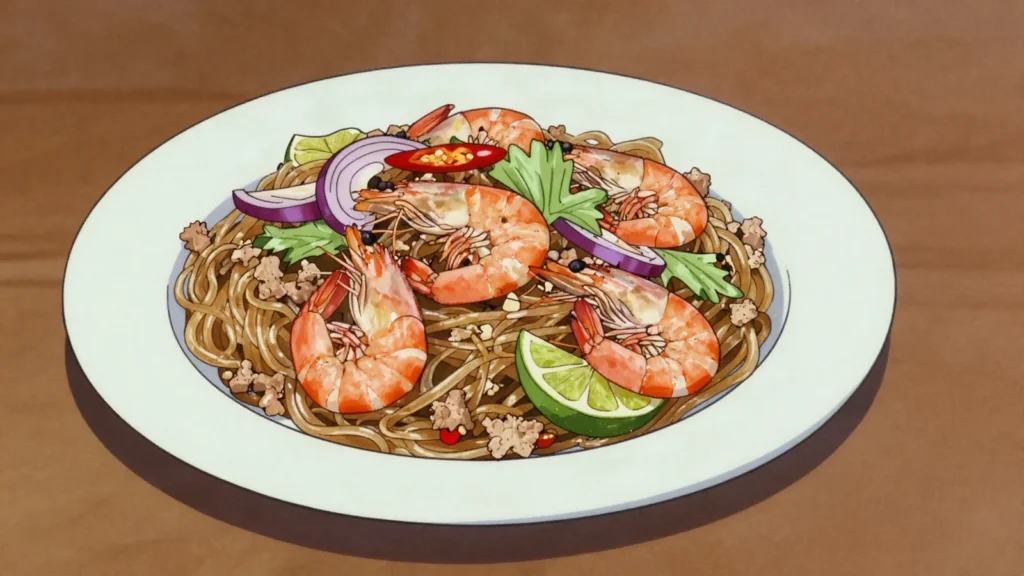
Yam Woon Sen is a salad & side from Thailand: glass noodles tossed with minced pork, prawns, lime, chilli and fish sauce.
How long does Yam Woon Sen take to make?
Yam Woon Sen takes 25 minutes of preparation and 10 minutes of cooking. The recipe makes serves 4. It is rated easy to make.
What can I substitute in Yam Woon Sen?
Yes, within limits. Squid, chicken or firm tofu replace or join the pork and prawns. Ordinary celery replaces Chinese celery. Caster sugar replaces palm sugar. Dried shrimp are optional and add savoury depth. Shallots replace red onion and are more traditional. A vegetarian version needs a soy-based sauce in place of fish sauce and is a considerable departure.
What is the most important thing to get right in Yam Woon Sen?
Never boil glass noodles. Soak them in warm water until pliable, dip them in boiling water for twenty or thirty seconds, then rinse in cold. They overcook in seconds into mush.