
Ingredients
Noodles
- 1 kgfresh khanom jeen noodles
- sold in coiled nests
- or 500 g dried rice vermicelli
Nam ya, fish curry sauce
- 500 gwhite fish fillet
- 400 mlcoconut milk
- 4 tablespoonsred curry paste
- 4 sliceskrachai, fingerroot
- 2 tablespoonsfish sauce
- 1 tablespoonpalm sugar
- 200 mlwater or stock
- salt
Raw vegetables
- beansprouts
- shredded white cabbage
- long beans, cut short
- cucumber, sliced
- Thai basil and mint
- pickled mustard greens
- banana blossom, sliced thin
On the table
- dried chilli flakes
- fish sauce with chilli
- sugar
- lime wedges
Directions
- Poach the fish in lightly salted water. Give it about eight minutes until cooked. Lift it out and let it cool a little. Keep the poaching liquid for the sauce. Flaking the fish takes real care. Flake the cooked fish with your fingers. Check very carefully for any bones. Discard the skin and any dark flesh.
- Put the flaked fish in a mortar. Add the sliced krachai in with it. Pound them together into a paste. The sauce thickens because of it. Put the thick part of the coconut milk in a pan. Heat it over a medium heat steadily. Let it bubble until the oil separates. That takes about five minutes. Add the red curry paste to the split oil. Fry it steadily for three or four minutes.
- Stir it constantly as it fries. It should darken and smell strongly. Add the pounded fish and krachai paste. Stir it through the fried curry paste. Add the rest of the coconut milk. Add the poaching liquid or stock. Bring it up to a gentle simmer. Seasoning it is done by tasting.
- Add the fish sauce and the palm sugar. Let it simmer for about ten minutes. Taste it and adjust the balance. It should be salty, sweet and hot together. Add water if it has reduced too far. Fresh noodles need only to be loosened. Lay the coiled nests out on a platter. Leave them at room temperature. Cooking dried vermicelli takes a moment.
- Soak dried vermicelli in hot water. Give it about six minutes until soft. Drain it and rinse it under cold water. That stops the strands clumping together.
- Wash and dry all the raw vegetables. Shred the cabbage very finely. Cut the long beans into short lengths. Slice the cucumber and banana blossom. Pile them all onto a large platter. Slice it into acidulated water. Lemon or lime water keeps it pale. Slice it at the last moment if you can. Serving it is done as a spread.
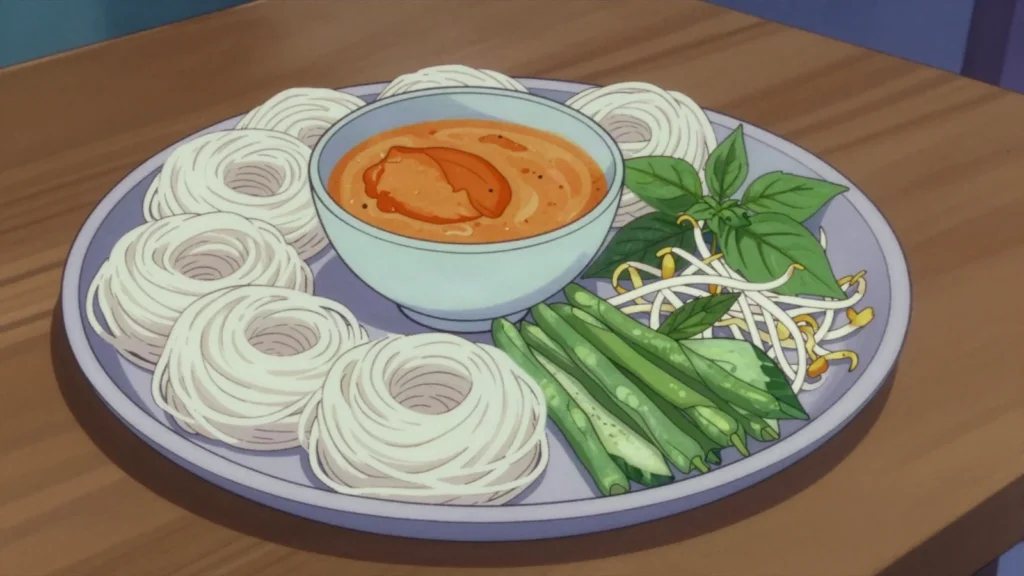
- Set the noodle nests out on a platter. Put the hot sauce in a bowl alongside. Set the vegetable platter on the table. Put chilli, fish sauce, sugar and lime out. They take noodles and ladle sauce over them.
Technique
- The name is often said to mean Chinese noodle since jeen means Chinese in modern Thai, but it is thought to come from a Mon word relating to cooking or boiling; the Chinese reading appears to be a later folk explanation, and the atlas records the Mon origin as the likelier one.
- The rice is soaked and fermented for days before extrusion, which gives these noodles a faint sourness and very soft texture that ordinary unfermented rice noodles do not have; they are genuinely difficult to make at home, needing days of attention and a press that extrudes the dough directly into boiling water, so they are bought fresh almost everywhere in Thailand.
- The noodles are served at room temperature and only the sauce is hot, and the large plate of raw vegetables alongside is a main component rather than a garnish, cutting the richness of the coconut sauce and adding crunch against the soft noodles.
Substitutions
- Dried rice vermicelli is the practical substitute, though it lacks the fermented sourness.
- Krachai, fingerroot, is central to nam ya and hard to replace.
Variations
- Nam ya, nam prik, nam ngiao and green curry are all served over the same noodles.
- Northern Thailand favours nam ngiao with tomato and pork.
- The raw vegetable plate varies with the season and the region.
History
The rice is fermented for days before extrusion; the name is thought to come from a Mon word, and the noodles are a temple and festival food.
Frequently asked questions
What is Khanom Jeen?
Khanom Jeen is a main from Thailand: soft fermented rice vermicelli served cold under curry sauces and raw vegetables. The rice is fermented for days before extrusion; the name is thought to come from a Mon word, and the noodles are a temple and festival food.
How long does Khanom Jeen take to make?
Khanom Jeen takes 30 minutes, if buying noodles of preparation and 45 minutes of cooking. The recipe makes serves 6. It is rated medium to make.
What can I substitute in Khanom Jeen?
Yes, within limits. Dried rice vermicelli is the practical substitute, though it lacks the fermented sourness. Krachai, fingerroot, is central to nam ya and hard to replace.
What is the most important thing to get right in Khanom Jeen?
Wash and dry all the raw vegetables. Shred the cabbage very finely. Cut the long beans into short lengths. Slice the cucumber and banana blossom. Pile them all onto a large platter. Slice it into acidulated water. Lemon or lime water keeps it pale. Slice it at the last moment if you can. Serving it is done as a spread.