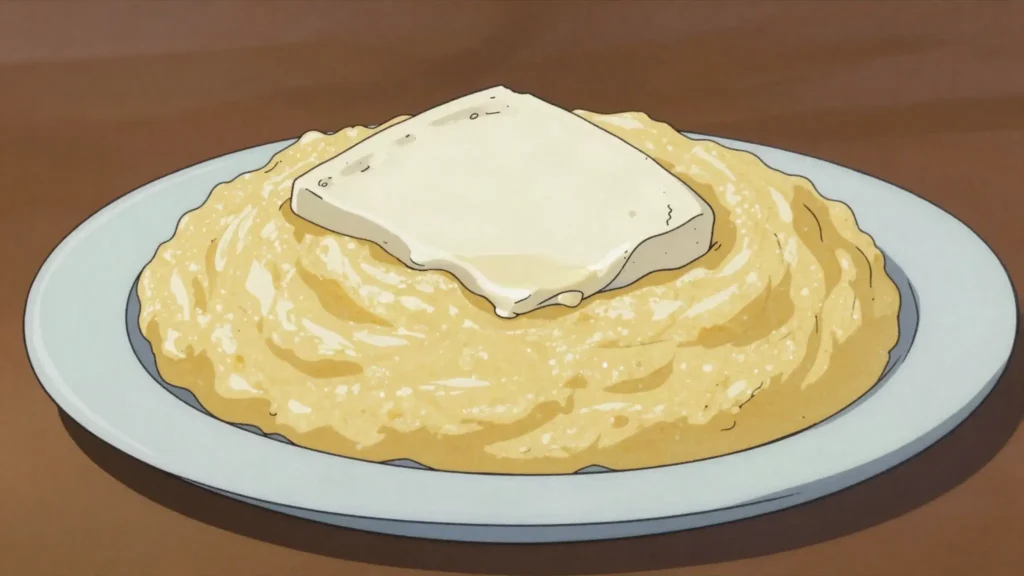

Ingredients
Porridge
- 200 gcoarse white cornmeal, or ghomi flour
- 100 gfine white cornmeal
- 1.5 litreswater
To serve
- 300 gsulguni cheese, sliced
- a stew such as chicken chakhokhbili or kharcho
Note
- no salt, and no butter, are added to the porridge itself
Directions
- Rinse the coarse meal in cold water and drain it if it looks dusty. Now the cooking, which is long and needs attention at the end.
- Bring the water to the boil in a heavy pot with a thick base. A thin pot will catch and burn, since this porridge is stirred against the bottom.
- Stir constantly as you add it so no lumps form. Cook it for twenty-five minutes, stirring every few minutes. Sprinkle the fine cornmeal over the surface in a thin layer. Beat it in hard with a wooden spoon or a flat paddle.
- Cook it for a further fifteen minutes, beating it every couple of minutes. Now judging when it is done, which is by texture rather than time.
- Add a splash of hot water if it has gone stiffer than that. Now the salt question, which people always ask about.
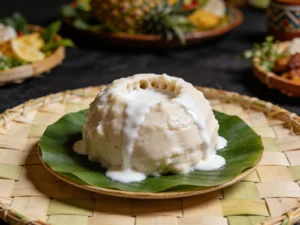
- Spoon a thick mound onto each plate with a wet spoon. Press a hollow in the top with the back of the spoon. Lay slices of sulguni on the hot porridge so they begin to soften and stretch.
- Spoon the stew alongside rather than over the top. It must be eaten hot, since ghomi sets solid as it cools.
Technique
- No salt goes into ghomi, since the seasoning comes from the cheese and the stew.
- Use white cornmeal, not yellow, for the correct colour and flavour.
- Beat it against the bottom of a heavy pot, since a thin pot will scorch.
Substitutions
- Fine polenta plus coarse polenta, if ghomi flour is unavailable.
- Mozzarella in place of sulguni, though it is a poor substitute.
Variations
- Elarji, with sulguni beaten right into the porridge.
- Served with ajika and cheese only, as a plain meal.
- Sliced cold and fried in butter the next day.
History
The staple of western Georgia, originally made from millet before maize arrived; it carries stews and cheeses rather than being seasoned.
Frequently asked questions
What is Ghomi?
Ghomi is a salad & side from Georgia: thick unsalted cornmeal porridge eaten hot with cheese instead of bread. The staple of western Georgia, originally made from millet before maize arrived; it carries stews and cheeses rather than being seasoned.
How long does Ghomi take to make?
Ghomi takes 5 min of preparation and 40 min of cooking. The recipe makes 4 servings. It is rated easy to make.
What can I substitute in Ghomi?
Yes, within limits. Fine polenta plus coarse polenta, if ghomi flour is unavailable. Mozzarella in place of sulguni, though it is a poor substitute.
What is the most important thing to get right in Ghomi?
Cook it for a further fifteen minutes, beating it every couple of minutes. Now judging when it is done, which is by texture rather than time.