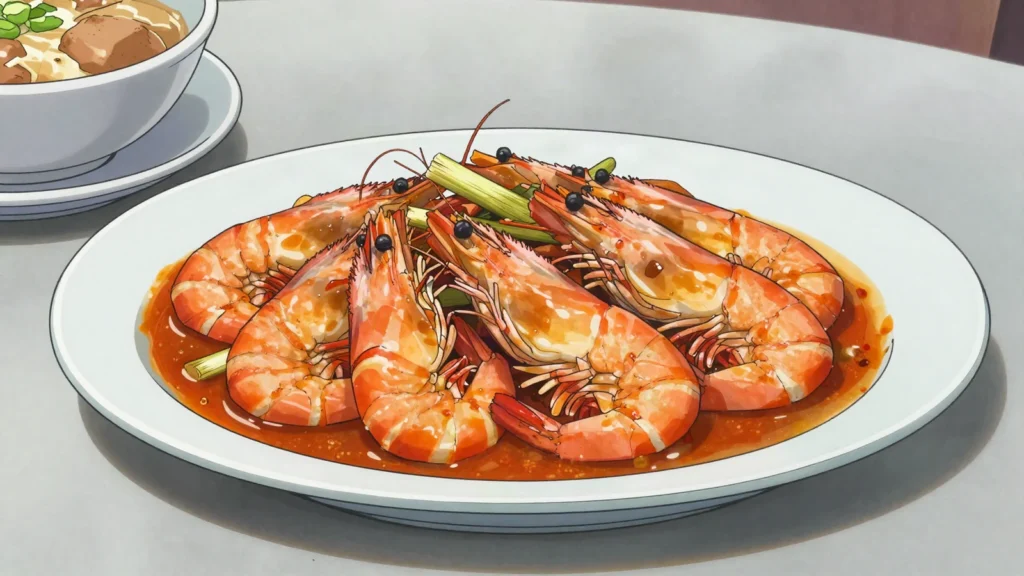

Ingredients
The prawns
- 800 glarge raw prawns
- shell on, heads on if possible
- peeled and deveined
- shells reserved
The spice paste
- 10dried red chillies
- soaked in hot water
- or to taste
- 4fresh red chillies
- 2large onions, or 8 shallots
- 6 clovesgarlic
- 4 stalkslemongrass
- tender inner part only
- sliced thinly
- a thumb of galangal
- or ginger
- 2 teaspoonsbelacan
- shrimp paste, toasted
- see the note
- 2candlenuts, optional
- or 2 macadamia nuts
The sauce
- 400 mlcoconut milk
- full fat
- plus 200 ml thick coconut cream
- for the finish
- 3 tablespoonsoil
- 2 stalkslemongrass, bruised
- left whole
- 4kaffir lime leaves
- or makrut lime leaves
- 1 tablespoontamarind water
- or juice of 1 lime
- 1 tablespoonpalm sugar
- salt, to taste
To serve
- steamed white rice
- cucumber slices
- a simple vegetable dish
- lime wedges
Directions
- Oil and gas dominate its economy entirely. It must be toasted before use. Wrap a piece in foil and toast it. Toast it in a dry pan for a few minutes. Turn it so it heats through evenly. Peel them but keep the shells.
- Fry them in a little oil until pink. Add water and simmer for fifteen minutes. Strain it and use it in the sauce. Cut a shallow slit along the back. Lift the dark thread out with a knife tip. Rinse the prawn briefly and pat it dry. Large prawns need this more than small ones. Soak the dried chillies in hot water. Soak them for twenty minutes until soft. Remove the seeds for a milder paste.
- Leave them in for a fiercer one. Capsaicin oil clings to skin for hours. Trim off the dry top two thirds. Peel away the tough outer layers. Slice it very thinly across the grain. Thick slices are unpleasant to eat. Put the chillies, onion and garlic in a blender. Add the sliced lemongrass and galangal.
- Add the toasted belacan and the candlenuts. Add a splash of water to help it move. Blend it into a completely smooth paste. That blending takes several minutes. Heat the oil in a wide heavy pan. Add the paste and lower the heat. You fry until the oil separates out.
- Stir it very frequently throughout. Lower the heat if it starts to stick. Add the lime leaves, torn slightly. Fry them for a minute in the paste. Pour it in and stir it through. Add the prawn stock if you made it. Bring it up to a gentle simmer. Never let coconut milk boil hard. Keep it at a bare simmer throughout. Simmer it for ten minutes to thicken. Taste it and adjust carefully.
- Add salt gradually and taste again. Three to four minutes is usually enough. Add it in the last minute only. Stir it through gently and warm it. Do not let it boil at this point.
- Take the pan off the heat entirely. Taste it one final time before serving. Squeeze a little lime if it needs lifting. Serve it hot with steamed white rice. Leftovers keep two days in the fridge. Freeze the sauce without the prawns. Add fresh prawns when you reheat it.
Technique
- Frying the spice paste until the oil separates — pecah minyak, breaking the oil — is the step that decides the dish. It takes fifteen to twenty patient minutes with frequent stirring, and it cannot be rushed. Undercooked rempah tastes raw and sharp no matter what else you do.
- Prawns are a major shellfish allergen and belacan is a shrimp product, so the sauce itself contains shellfish. Removing the prawns does not make it safe for a shellfish-allergic guest. Candlenuts are a tree nut concern as well. Say what is in it.
- Belacan must be toasted before use — wrapped in foil in a dry pan for a few minutes. It smells extremely strong raw and while toasting, and it transforms into something deeply savoury when cooked. Open a window, or toast it outdoors as some cooks do.
- Prawns cook in three to four minutes and overcooking is the most common failure. A loose C shape is right; a tight curl means they have gone. Watch them rather than the clock.
- Never boil coconut milk hard — it splits into grainy oil. Keep the sauce at a bare simmer and add the thick cream only in the last minute.
- Use only the tender pale inner section of the lemongrass and slice it very thinly across the grain. The stalk is extremely fibrous and thick slices neither blend smooth nor eat well.
- Keep the prawn shells and heads and make a quick stock with them. Five minutes of frying and fifteen of simmering deepens the sauce noticeably.
- The dish is associated with the Bruneian royal table and served at state occasions — prawns are expensive and a rich coconut sauce is generous cooking. It is also cooked in ordinary households, and both things are true.
Substitutions
- Ginger replaces galangal, though galangal is sharper and more resinous and is the correct root.
- Macadamia nuts replace candlenuts closely; blanched almonds are a distant third. Both can be left out.
- Lime juice replaces tamarind water for the sourness, giving a brighter and less deep result.
- Brown sugar replaces palm sugar.
- Frozen makrut lime leaves work well; dried ones are much weaker.
- Chicken or firm white fish replaces prawns, though the dish is then a different one — and a shellfish-allergic guest still cannot eat it because of the belacan.
- Fewer dried chillies makes a considerably milder sauce; seeding them all does the same.
Variations
- Sambal udang without coconut milk is drier, hotter and more concentrated, and is made across Malaysia and Singapore.
- Udang masak lemak is the closely related Malaysian dish, usually with turmeric and no dried chilli.
- A version with petai, the strong-smelling stink bean, is common in Malaysia and Brunei alike.
- Squid or fish cooked in the same sauce is equally common in Bruneian households.
- Ambuyat, the sago starch eaten with a bamboo fork, is Brunei’s national dish and takes sharply flavoured sauces alongside.
- Some cooks add okra or aubergine to the sauce, making it a fuller one-pot dish.
History
A dish associated with the Bruneian royal table and served at official banquets and state occasions.
Frequently asked questions
What is Udang Sambal Serai Bersantan?
Udang Sambal Serai Bersantan is a main from Brunei: prawns cooked in coconut milk with lemongrass and chilli paste. A dish associated with the Bruneian royal table and served at official banquets and state occasions.
How long does Udang Sambal Serai Bersantan take to make?
Udang Sambal Serai Bersantan takes 30 minutes of preparation and 30 minutes of cooking. The recipe makes serves 4. It is rated medium to make.
What can I substitute in Udang Sambal Serai Bersantan?
Yes, within limits. Ginger replaces galangal, though galangal is sharper and more resinous and is the correct root. Macadamia nuts replace candlenuts closely; blanched almonds are a distant third. Both can be left out. Lime juice replaces tamarind water for the sourness, giving a brighter and less deep result. Brown sugar replaces palm sugar. Frozen makrut lime leaves work well; dried ones are much weaker. Chicken or firm white fish replaces prawns, though the dish is then a different one — and a shellfish-allergic guest still cannot eat it because of the belacan. Fewer dried chillies makes a considerably milder sauce; seeding them all does the same.
What is the most important thing to get right in Udang Sambal Serai Bersantan?
Oil and gas dominate its economy entirely. It must be toasted before use. Wrap a piece in foil and toast it. Toast it in a dry pan for a few minutes. Turn it so it heats through evenly. Peel them but keep the shells.