
Ingredients
Meat
- 1.5 kgpork belly or shoulder
- or 1.5 kg beef, in chunks
- with its own fat left on
- 2 teaspoonssalt
To flavour
- 10garlic cloves, crushed
- 3cm ginger, grated
- 2onions, chopped
- 1 teaspoonblack pepper
- 2 tablespoonssoy sauce, optional
- about 300 ml water
Sometimes added
- 2tomatoes, chopped
- 1 teaspoonsugar
- a piece of dried fish
To serve
- plain rice, plenty of it
- bredes, cooked greens
- sakay, chilli paste
- ranovola, the rice water drink
Directions
- Keep cooked meat refrigerated rather than out. Discard it if it smells at all wrong. The meat must have plenty of its own fat.
- Cut the meat into large even chunks. Aim for pieces about four centimetres. Leave all the fat attached to them. Season them with salt and black pepper. Put the meat in a wide heavy pot.
- Add the crushed garlic and grated ginger. Add the chopped onions to the pot. Pour in the water to come partway up.
- Add the soy sauce if you are using it. Bring the whole pot up to a simmer. Cover the pot and let it simmer. Give it about one full hour of that. Check it and add a splash of water if dry. Take the lid off the pot entirely. Turn the heat up very slightly.
- Let the liquid boil away steadily. Frying it down takes real attention. Stir it regularly from this point. Give it about thirty minutes of this.
- Take it off before anything blackens. Serving it is done hot with rice. Spoon the meat over plenty of plain rice. Spoon a little of the fat over it too. Serve cooked greens alongside.
- Put sakay on the table for those who want heat. It keeps four days refrigerated.
Technique
- The meat is braised in water until the liquid boils away entirely, after which it fries in its own rendered fat; that two-stage cooking is the whole technique, and the sound changing from bubbling to sizzling is the signal.
- Long cooking drives out the water and the rendered fat coats the meat, which together extend its life; it was traditionally kept for days at room temperature, but modern practice should refrigerate it and reheat it thoroughly right through.
- Rice is the centre of the Malagasy meal and consumption per person is among the highest anywhere, so the meat is a strongly flavoured relish beside it, which is why it is cooked so intensely.
Substitutions
- Beef with plenty of fat works in place of pork and cooks the same way.
- The soy sauce is a modern addition and can be left out entirely.
Variations
- Some cooks add tomato to the pot for a slightly different result.
- Pouring off most of the fat at the end gives a lighter dish.
- Brede mafana and other cooked greens are the usual accompaniment.
History
A Malagasy way of cooking meat down until it keeps for days, served with plain rice and greens.
Frequently asked questions
What is Hena ritra?
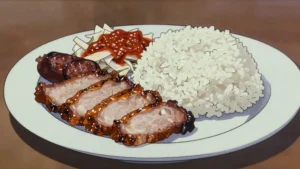
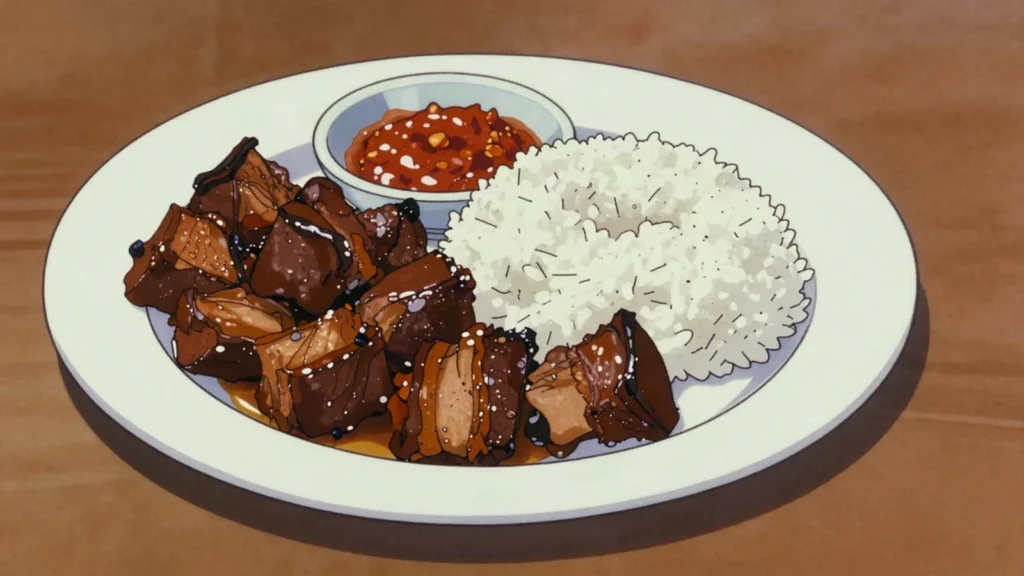
Hena ritra is a main from Madagascar: pork or beef simmered in its own fat until dark and caramelised. A Malagasy way of cooking meat down until it keeps for days, served with plain rice and greens.
How long does Hena ritra take to make?
Hena ritra takes 20 minutes of preparation and 2 hours of cooking. The recipe makes serves 6. It is rated easy to make.
What can I substitute in Hena ritra?
Yes, within limits. Beef with plenty of fat works in place of pork and cooks the same way. The soy sauce is a modern addition and can be left out entirely.
What is the most important thing to get right in Hena ritra?
Keep cooked meat refrigerated rather than out. Discard it if it smells at all wrong. The meat must have plenty of its own fat.