
Ingredients
Sambal oelek
- 300 gfresh red chillies
- 1 tspsalt
- 1 tbspvinegar or lime juice
- 1 tspsugar
Sambal terasi
- the above plus 2 tsp terasi, shrimp paste, toasted
- 6shallots
- 4 clovesgarlic
- 2tomatoes
To cook
- 4 tbspoil
Equipment
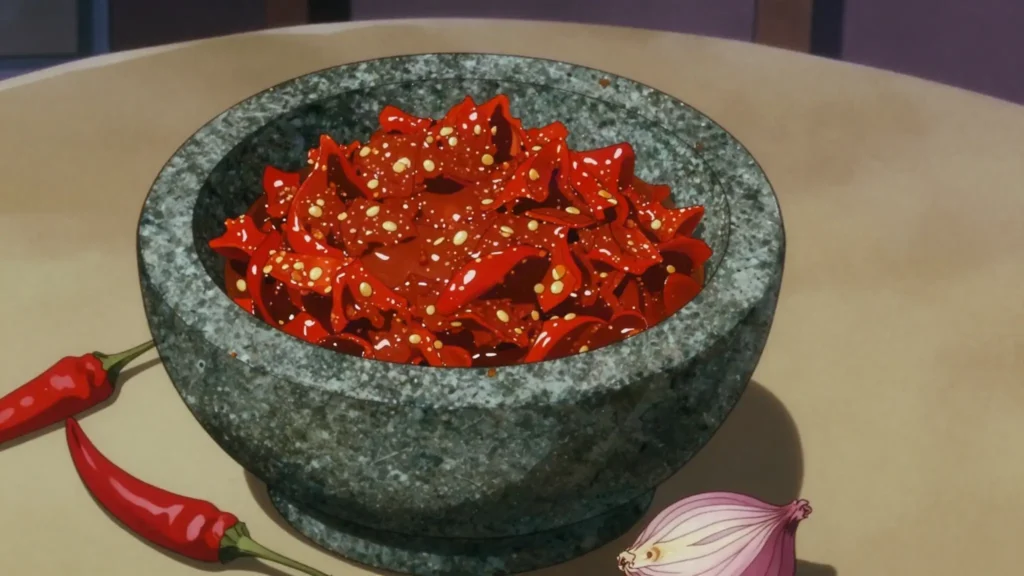
- a cobek and ulekan, the Indonesian stone mortar and pestle
- gloves
To serve
- with everything
Directions
- Work in a ventilated room and do not lean over the mortar. If you use a blender, pulse it in short bursts and stop while it is still coarse.
- Trim the chillies and decide about the seeds. Indonesian sambal generally keeps them. Keep it coarse. Sambal oelek should have visible flecks and a rough texture, not be a smooth purée.
- Add the vinegar and sugar and grind them through. Now cook it, which is what makes it keep. Heat the oil in a pan and fry the paste over a medium heat for 8 to 10 minutes.
- Fry it until the raw smell has gone and the oil separates and rises to the surface. Raw sambal is sharper and brighter but it lasts only days, and cooked sambal keeps for weeks.
- Wrap the terasi in foil and toast it in a dry pan for 2 or 3 minutes, or hold it over a flame on a skewer.
- Grind the toasted terasi with the shallots, garlic and chillies, then the tomato, then fry the whole lot as before.
- Taste it and balance the salt, sugar and acid. A good sambal is hot first, then salty, then faintly sweet and sour behind, and the balance is what people judge.
Technique
- Sambal oelek is the base for many other sambals and is worth keeping in the fridge.
- The stone cobek is porous and takes on flavour, and Indonesian cooks keep separate ones.
- It freezes well in ice cube trays.
Substitutions
- A blender pulsed briefly, accepting a different texture.
- Any hot fresh red chilli, adjusting for heat.
Variations
- Sambal matah, raw with lemongrass and shallot.
- Sambal ijo, made with green chillies.
- Sambal bajak, fried long and dark with candlenut.
History
A category of spicy chili-based condiment, made by grinding or pounding chili with additional ingredients including garlic, shallot, shrimp paste or tomato, documented across Indonesia with hundreds of distinct regional and family variations found throughout the country’s many islands and ethnic communities, reflecting the sheer diversity of Indonesia’s regional culinary traditions. Its preparation, traditionally done using a mortar and pestle called a cobek and ulekan, is considered by many Indonesian cooks essential to achieving the correct texture and released aromatic oils compared to a modern blender, and a specific family’s or region’s particular sambal recipe is often treated as a point of significant culinary pride. Sambal remains an absolutely essential and universal condiment across virtually all of Indonesian cuisine.
Frequently asked questions
What is Sambal?
Sambal is a sauce & condiment from Indonesia: chili relishes pounded fresh; hundreds of regional variations. A category of spicy chili-based condiment, made by grinding or pounding chili with additional ingredients including garlic, shallot, shrimp paste or tomato, documented across Indonesia with hundreds of distinct regional and family variations found throughout the country’s many islands and ethnic communities, reflecting the sheer diversity of Indonesia’s regional culinary traditions. Its preparation, traditionally done using a mortar and pestle called a cobek and ulekan, is considered by many Indonesian cooks essential to achieving the correct texture and released aromatic oils compared to a modern blender, and a specific family’s or region’s particular sambal recipe is often treated as a point of significant culinary pride. Sambal remains an absolutely essential and universal condiment across virtually all of Indonesian cuisine.
How long does Sambal take to make?
Sambal takes 20 min of preparation and 20 min of cooking. The recipe makes about 300 ml. It is rated easy to make.
What can I substitute in Sambal?
Yes, within limits. A blender pulsed briefly, accepting a different texture. Any hot fresh red chilli, adjusting for heat.
What is the most important thing to get right in Sambal?
Work in a ventilated room and do not lean over the mortar. If you use a blender, pulse it in short bursts and stop while it is still coarse.